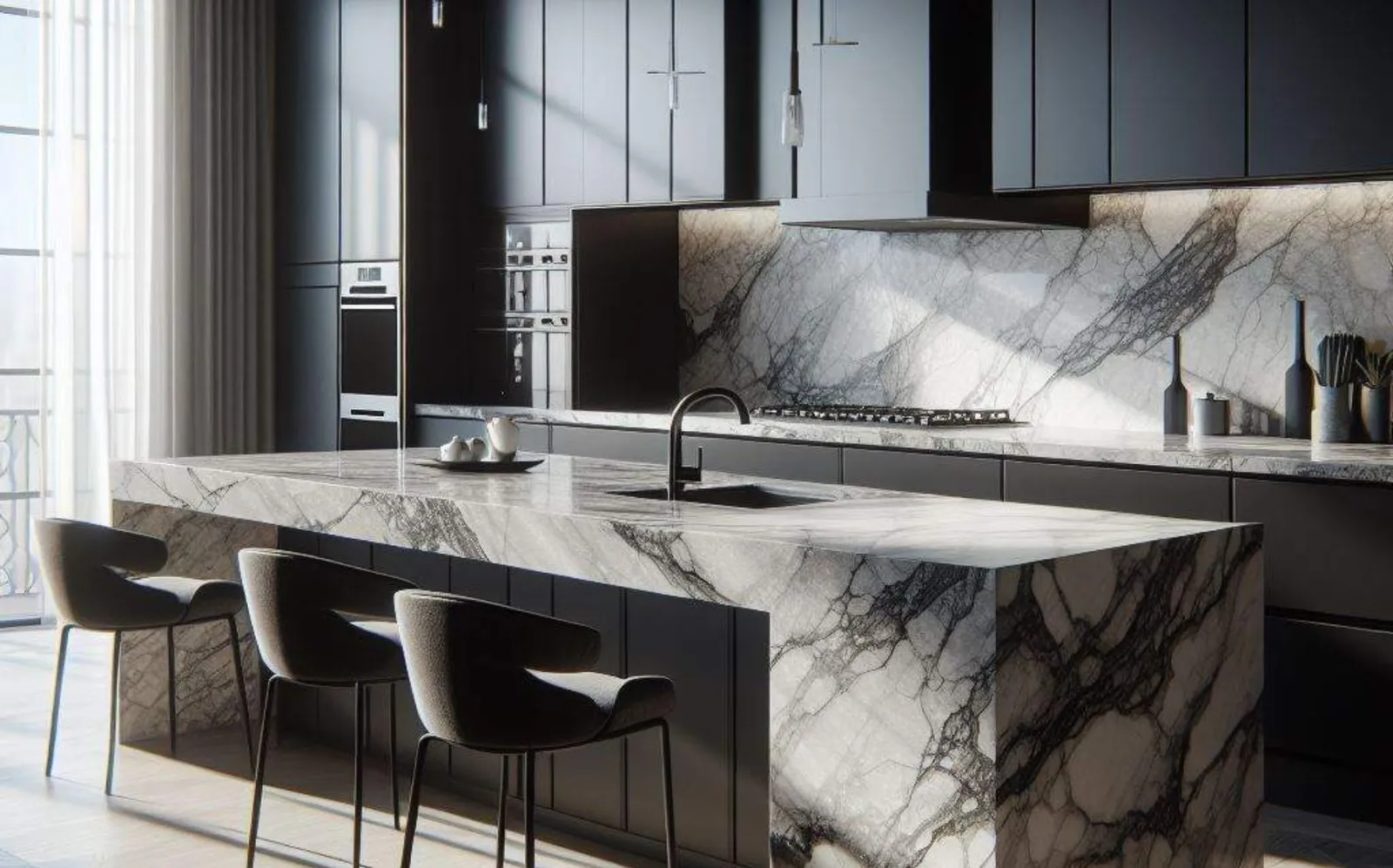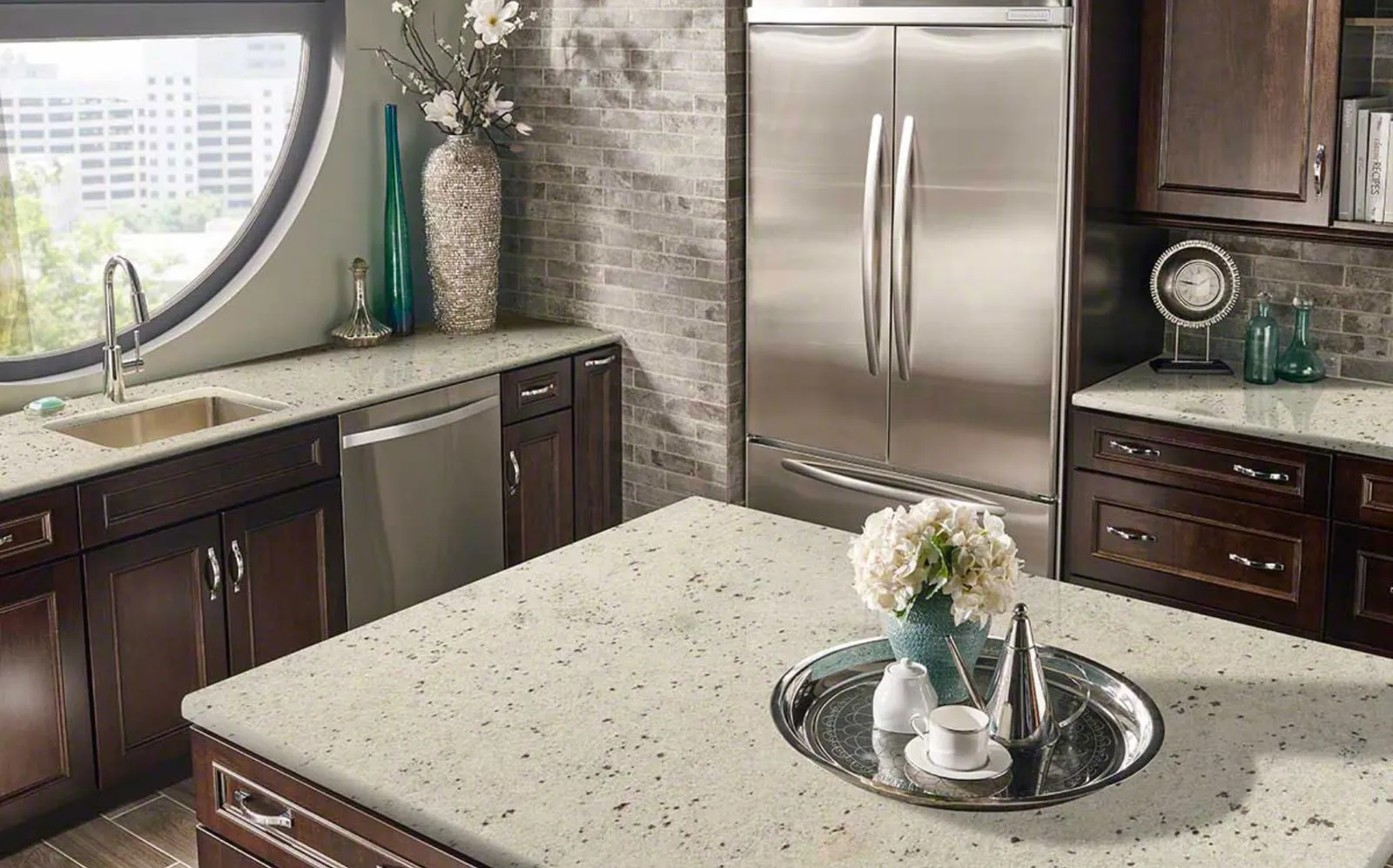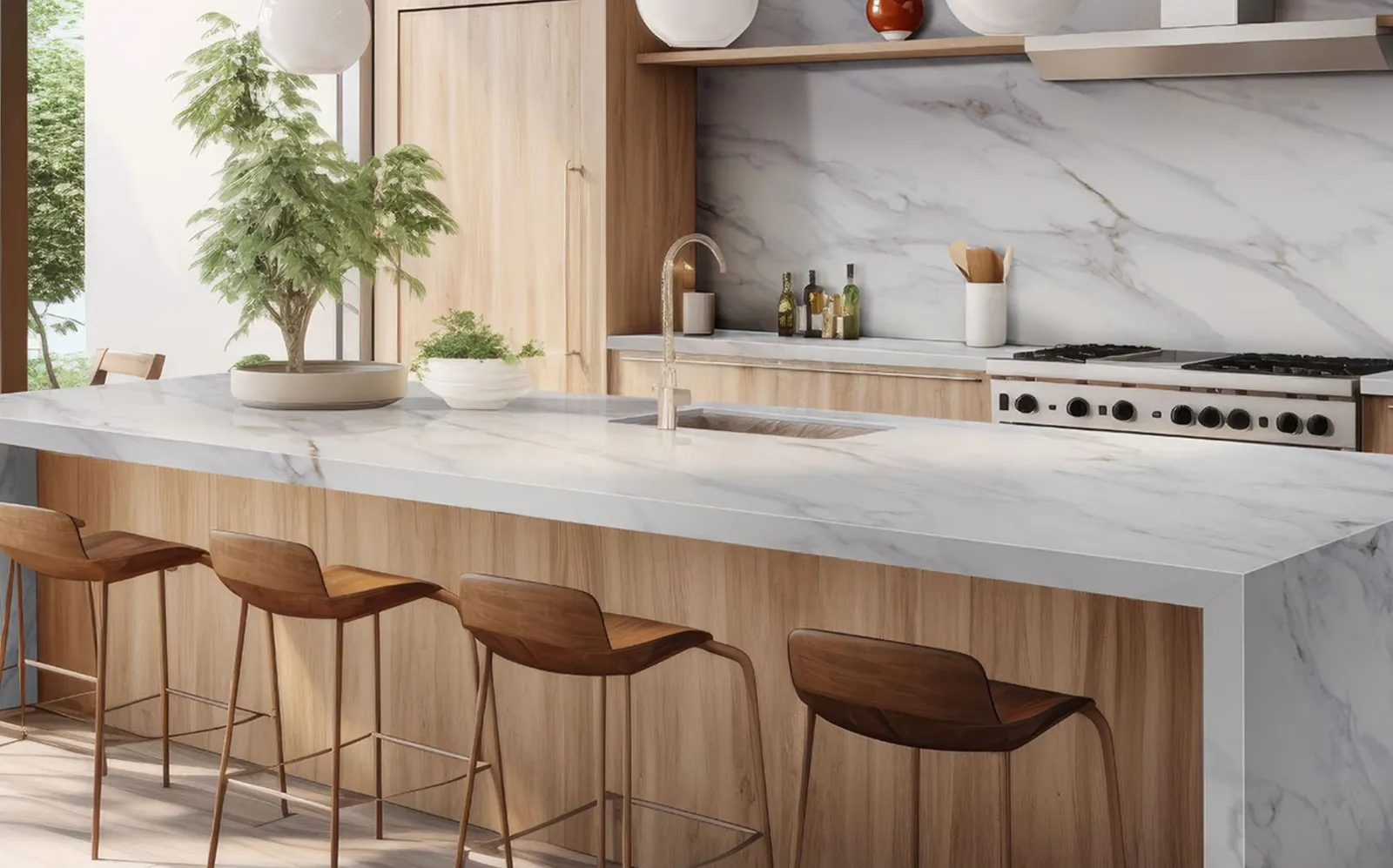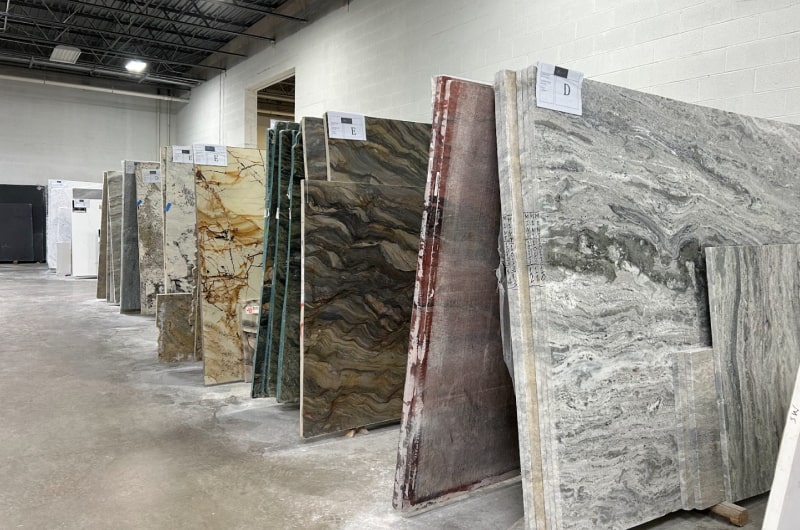
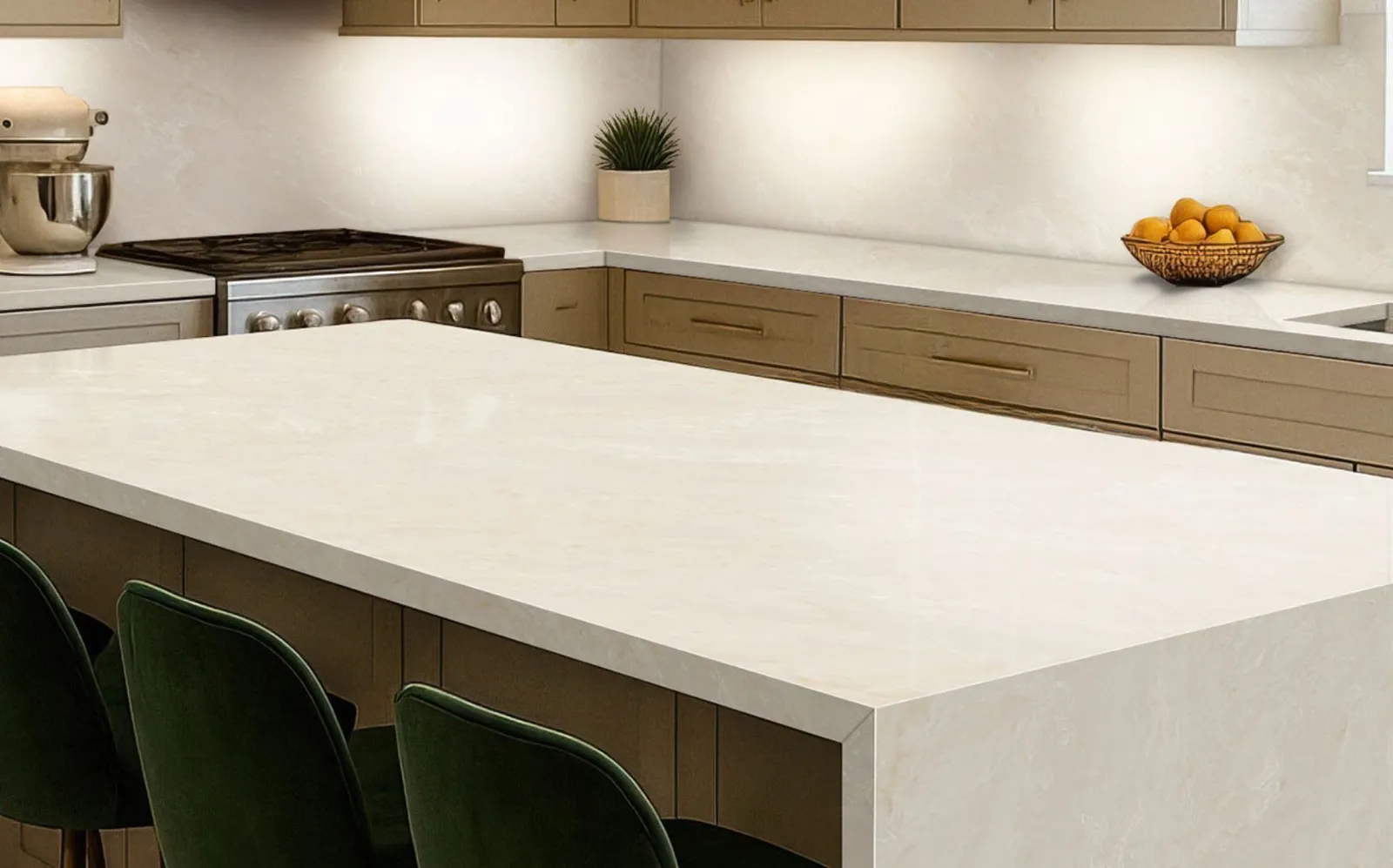
Quartz is one of those stones about which house owners get confused. The most commonly asked question we get to hear about this stone is whether it is natural. While the mineral quartz is a natural rock, the quartz used in home interiors is not purely natural. It means the quarried material of quartz from where it originates is pure. But the engineered version is often used in daily life.
Understanding Quartz
Quartz has been widely used around us in various forms for centuries. Let’s start understanding it from the fundamentals.
Origin
Quartz is the second most abundant mineral on Earth, which forms through different natural geological processes. This mineral is generally found in igneous, metamorphic, and sedimentary rocks. It is quarried worldwide in many parts of the planet. The most popular names are Brazil, China, India, and the United States. Its crystals are valued because of their transparent appearance and strong structure.
Composition
Quartz is made up of silicon dioxide (SiO₂), which is a naturally occurring chemical compound. This is a mixture of one silicon atom and two oxygen atoms. That’s what made quartz a hard material. In pure form, it is fully transparent. When other elements and natural impurities are mixed up, its appearance may be affected. That’s what further gives it various subtle shades. Plus, these variant compositions make two quartz natural pieces different, even if they have the same chemical structure.
Quartz in Everyday Use
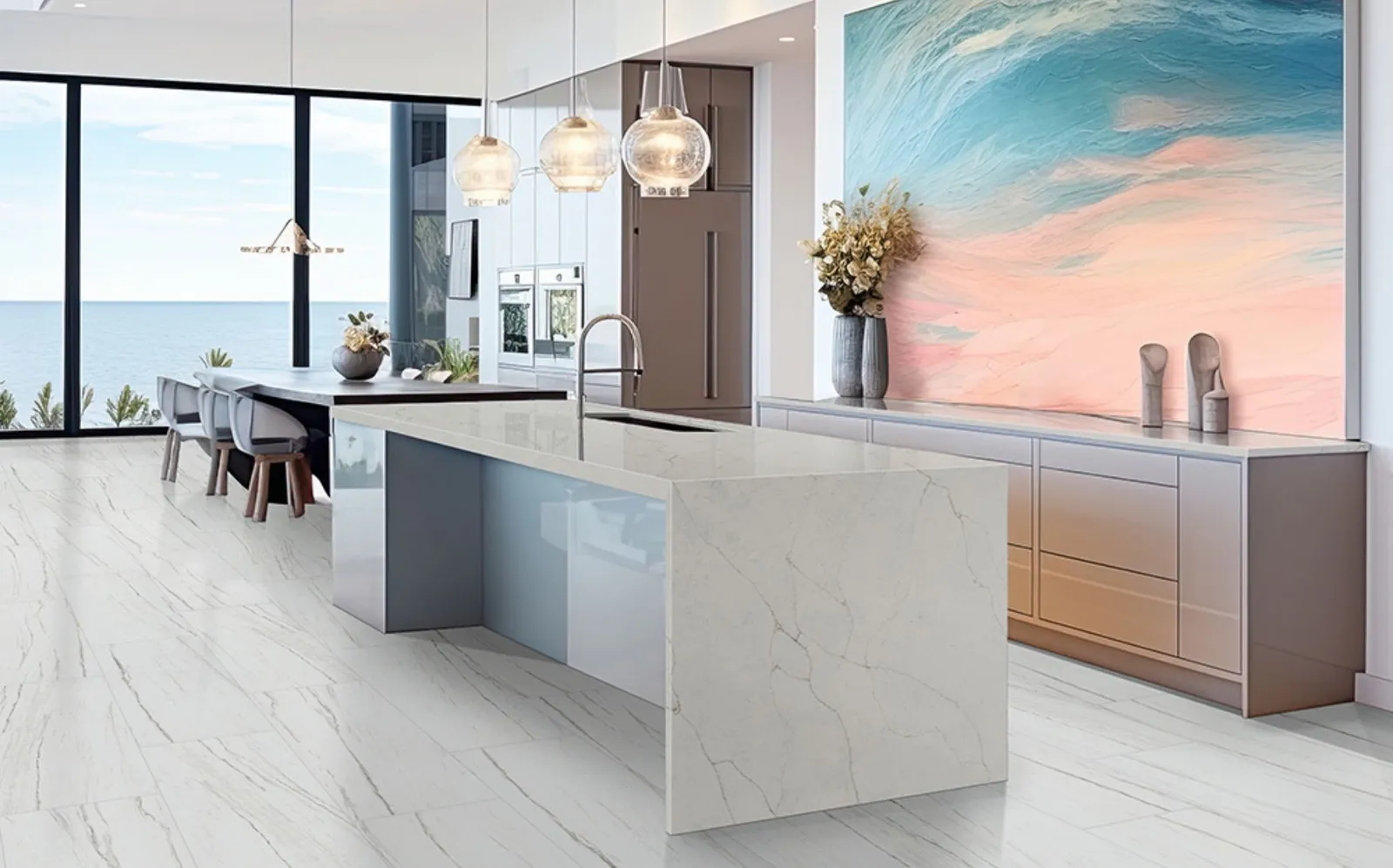
Natural Quartz only present in the raw material form. But its engineered version is used for countertops, backsplashes, wall cladding, and bathroom vanities. The engineered material is made by combining natural Quartz crystals with resins, polymers, and pigments. These materials attach the quartz together, improve its strength, and make it uniform in appearance. This way, the quartz performs well and can be used in a wide range of residential and commercial applications. The engineered manufacturing makes it highly durable, non-porous, and visually consistent.
Quartz Features
Understanding Quartz features reveals why it has gained popularity among all natural stones:
Non-Porous Surface
During engineering manufacturing, its surface becomes non-porous. That blocks the seepage of liquids. In this way, bacteria and other germs cannot be trapped on the surface. This property makes quartz a hygienic choice for home interiors.
High Durability
Quartz ranks 7 on MOHS scale. That means it is a solid and dense material that resists scratches and minor chips.
Stain Resistance
Its non-absorbent structure makes it resist stains. When coffee, oil, and wine spill on the surface, they stay on the surface rather than soaking in. That prevents the slow internal damage over time.
Low Maintenance
Unlike natural stones, quartz does not require periodic sealing. It asks for less care, like cleaning with mild soap and a soft cloth to remove dust and food particles. It’s the only maintenance needed to keep the quartz surfaces in their original condition.
Consistent Appearance
Compared to natural stones, Quartz patterns are consistent across the slabs. You can choose a variety of patterns and colors according to your preferences. This feature allows for a consistent look even in large areas.
Wide Range of Designs
Consistent texture does not mean you are limited to just selecting one design. Engineered quartz offers various designs in different colors. So, if you even want to enjoy a granite or marble appearance with engineered properties, it allows for that. This flexibility makes it suitable for both modern and classic interiors.
Pros and Cons
Studying quartz pros and cons helps homeowners determine where it is the best fit and where it is not.
| Pros | Cons |
| Non-porous surface makes it resists stains and bacteria | Can be more expensive than some natural stones |
| Highly durable and resistant to scratches and chips | Not fully heat-resistant (can get damaged by very hot pans) |
| Low maintenance, so no sealing is required | Less natural variation compared to marble or granite |
| Wide range of colors and consistent designs | Can appear less “natural” due to an engineered look |
| Hygienic and easy to clean | Seams may be visible in large installations |
How Much Does Quartz Cost?
The average quartz countertops cost is around $50 to $200 per square foot, including material, labor, and installation. The standard kitchen area can cover in $3,500 and $6,500, depending on brand and material quality. A well-known brand’s premium designs can cost up to $200 per square foot. It demonstrates that the final amount of the project fully depends on the quality, brand, design, and installation.
Factors Affecting the Total Amount
The key factors that usually influence the total price are slab thickness, edge finishing, color complexity, and fabrication work. The simple, general colors and designs are more affordable than marble-look designs with detailed veining and other premium styles. High-end and luxury areas ask for unique quartz fabrication as countertops and islands. Therefore, such kitchens are more expensive.
Quartz Application
Quartz is widely used in residential and commercial areas due to its hardness and low maintenance.
Kitchen Countertops
The most popular place where this engineered material is used is in kitchens. Its strength empowers it to work best in high-traffic spaces, and its non-porous nature makes it antimicrobial. Many homeowners prefer it for kitchen countertops because it withstands daily activities and promotes cleanliness. Professional quartz countertop installation ensures a perfect fit and a durable, seamless finish in kitchen spaces.
Bathroom Vanities
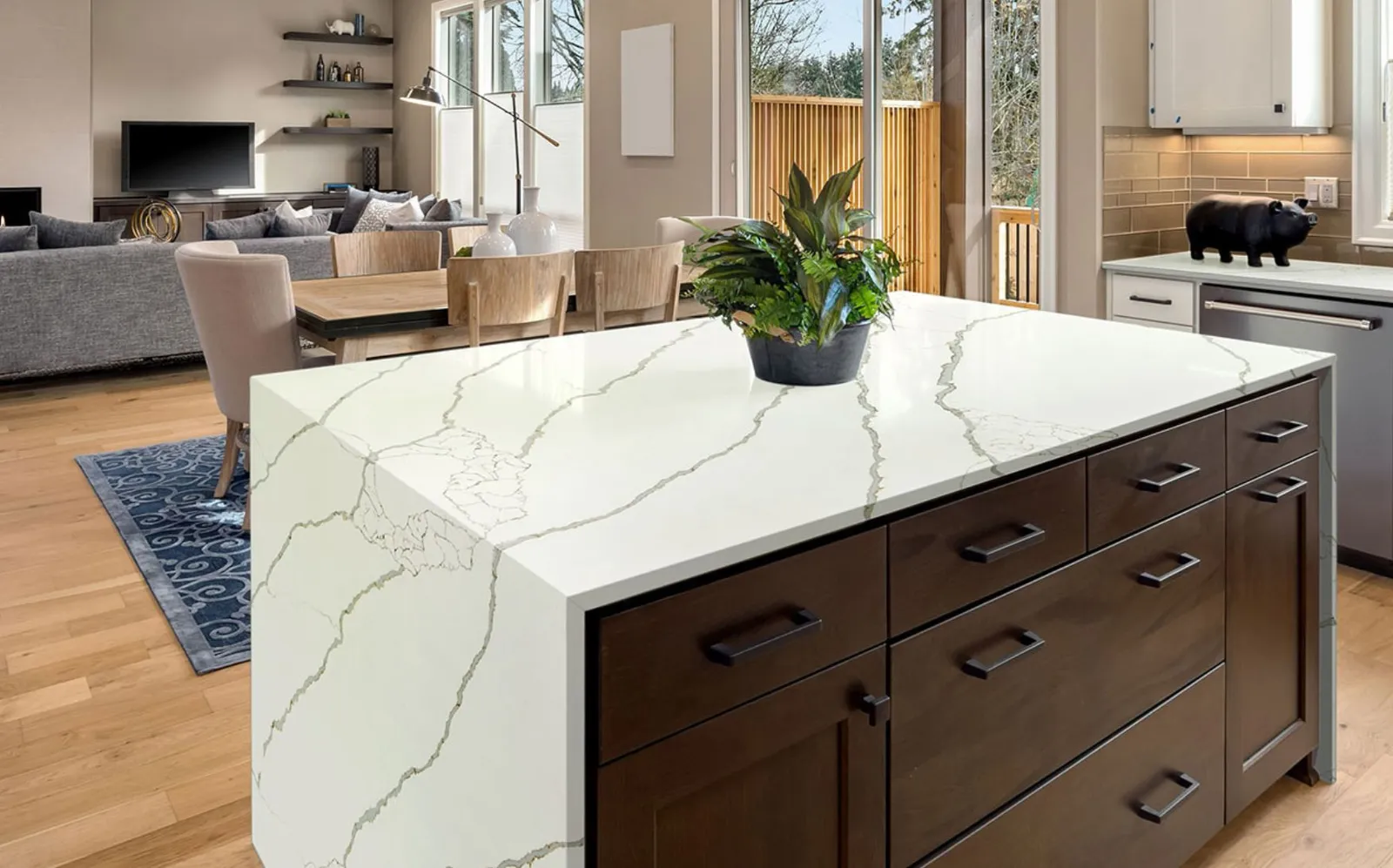
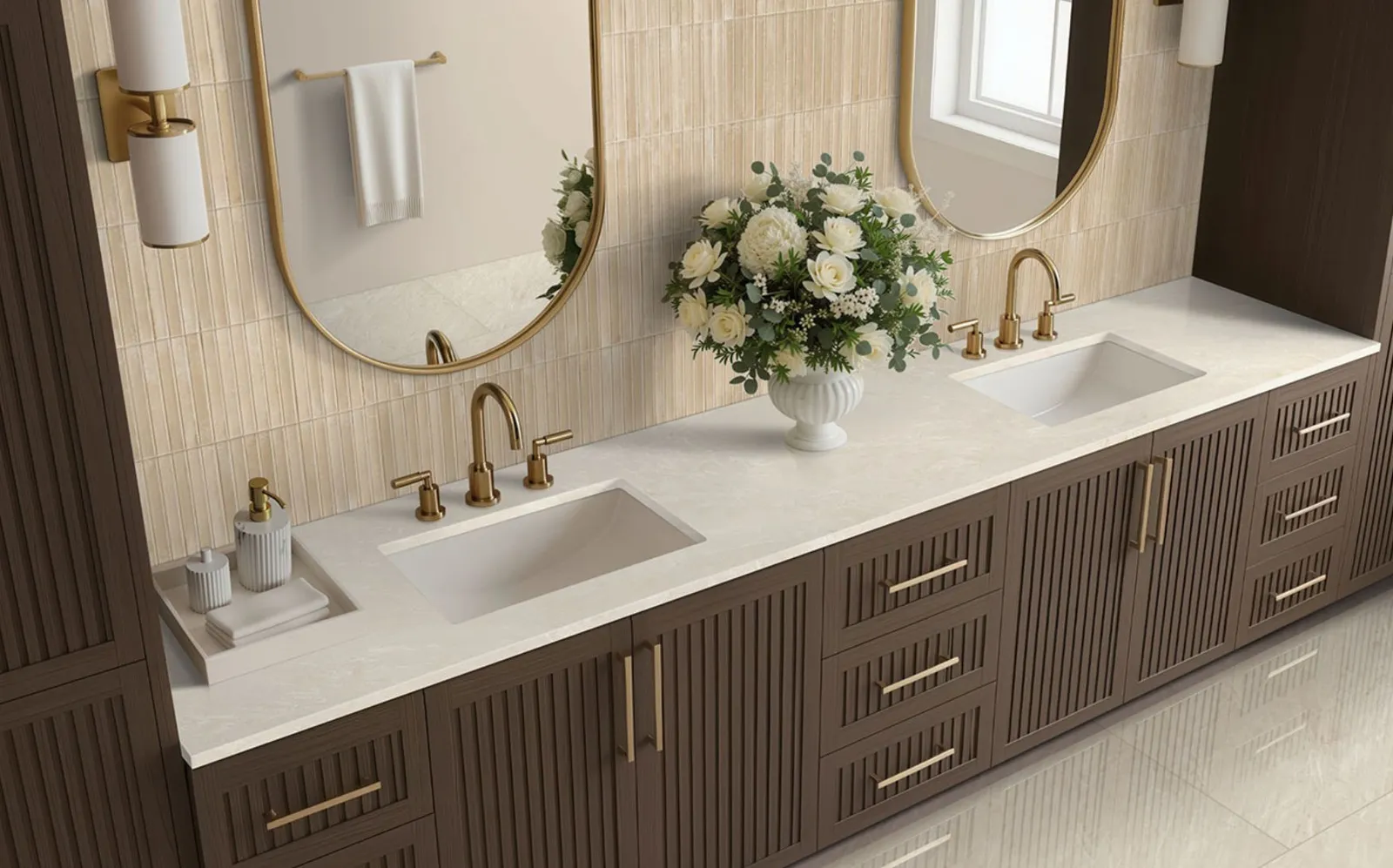
The other place where we get to see this stone is in the bathroom. The quartz vanities resist moisture and humidity by preventing water seepage. To achieve your desired appearance, this stone can help, especially when you aim to create a spa-like aesthetic.
Backsplashes and Wall Cladding
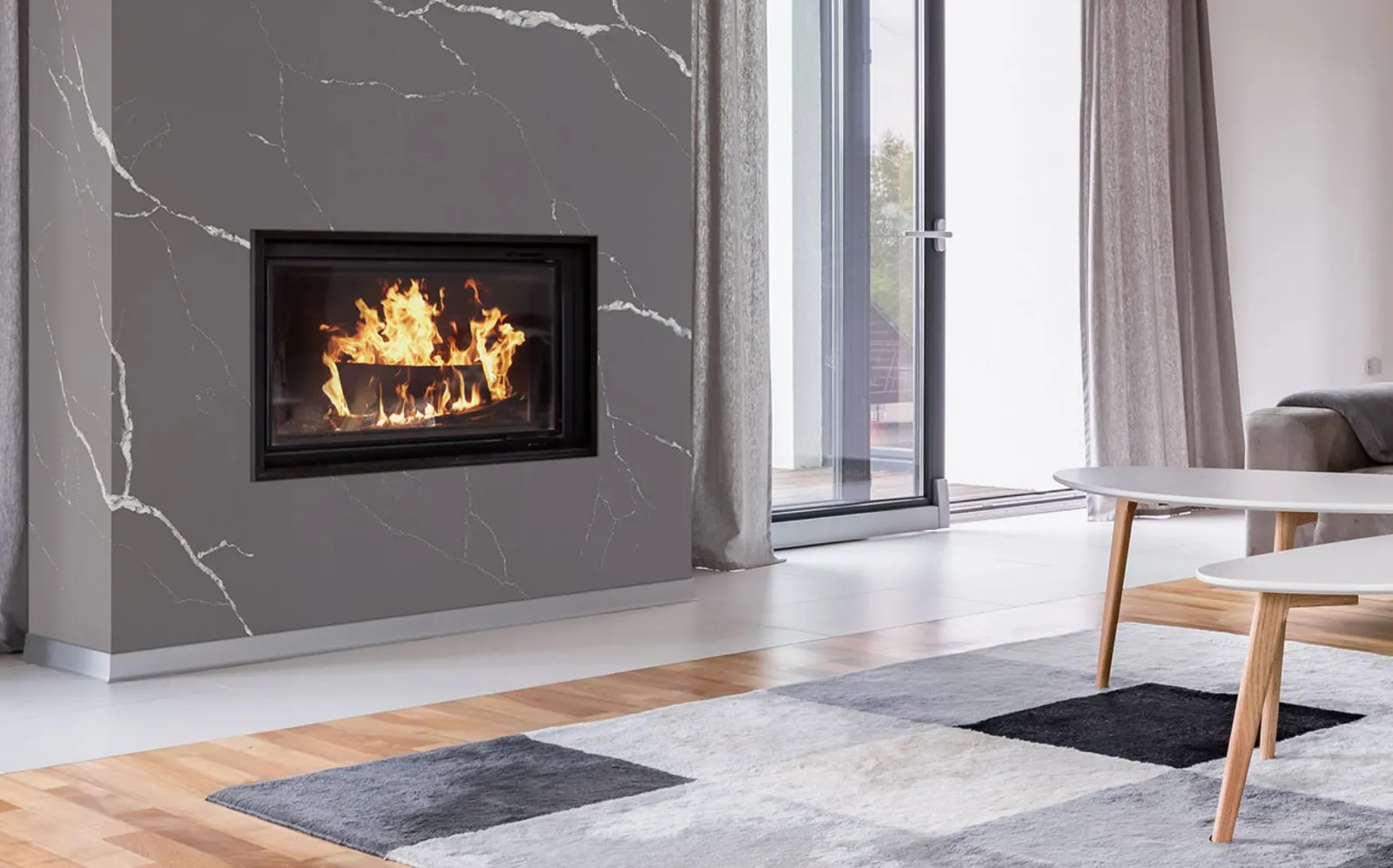
You can also use quartz for backsplashes and wall cladding. Its consistent look and versatility allow it to pair with different surrounding items, no matter what the layout is. If you want to update interior walls and are looking for an easy-to-maintain option, turning to it can prove a smart decision.
Commercial Spaces
Its usage extends to commercial environments, including hotels, offices, restaurants, and retail stores. There, it mainly works for worktops, reception desks, and tabletops. Wondering how it can use at high-traffic areas? Quartz’s strength, functionality, longevity, and a wide list of designs make it ideal for even these places.
Flooring
Quartz is sometimes used for flooring in specific interior projects. However, it is preferred where a polished and premium look is required rather than in heavy-use areas.
Quartz FAQs
Is quartz better than granite?
No, Quartz is not heat-resistant, unlike Granite. That makes it less effective than this natural stone.
Does quartz need sealing?
No, it does not need sealing, which makes it easier to maintain. Usually, the natural stones need periodic treatments to become non-porous and stain-resistant.
Can quartz be used for flooring?
Yes, it can be used for flooring to create a consistent and contrasting area. Its excellent durability extends its application from house countertops to flooring.
Is quartz heat-resistant?
No. Quartz can handle moderate heat but is not heat-proof. The extremely hot pans can damage surfaces over time. So, using trivets or heat pads is recommended.
Is quartz expensive compared to other countertop materials?
Yes. Quartz is considered the mid to high range material. It is more expensive than affordable options like laminate, tile, or solid surface. Its cost may not beat the price of premium marble, Quartzite, and granite.
Wrap Up
Quartz is a natural mineral that is manufactured by mixing pigments and resins to make an engineered stone. It is strong and durable, so it can withstand kitchen activities and high-traffic areas. From home kitchens to restaurant worktops, it can be used to make the appearance you want. Its luxury and premium designs require a higher cost compared to simple ones. Apart from this, choose quartz when you don’t want sealing stress and different slab patterns. At Royal Marble and Granite NJ, quartz selection is commonly guided by practical factors such as strength, usage, and long-term performance.