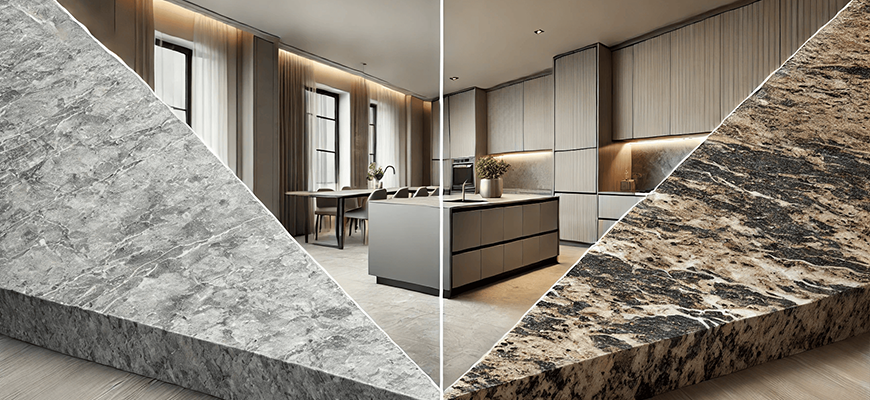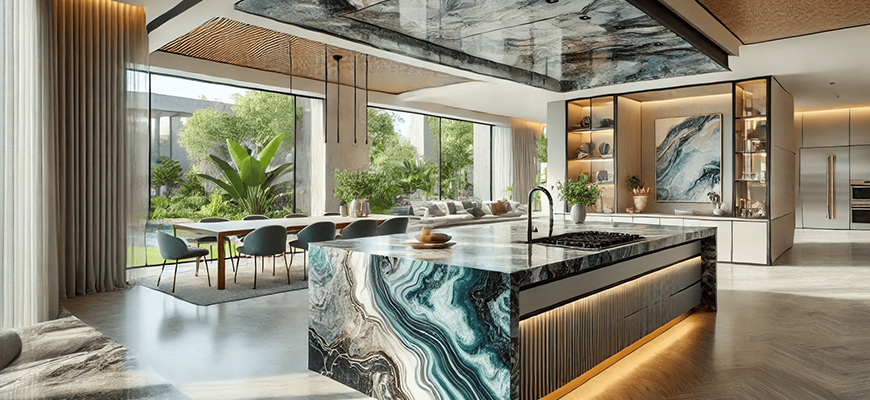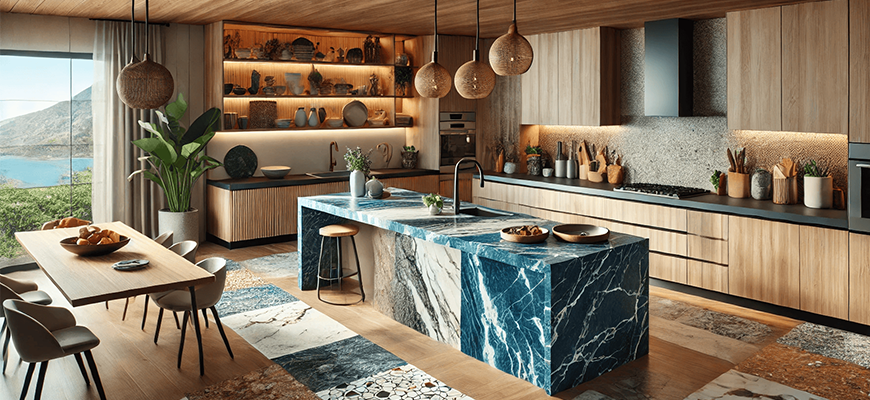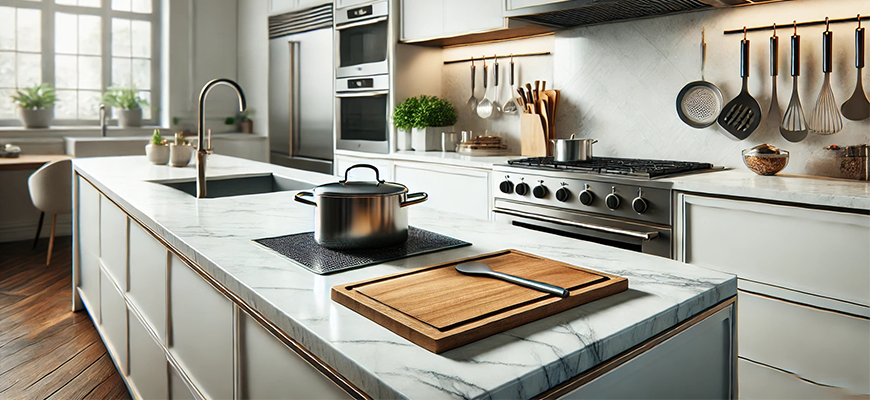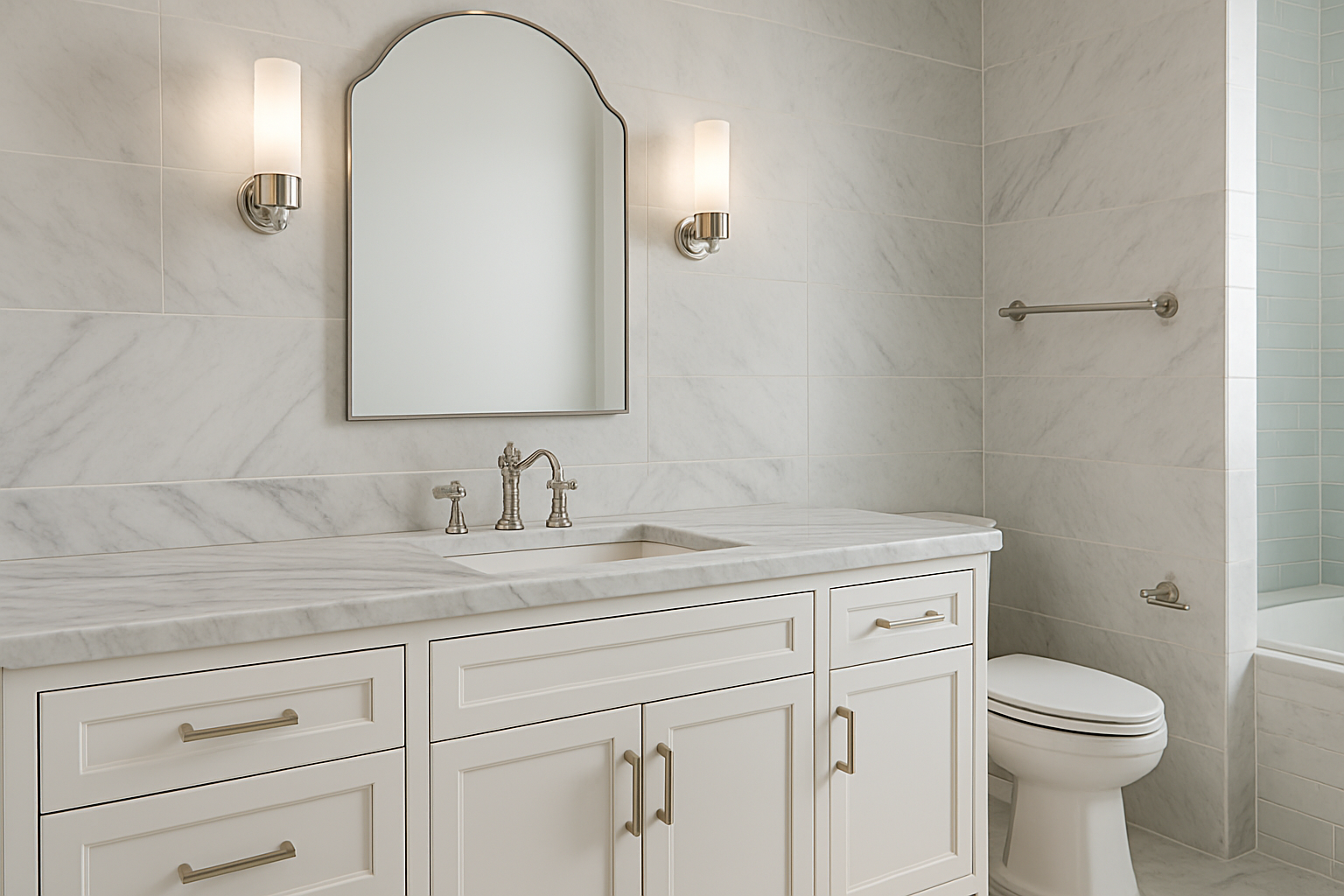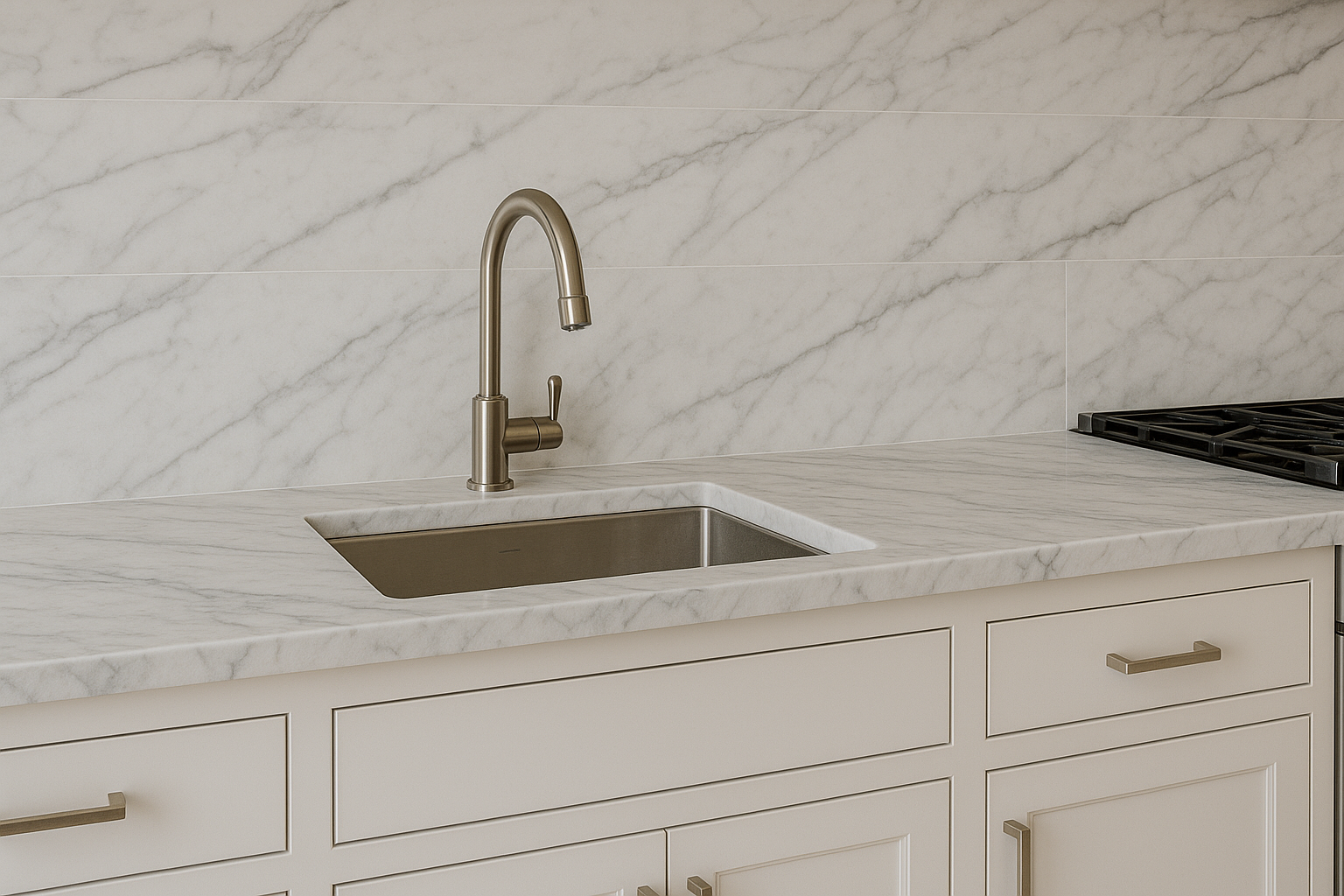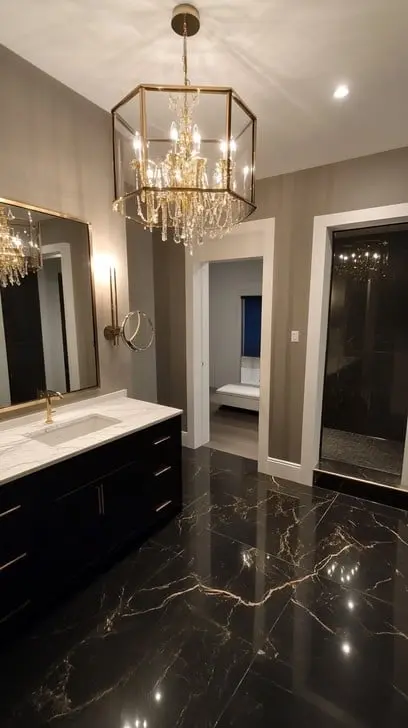
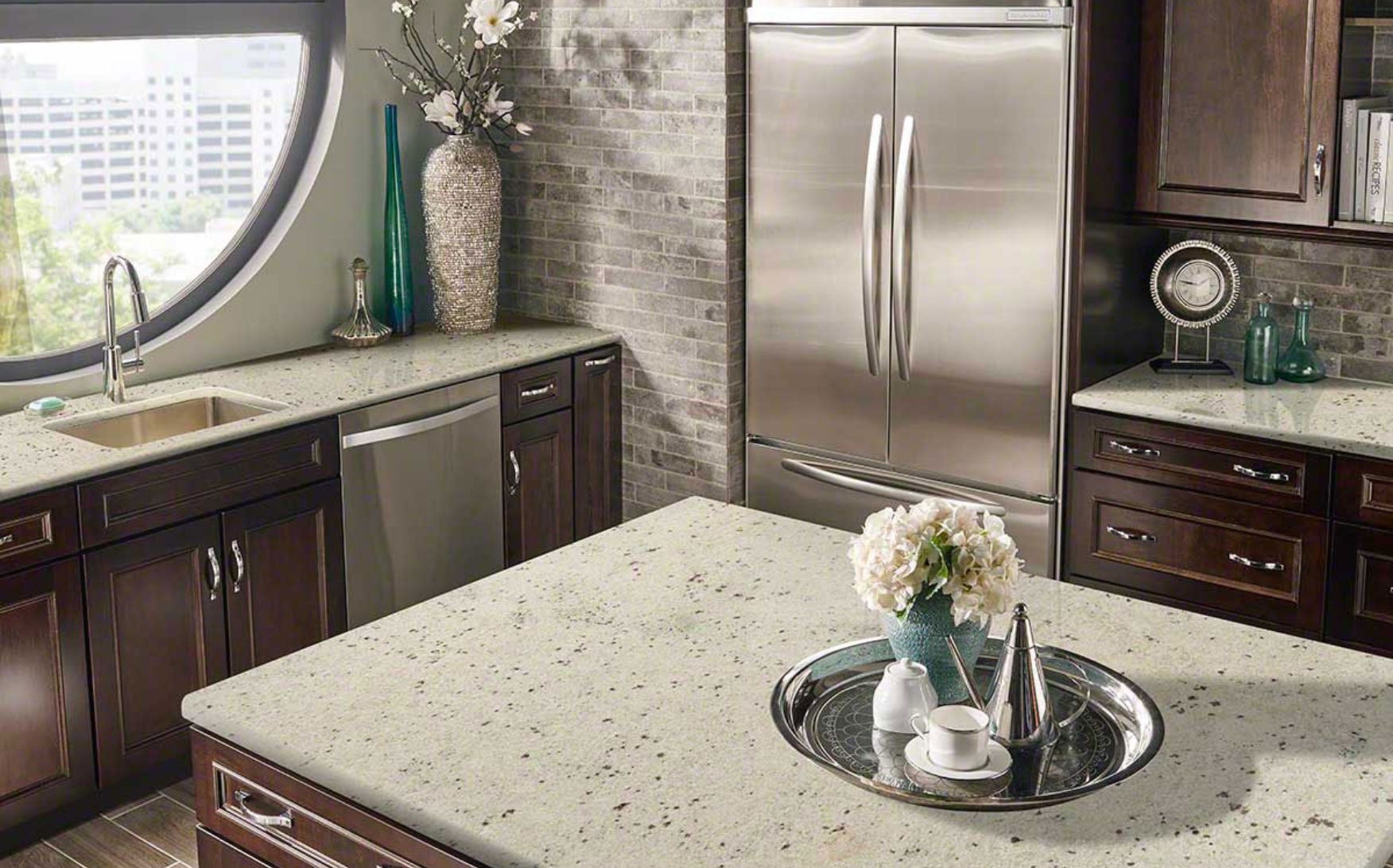
Granite is recognized by its white color, even if pure white granite does not exist. No doubt, you get many other colors as well, but white is a favorite of homeowners. White granite countertops naturally pair with a range of items across different kitchens. They create a bright, open, minimalist, and attractive environment. Beyond just appearance, they are highly durable, functional, and heat-resistant. This is why they have been used in our homes for decades.
White granites are not completely white. They have an off-white, creamy background that features patterns in gray, black, beige, or cream. This variation happens because of the presence of different minerals in the composition.
Till now, these surfaces sound like a perfect choice, but definitely judging before knowing everything is not smart. We will learn everything about white granite countertops from formation to usage. This guide will be helpful. It will disclose different varieties, price ranges, maintenance needs, and performance of white granite. So, if you are looking for countertops or thinking of replacing older ones, see if it is your taste.
Quick Overview of White Granite Countertops Specifications
The table below quickly describes this granite’s important features, strengths, and limitations almost all you will learn in today’s guide:
| Aspects | Details |
| Material | It is a natural igneous stone formed by slowly cooling magma deep under the Earth. |
| Primary Color | Off-white, creamy, light gray with natural mineral patterns in gray, black, beige, cream, brown, or subtle blue tones, depending on the variety. Pure bright white granite does not exist. |
| Appearance | Available in a range of speckles, veins, waves, or flowing mineral patterns. |
| Common Finishes | Polished (glossy), honed (matte), leathered (lightly textured) |
| Durability | Highly durable, resistant to scratches, heat, and normal kitchen wear. |
| Hardness | Usually between 6 and 7 on the MOHS hardness scale |
| Heat Resistance | Excellent. It can tolerate hot pans or pots better than most engineered surfaces |
| Scratch Resistance | Very good. Normal kitchen knives and utensils can hardly scratch the surface |
| Stain Resistance | Naturally resistant, but not completely stain-proof, so proper sealing is required |
| Porosity | All white granites are porous, and the level of porosity varies by type. |
| Maintenance Level | Low maintenance when properly sealed. |
| Typical Thickness | Most commonly available in 2 cm (¾ inch) and 3 cm (1¼ inch) slabs. |
| Edge Options | Can be fabricated with straight, eased, beveled, bullnose, ogee, waterfall, and many other decorative edge profiles. |
| Best Applications | Kitchen countertops, bathroom vanities, islands, backsplashes, laundry rooms, bar tops, fireplaces, and some outdoor kitchens. |
| Lifespan | Can last 50 years or more, and often a lifetime |
| Price Range (Installed) | Cost around $50 to $200+ per square foot, depending on the granite variety, slab rarity, thickness, edge profile, location, and countertop installation complexity. |
| Resale Value | Significantly increases a home’s appeal. Natural stone countertops are a desirable feature for many buyers. |
| Best For | Homeowners looking for a bright, classic appearance and long-lasting, durable surfaces. |
What Is White Granite?
White granite is an igneous rock that forms gradually as molten magma cools under the Earth over millions of years. During this period, minerals such as feldspar, quartz, and mica join together. That’s where the stone obtains its color, pattern, and strength. It is commonly used for kitchen countertops, bathroom vanities, and other interior surfaces because of its hardness. As it resists UV rays, you can also use it for outdoor applications. By its name, “white granite”, you may think it is entirely white. But every slab comes with natural speckles or veins in some shades of gray, black, beige, or blue. Interestingly, each slab varies from others. Consistency in patterns and veining is not possible, which is generally seen in engineered countertops.
In kitchens, you can create different types of effects by combining it with other components. Using it in the bathroom accomplishes a spa-like, relaxing, and cozy effect.
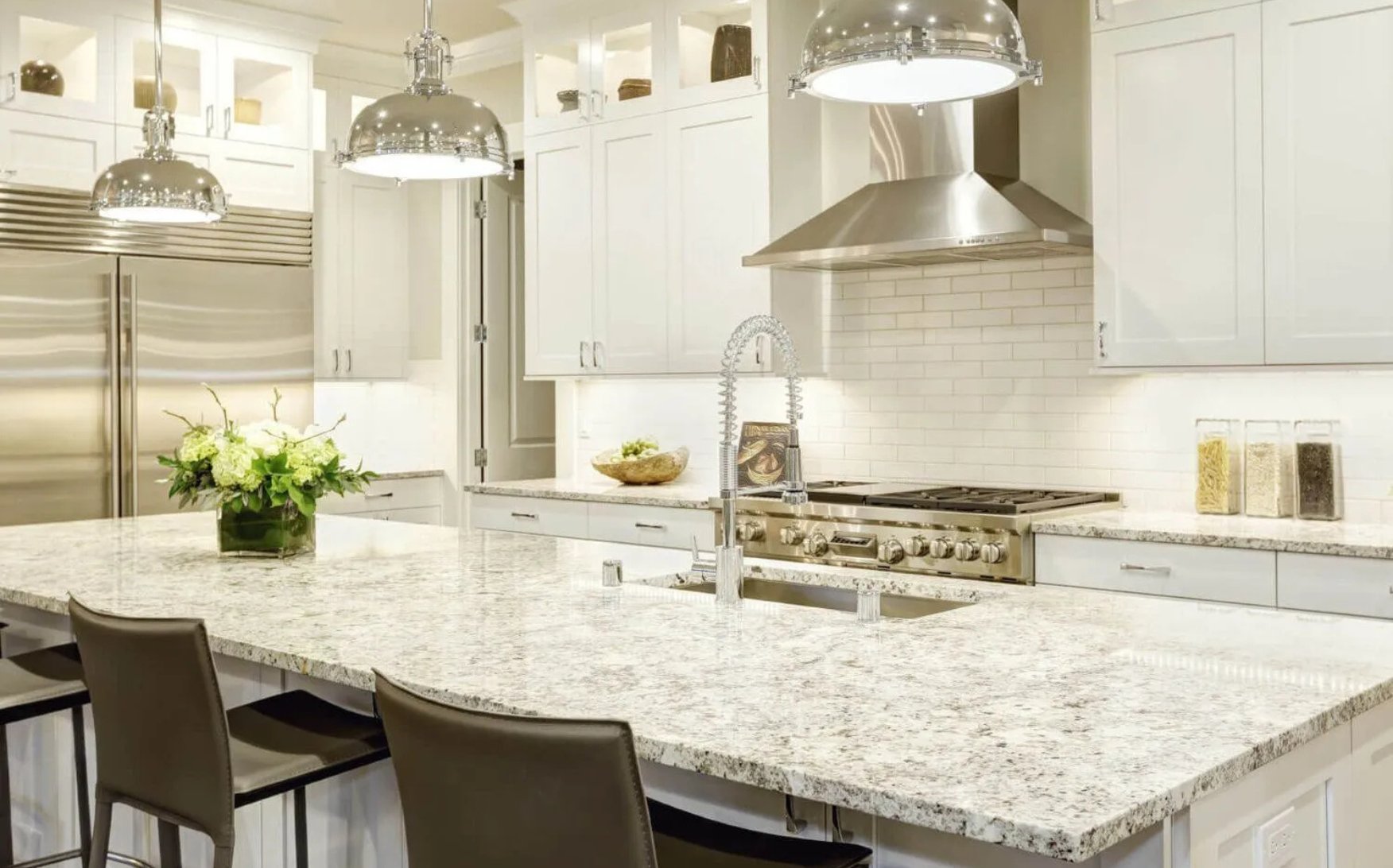
Popular White Granite Colors & Patterns
Granite countertops are in high demand because they are unique and offer inconsistent patterns. The standard slabs may contain minimal veining, while some exotic ones possess dramatic, flowing patterns and specks.
Below, we have covered some of the most popular white granite varieties used for countertops.
Alaska White Granite
Alaska white Granite’s background color is something white or silver. It mostly has gray, black, and warm beige mineral deposits. The combination of light and dark tones does not feel awkward. This makes it a versatile choice for both modern and traditional kitchens.
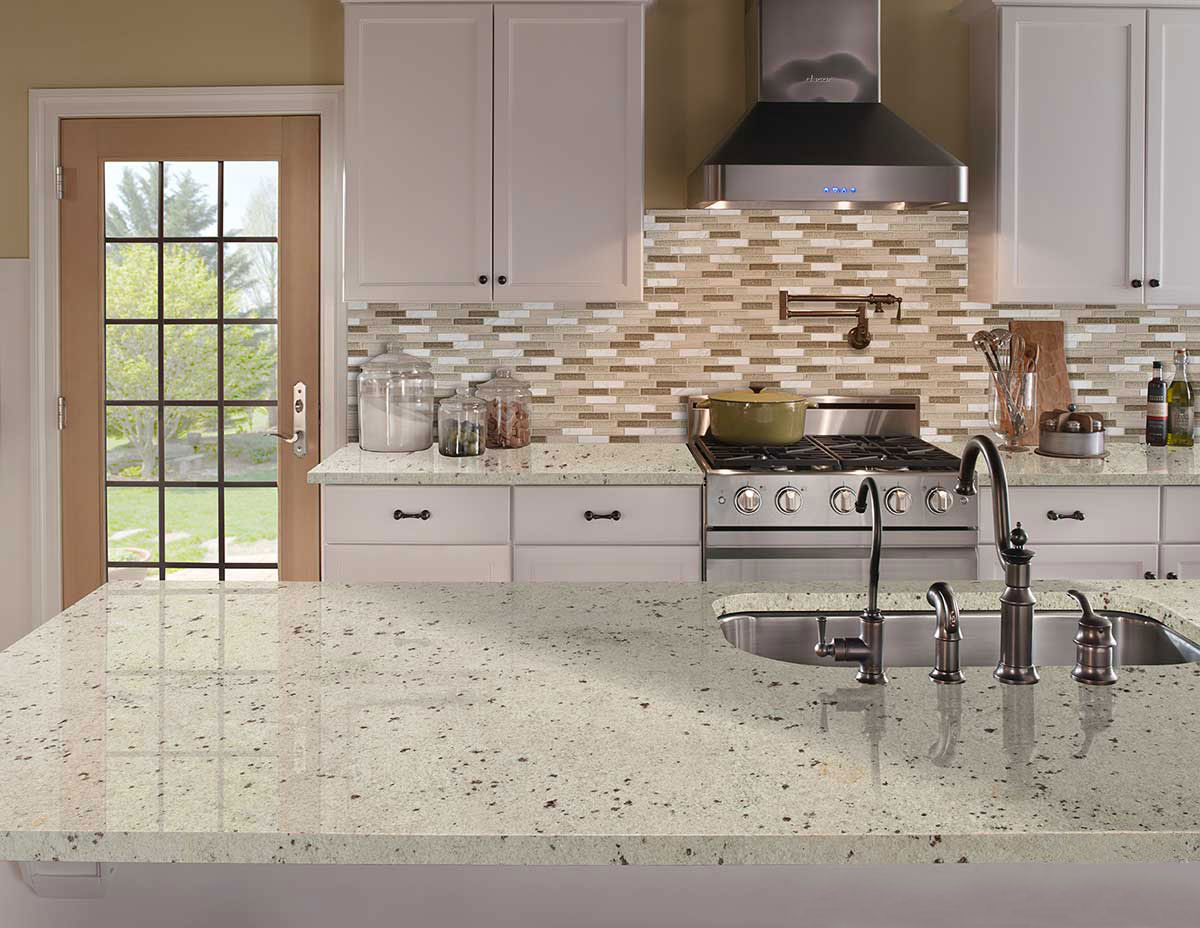
Colonial White Granite
With an off-white base, the Colonial White Granite features light gray veining and small black or burgundy mineral specks. This variant gets an elegant, distinct appearance.
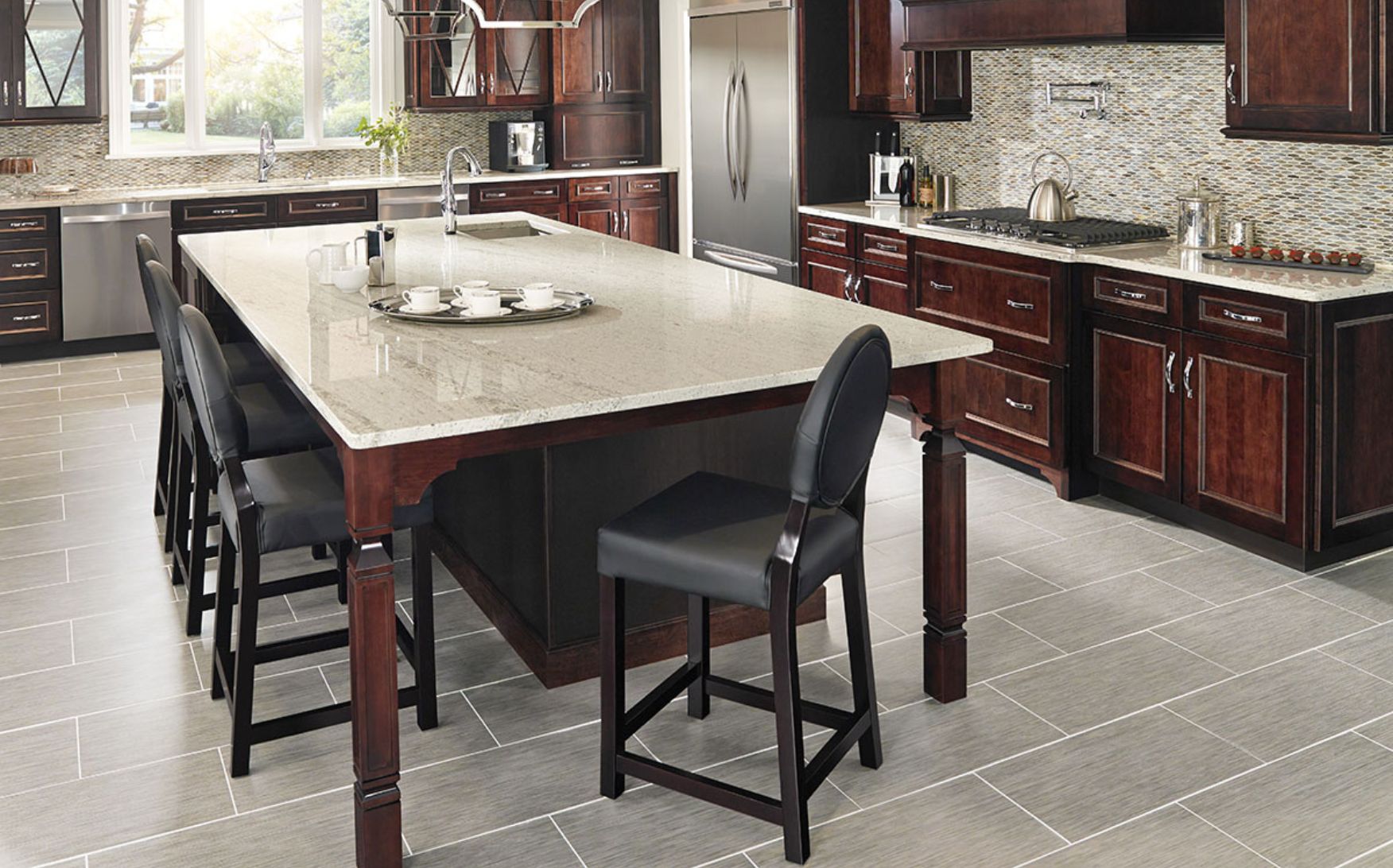
River White Granite
River white granite is a well-known and sought-after stone in the market. Its creamy white background is decorated with flowing gray veins and small burgundy mineral flecks. Due to this texture, it feels like giving marble-like appearance.
Viscount White Granite
The Viscount White Granite has a white base with dramatic gray and black waves. The bold movement portrays something different in the kitchen. Therefore, it is usually used for islands.
Kashmir White Granite
The creamy, warm base of Kashmir White Granite has soft gray patterns and burgundy mineral specks. It offers a gentle, calm effect instead of seeking attention like veined variants.
Bianco Antico Granite
The Bianco Antico Granite features a combination of white, gray, taupe, and black mineral clusters. Its veining is too prominent, so it works well with light components.
White Ice Granite
The White Ice Granite is neither too dramatic nor too light. Its white background features gray veining and small black mineral accents.
Delicatus White Granite
On Delicatus White Granite, bright white, black, and gray minerals are in high contrast. This gives it a bold, unrealistic look perfect for a statement countertop or kitchen island.
Common Pattern Styles
The most common patterns we get to see on White granite countertops are:
- Speckled: Small, evenly distributed mineral flecks create a balanced and consistent appearance.
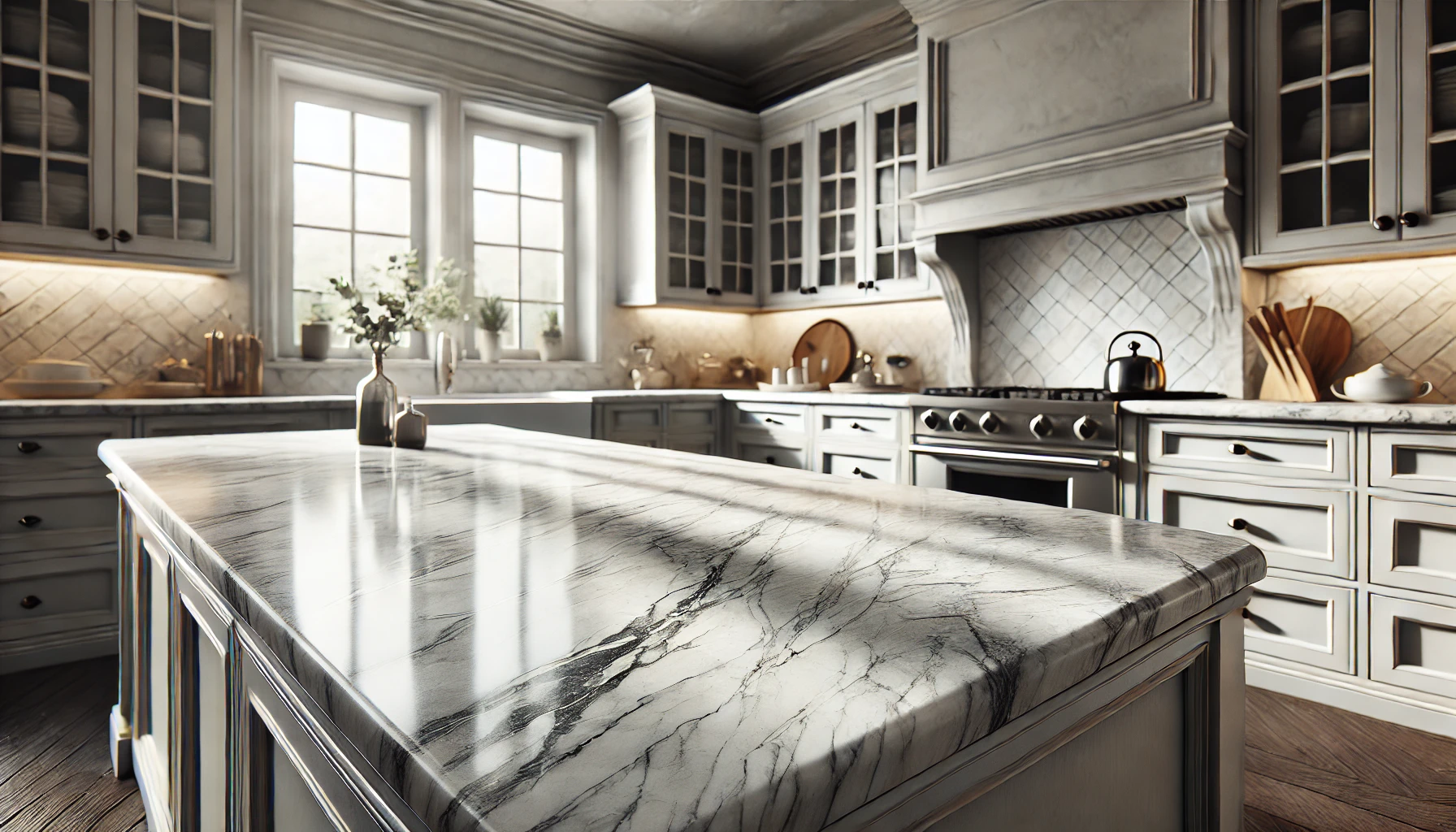
- Veined: Long, flowing mineral lines give the countertop a look similar to marble.
- Clouded: Soft mineral formations create a gentle, blended appearance with less contrast.
- Movement-rich: Large waves and sweeping patterns make each slab a dramatic focal point.
White Granite Design Ideas: Cabinet Pairings and Kitchen Styles
White granite is a versatile countertop material. Let’s understand how to pair it with different components to achieve a specific kitchen design.
Modern Kitchens
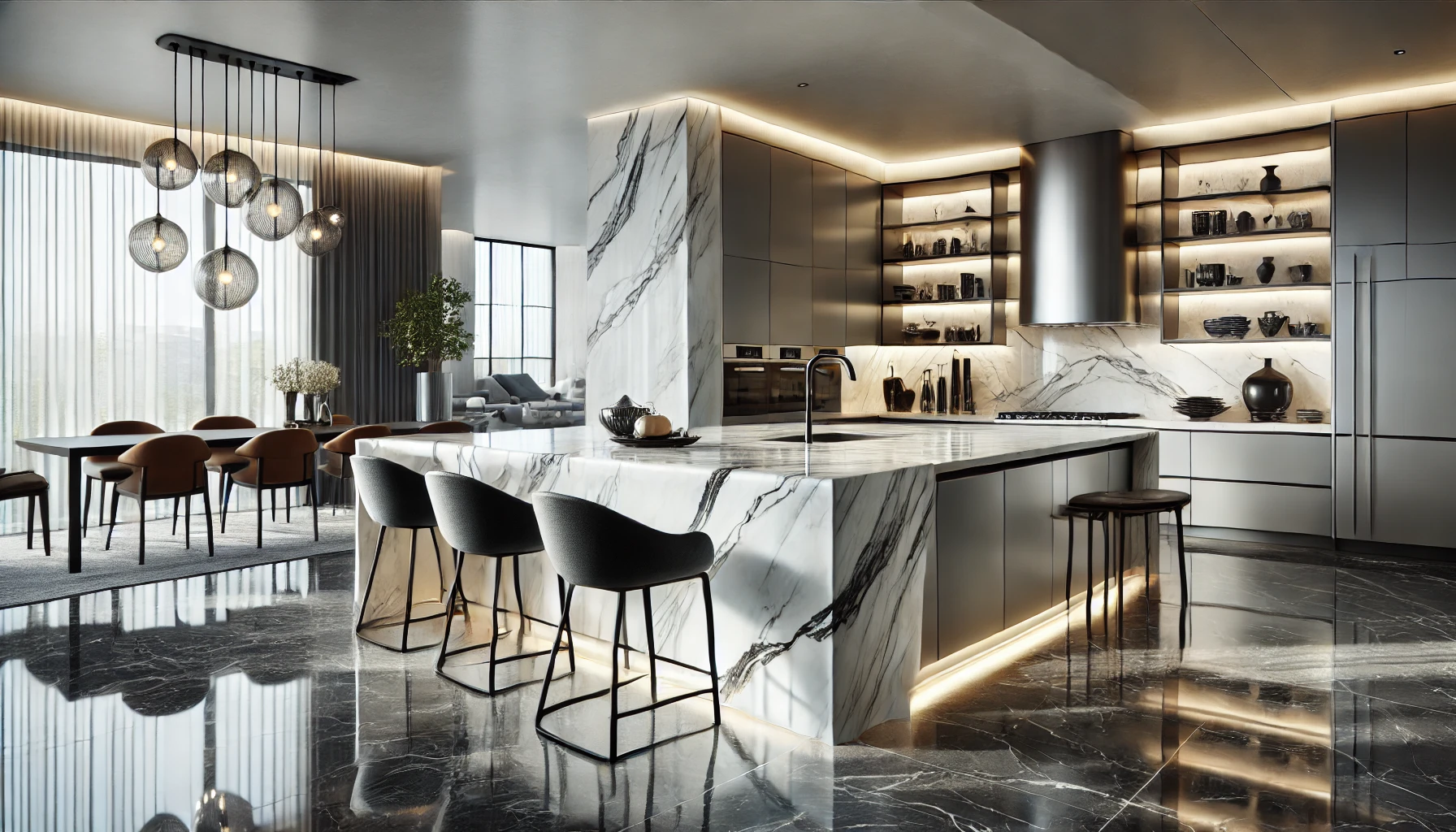
Pair white granite countertops with flat-panel, glass-panel, and handleless cabinets to create a modern kitchen look. For minimalist contrast, they should be in white, gray, black, or matte finishes. Use simple hardware and a neutral backsplash throughout the kitchen to maintain a sleek look.
Traditional Kitchens
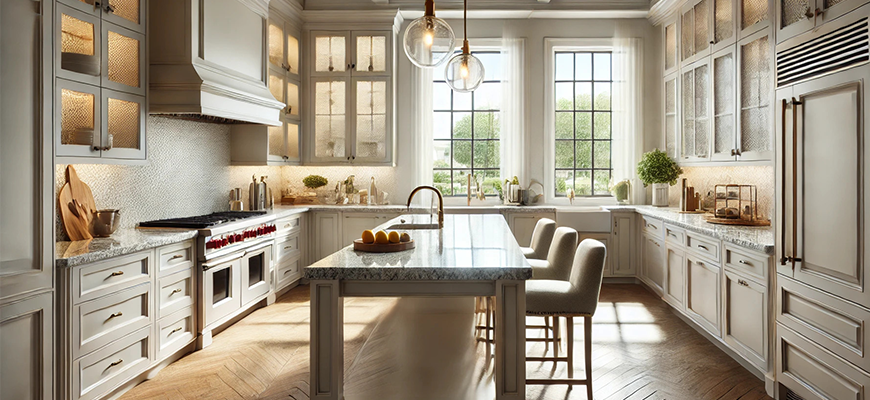
There are some White Granite variants that I personally feel best suited for traditional, farmhouse kitchens or interiors. Consider using White Granites that have noticeable black and grey patterns. The raised-panel and wood cabinets in warm white, cream, or natural tones can coordinate well with them. This idea is just to achieve a conventional visual.
Contemporary Kitchens
Components mostly contrast in contemporary kitchens. So, you can use different color components in this kitchen style, but ensure the combination will look good. It’s better to stick with shaker, handle-free, or slightly decorative cabinets. Their hardware should be simple. Keep the backsplash neutral as well, so other components can gain attention. The overall look also depends on how you style the lighting.
Transitional Kitchens
Traditional kitchens have traditional warm, inviting components with modern functionality. So, you can use either modern or traditional cabinetry in this design. Colors such as white, gray, navy, or light wood balance the design visually or build a classical aesthetic.
Coastal Kitchens
Coastal kitchens are inspired by beaches. Practicing this style means getting a beach-like, relaxed, and open feel in your home. In this design. Most items are used in white shades with slight contrasting hardware. However, you can also use light blue or sand-like color cabinets. The wood and simple white cabinets are popular in this design.
White Granite Maintenance & Care
Although white granite countertops are not high-maintenance, different finishes can require slightly different care. Polished surfaces can be easily maintained, while honed and leather ones need a slight bit more care. If they are sealed, you do not need any special cleaning products or to follow a complicated routine.
Cleaning
You need a soft cloth and a pH-neutral stone cleaner for daily cleaning. They can easily remove dust, food residue, and everyday spills. Cleaning granite countertops after a long period may take more time. The biggest mistake homeowners make is using harsh chemicals or acidic cleaners. They gradually harm the protective layer. This way, the natural beauty of stone can also get affected.
Sealing
Beyond cleaning, sealing is a part of maintenance. There is no fixed time after which you have to reseal surfaces. This depends on the type of granite, porosity, the sealer used, and daily wear. Always use a quality sealer that helps reduce stains and makes routine cleaning easy.
Care
Following the safety tips is vital to take care of them. This includes:
- Cutting directly on a granite surface is not recommended. Use cutting boards to protect the stone’s finish.
- Although they are heat-resistant, you should make a habit of placing hot pans and cookware on trivets. The charm of worktops can be reduced by prolonged exposure to hot items.
- Eliminate the risk of heavy objects falling on these surfaces. Edges and corners are more sensitive to chipping, so be more careful with them.
- Avoid sitting and standing on countertops. Excessive weight can cause dents and chips. The supports of worktops can also get damaged.
- Don’t forget to use coasters with glasses, especially for those that contain wine, coffee, citrus, or other staining liquids. This is to minimize the chance of spill marks.
- Make sure the things you drag across the surfaces are not acidic, heavy, or hot.
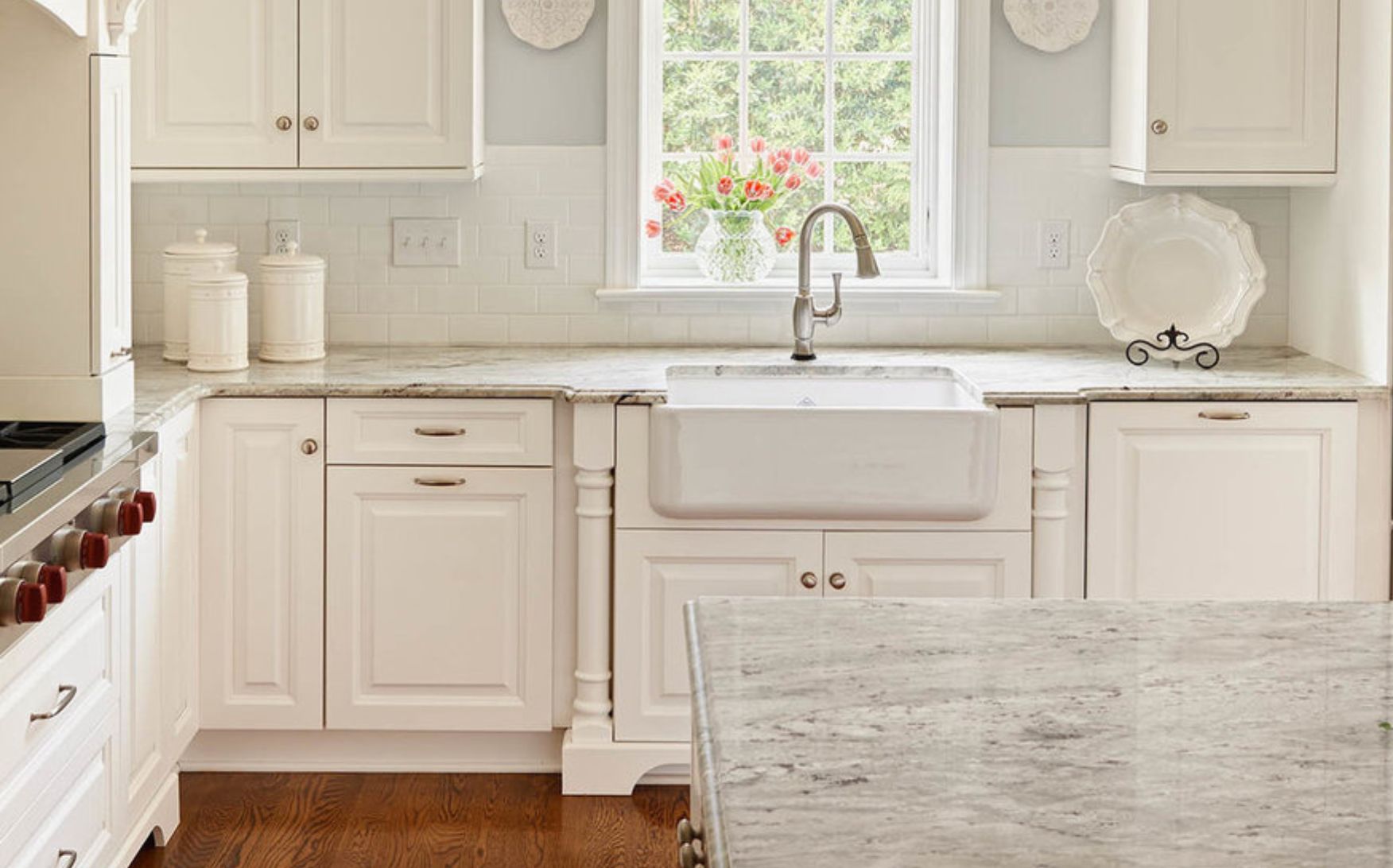
Pros and Cons of White Granite Countertops
Giving an honest overview is important. We will also discuss the drawbacks of White Granite countertops. The table below quickly describes the pros and cons of White Granite:
| White Granite Pros | White Granite Cons |
| Every slab has different, distinct patterns. | Requires periodic sealing for stain resistance. |
| Highly durable and scratch-resistant. | Can show stains if spills are left on an unsealed surface. |
| Impressive heat resistance. | Edges and corners can chip over time in case of constant heavy impact. |
| Brightens kitchens and bathrooms. | Natural variation means no two slabs are identical. |
| Blends naturally with a variety of cabinet colors and kitchen pairings. | As it is heavier than many countertop materials, professional installation is necessary. |
| Increases the value of a home. | Costs more than laminate or tile countertops. The premium slabs can exceed the prices of engineered materials. |
Cost of White Granite Countertops
White granite countertops cost $50 to $200 per square foot with installation. Standard, common slabs such as level 1 granite are not expensive, while premium slabs can cost up to $150. The standard kitchen needs around $2,000 to $4,000 to install white granite worktops.
White granite is available in different price ranges, from mid-range to higher. This means everyone can afford it. The cost you pay depends on essential factors such as material grade, brand, availability, size, and fabrication. The total budget of countertops, whether for kitchen remodeling or building, is influenced by:
- Granite variety and rarity
- Slab thickness
- Countertop size and layout
- Edge profile and cutouts
- Fabrication and installation costs
- Your location and local labor rates
This showcases that installation rates can increase if you ask for extra work, such as sink and microwave adjustments.
White Granite vs Quartz vs Marble
This section is going to be useful for homeowners looking for perfect countertops. We will compare the industry’s best-selling stones, white granite, quartz, and marble. This will help you determine which one aligns with your preferences.
| Feature | White Granite | Quartz | Marble |
| Material | 100% natural igneous rock | Engineered stone made from natural quartz and resins | Natural metamorphic stone |
| Appearance | Different white shades feature a number of mineral patterns | Consistent colors and patterns, including marble-like designs | Elegant natural veining with a luxurious look |
| Durability | Resistance to scratches, heat, and everyday wear | Highly durable and scratch-resistant but less heat-resistant than granite | Softer than granite and sensitive to scratches and etching |
| Maintenance | Requires periodic sealing and routine care | Non-porous, so sealing is not part of maintenance. However, cleaning cannot be overlooked. | Requires occasional sealing and extra care to prevent stains and etching |
| Stain Resistance | Good when properly sealed | Excellent because it is non-porous | Lower than granite and quartz. Spills need to be cleaned quickly |
| Heat Resistance | Excellent | Good, but excessive heat can damage the look by affecting resin in composition | Good, but prolonged heat exposure is still not recommended |
| Best For | Homeowners looking to brighten kitchen interiors and functional surfaces | Those seeking a low-maintenance countertop and uniform appearance of slabs | Those who prioritize timeless elegance and are ready for extra maintenance |
| Typical Price (Installed) | Around $50 to $200+ per sq. ft. | Approximately $50 to $150+ per sq. ft. | Cost between $40 and $180+ per sq. ft. |
White Granite Countertops FAQs
Below are the answers to some more questions related to white granite worktops:
Does white granite turn yellow over time?
White granite cannot naturally turn yellowish. The discoloration can result from oxidation of iron minerals, resin degradation, or chemical damage. Proper care and periodic sealing maintain its original appearance for longer.
Can white granite be used outdoors?
Yes, white granite can be used for outdoor applications as it can withstand climate changes. Plus, it can resist UV rays. But long exposure to sunlight, moisture, and temperature changes can increase the need for cleaning and resealing.
Does white granite have visible seams?
Yes, if multiple slabs are used, the seams will be visible. However, an expert fabricator can smartly adjust them in a way that they will be less noticeable. They also try to match the pattern as closely as possible.
Is white granite a good choice for small kitchens?
Yes, white granite is an excellent choice for compact kitchens. This stone is bright and can reflect light. With sufficient lighting, the space feels visibly open and less shady.
Will white granite go out of style?
No, it is unlikely that white granites will ever feel outdated. They have been used in our kitchens for decades and still do not lose value, so this can hardly be seen. Even if the trends change, they will still be considered to complement multiple types of interiors.
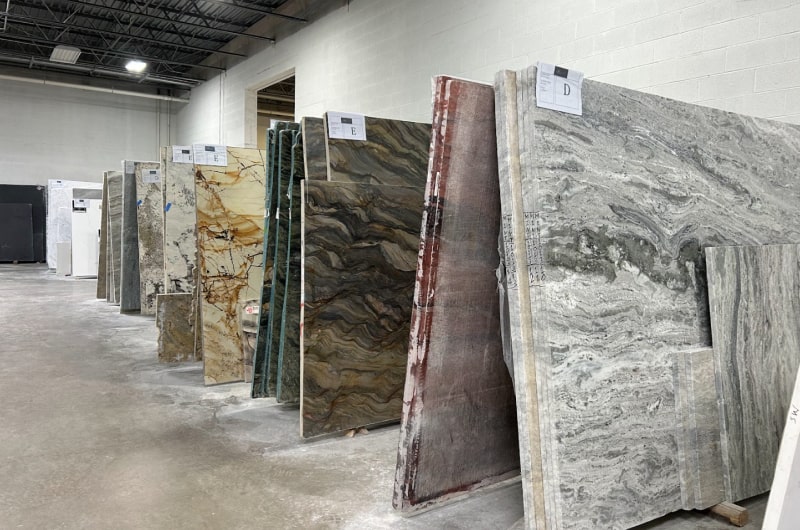
How to Choose the Right Slab?
You should not rely on just online samples. Go to the showroom. Since every slab is unique, you may start with multiple ones. The factor to consider is not only picking one that looks good. There are many more aspects to keep in mind before making any decision. Here, we provide a checklist that helps you in such a situation:
- View the complete slab instead of quickly purchasing by just seeing a sample.
- Check the slab under natural lighting.
- Match its undertones with your cabinets, flooring, and backsplash.
- Choose a pattern that does not hide due to your kitchen size.
- Compare polished, honed, and leathered finishes.
- Inspect the slab for excessive fissures or repairs.
- Ask about sealing and maintenance requirements.
- Confirm the slab thickness and edge profile.
- Try to purchase as many slabs as you need from the same batch.
- Work with an experienced fabricator and installer.
Visiting a reputable supplier like Royal Marble and Granite allows homeowners to compare full granite slabs before selecting the right fit for their project.