Home renovation and building are incomplete without countertops. With so many options available in the market, the question widely asked is which countertops can perform effectively. Taking this decision takes longer than you expect. Homeowners don’t select a surface randomly. They pick a stone that can withstand kitchen activities for decades. But the problem starts when a stone is given a unique appearance but not durability. And the other one is strong but not appealing enough to use for luxury kitchens. It’s the major concern. Therefore, today’s guide is compiled. It will guide you on the most demanding types of stone countertops. That will help you decide which one is worth investing in.
Granite Countertops
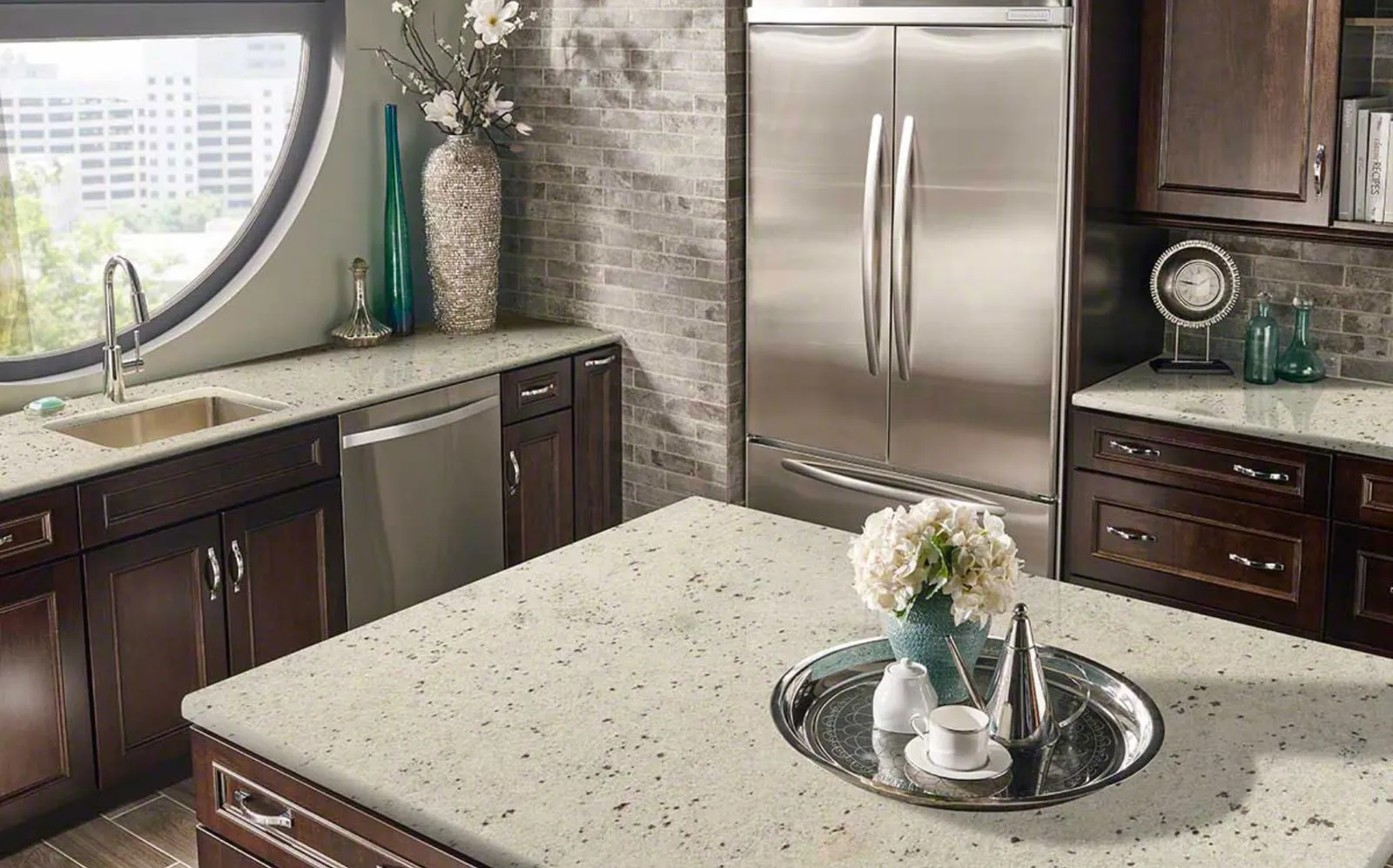
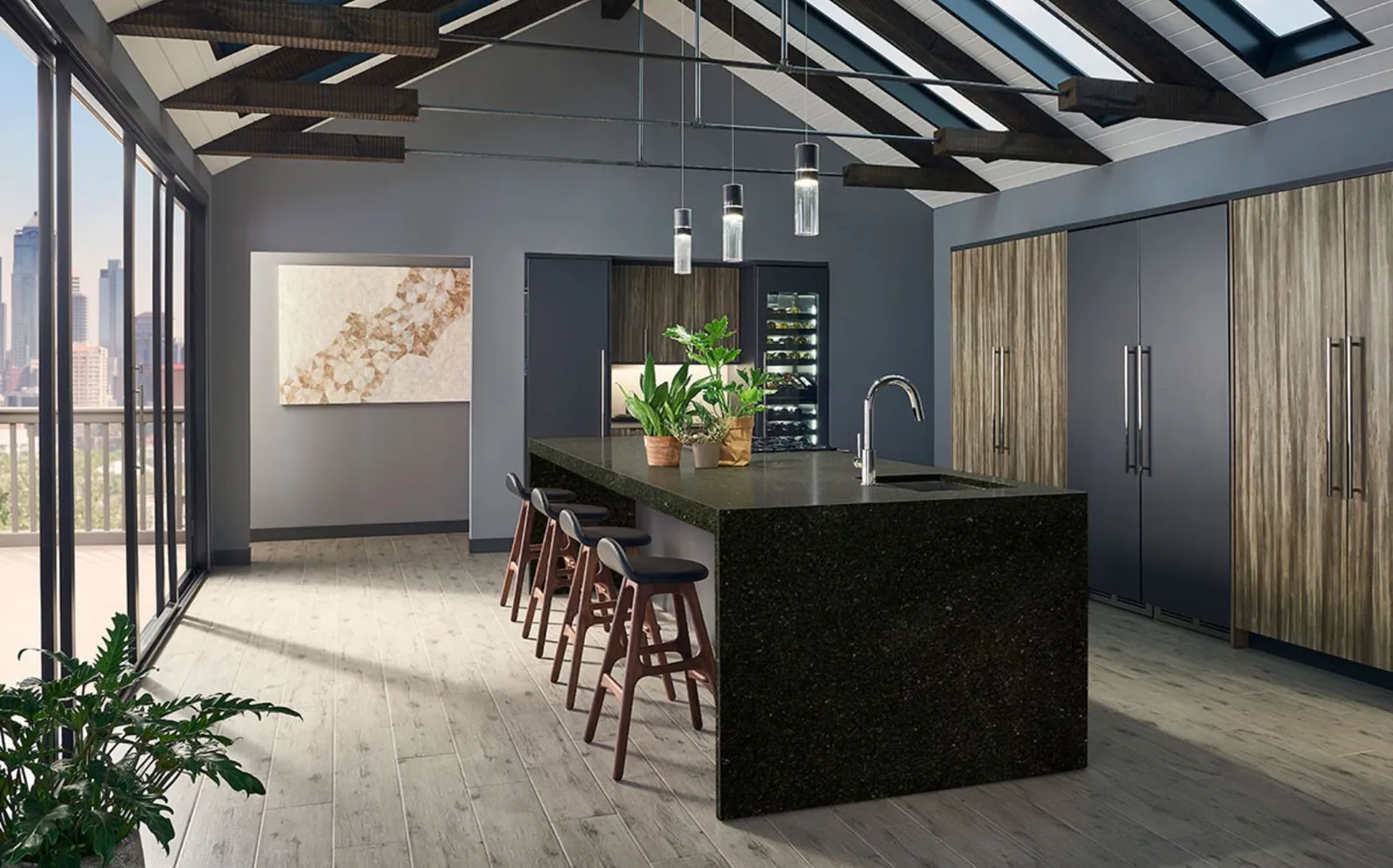
It is the first stone homeowners consider because of its unique, natural patterns and long-lasting durability. Its slabs don’t look the same because of inconsistent patterns. That makes each one unique from the others. It is a highly used stone in premium kitchens. You can get different colors of granite countertops, like neutral, dark, and bold, depending on the look you want to create.
This is what makes it naturally coordinate with different cabinets and designs. As of its solid material, you may need professional countertop installation to fit properly in the required area. Overall, it is best to pick because of its natural, unique appearance and top-notch durability.
Where it performs effectively:
- It can handle heat directly from pots and pans
- Highly resistant to scratches and everyday wear
- Best for high-traffic kitchens and bathroom areas
Where it needs to be improved:
- It’s a porous material, so it needs sealing once a year to resist stains
- Chips can pop up if something heavy hits the surfaces
- Inspect slabs before buying, as they can have natural fissures
Marble Countertops
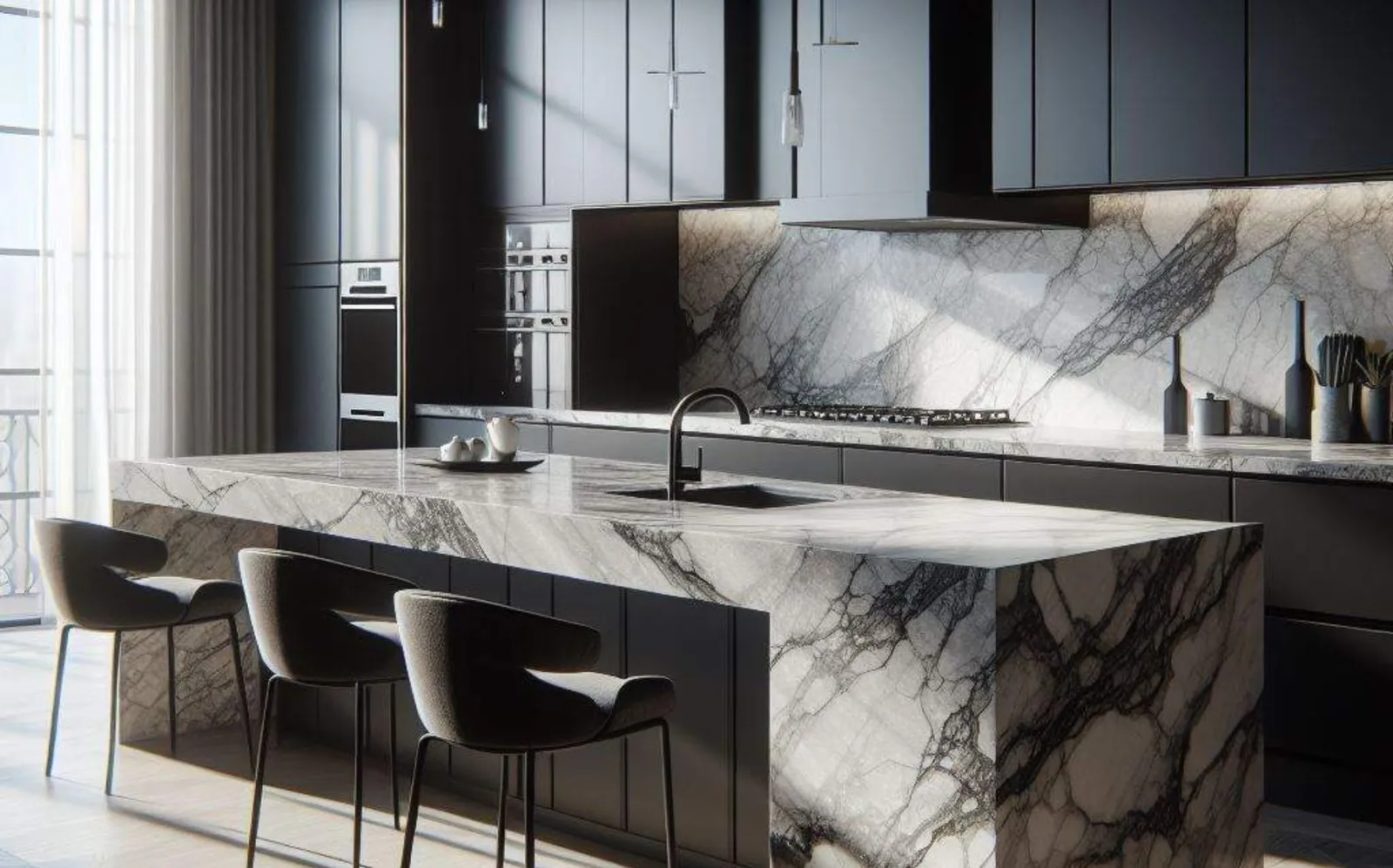
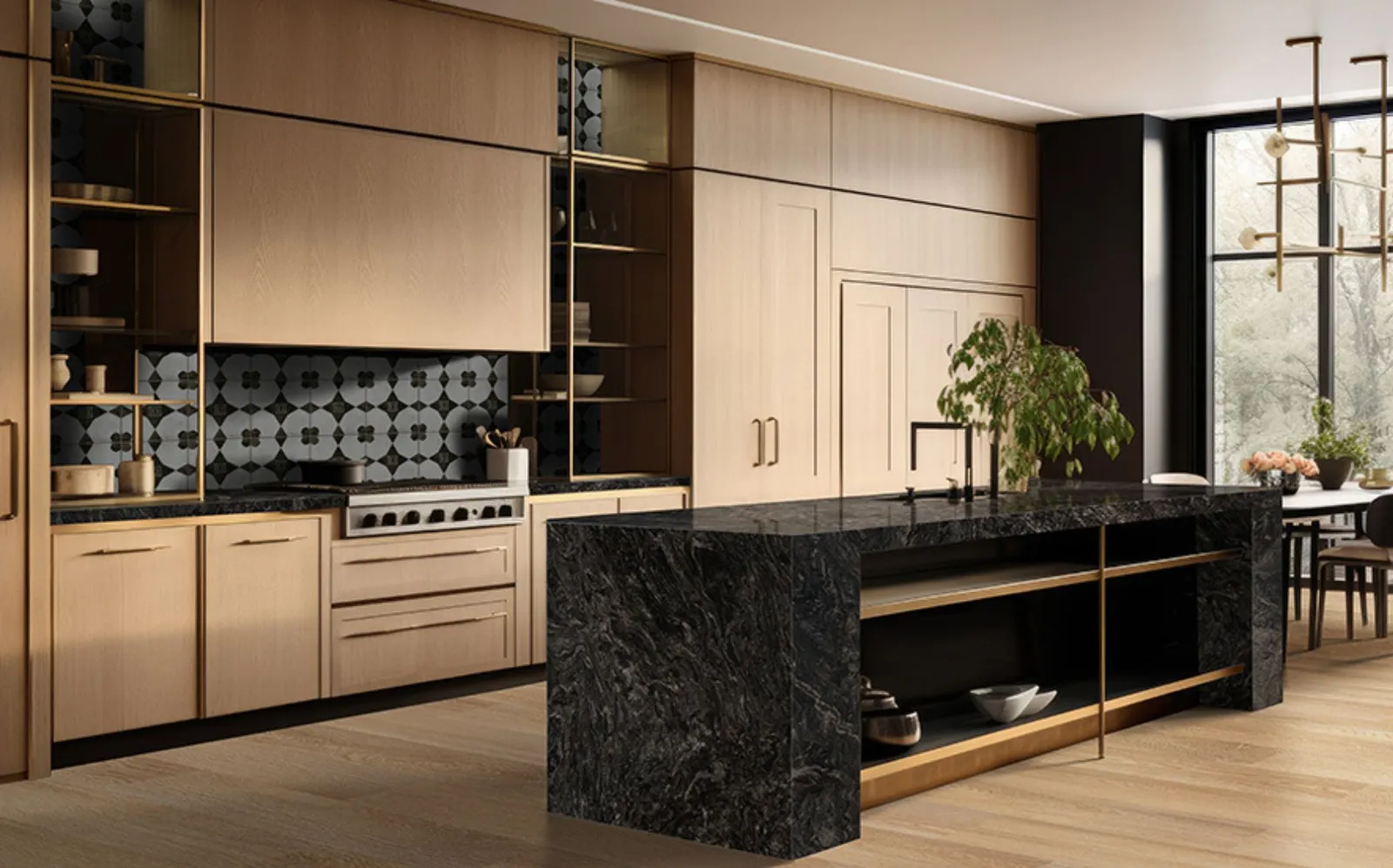
It is a metamorphic stone that has been used for years, mainly because of its classic, minimal look. This one is especially useful when the soft design and visuals are a priority. Homeowners and designers considered it for a clean, luxurious appearance. You can use it for kitchen or even bathroom countertops for a spa-like look.
Marble is known as a cooler stone. That is why it’s commonly seen in cooking areas, whether residential or commercial. Due to the bright, softer color, liquid spills and particle marks may become more visible over time.
Where it performs effectively:
- Its natural cooling nature makes it ideal for baking and pastry preparation areas.
- Marble can naturally pair with a range of surrounding elements.
- Best for variety of designs because it is available in a variety of veining patterns and colors.
Where it needs to be improved:
- Its slabs can show scratches and etches of acidic material
- As a natural stone, it requires periodic sealing to maintain its original form for longer
- It can hardly work for very high-traffic areas like flooring
Quartzite Countertops
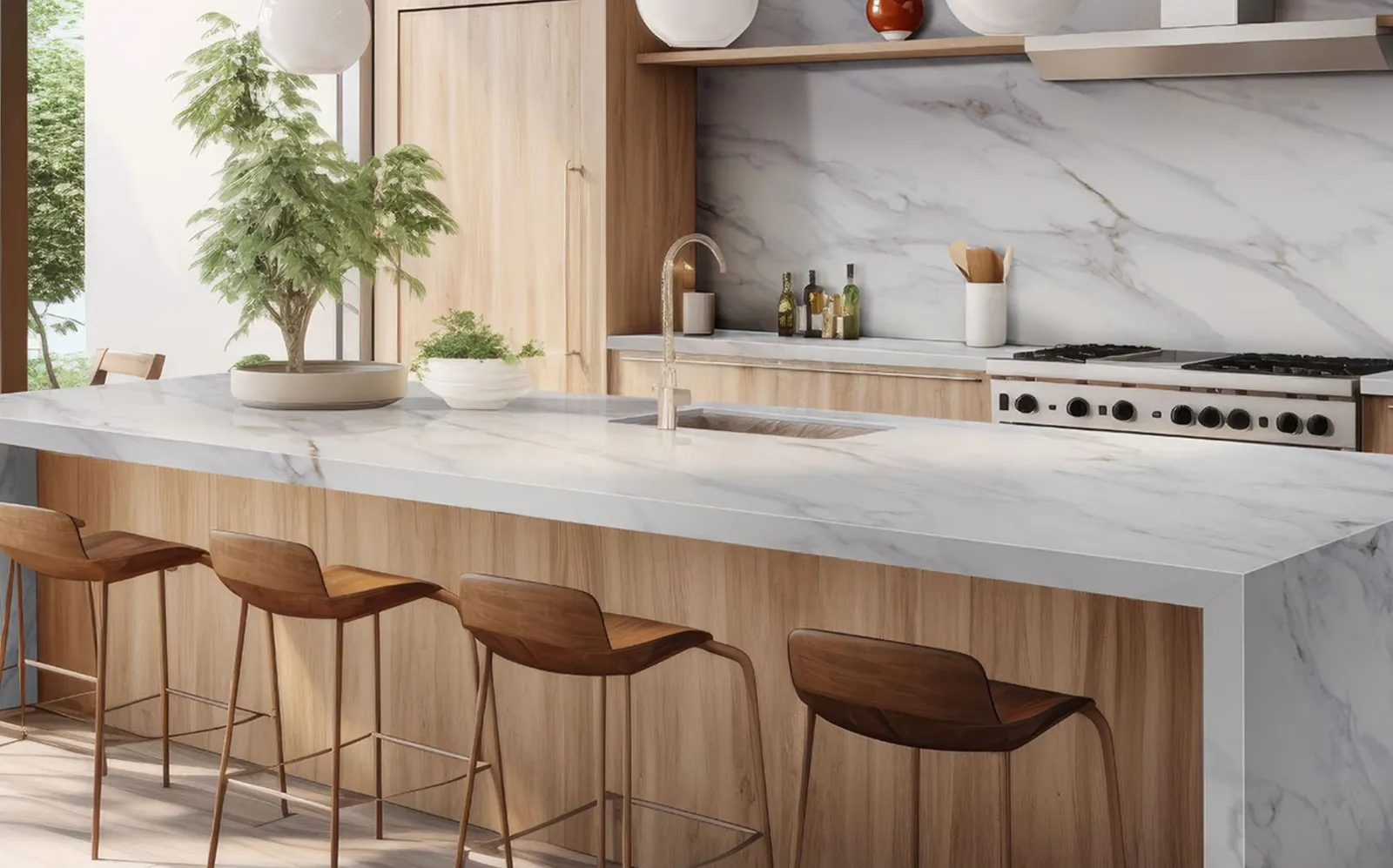
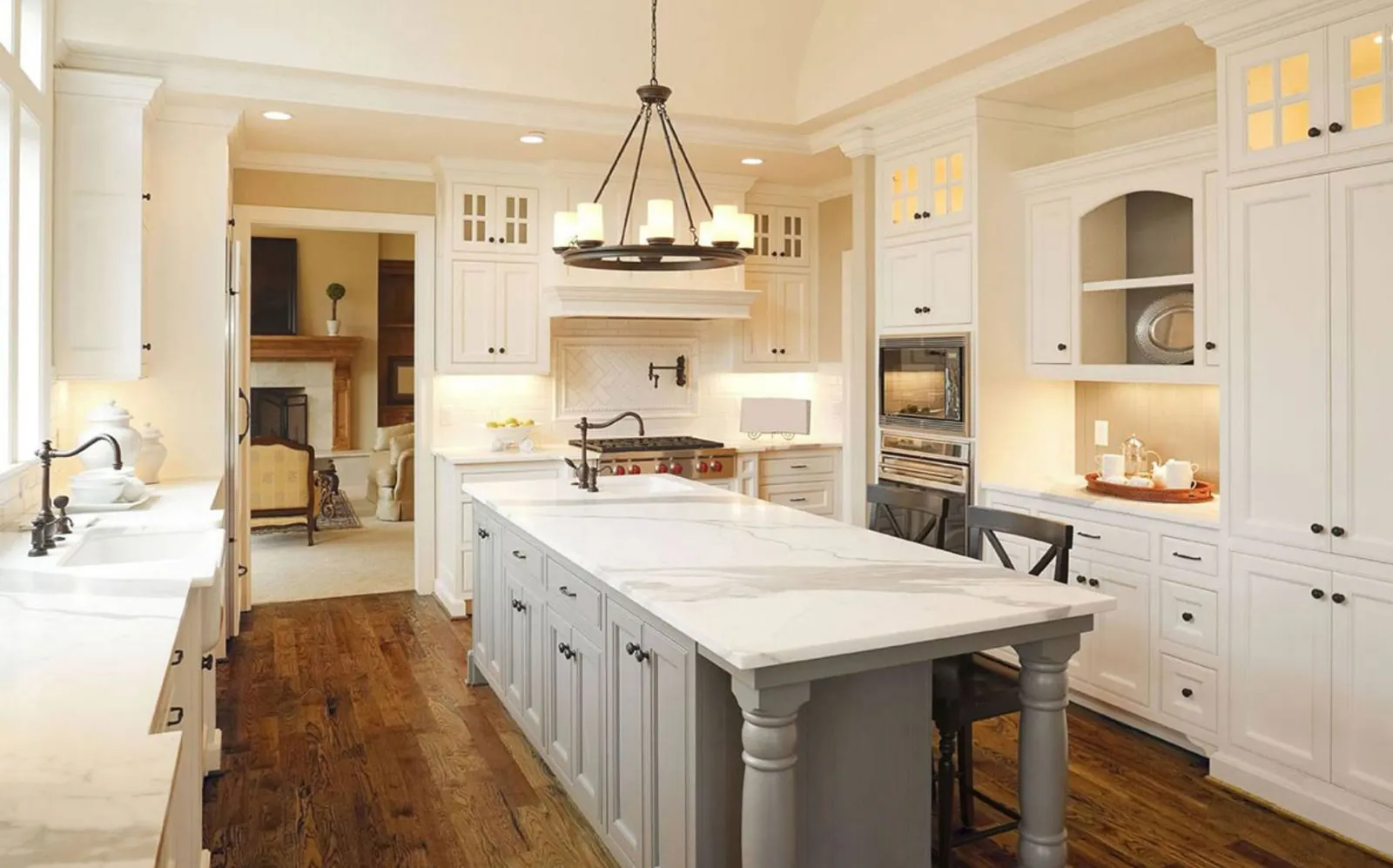
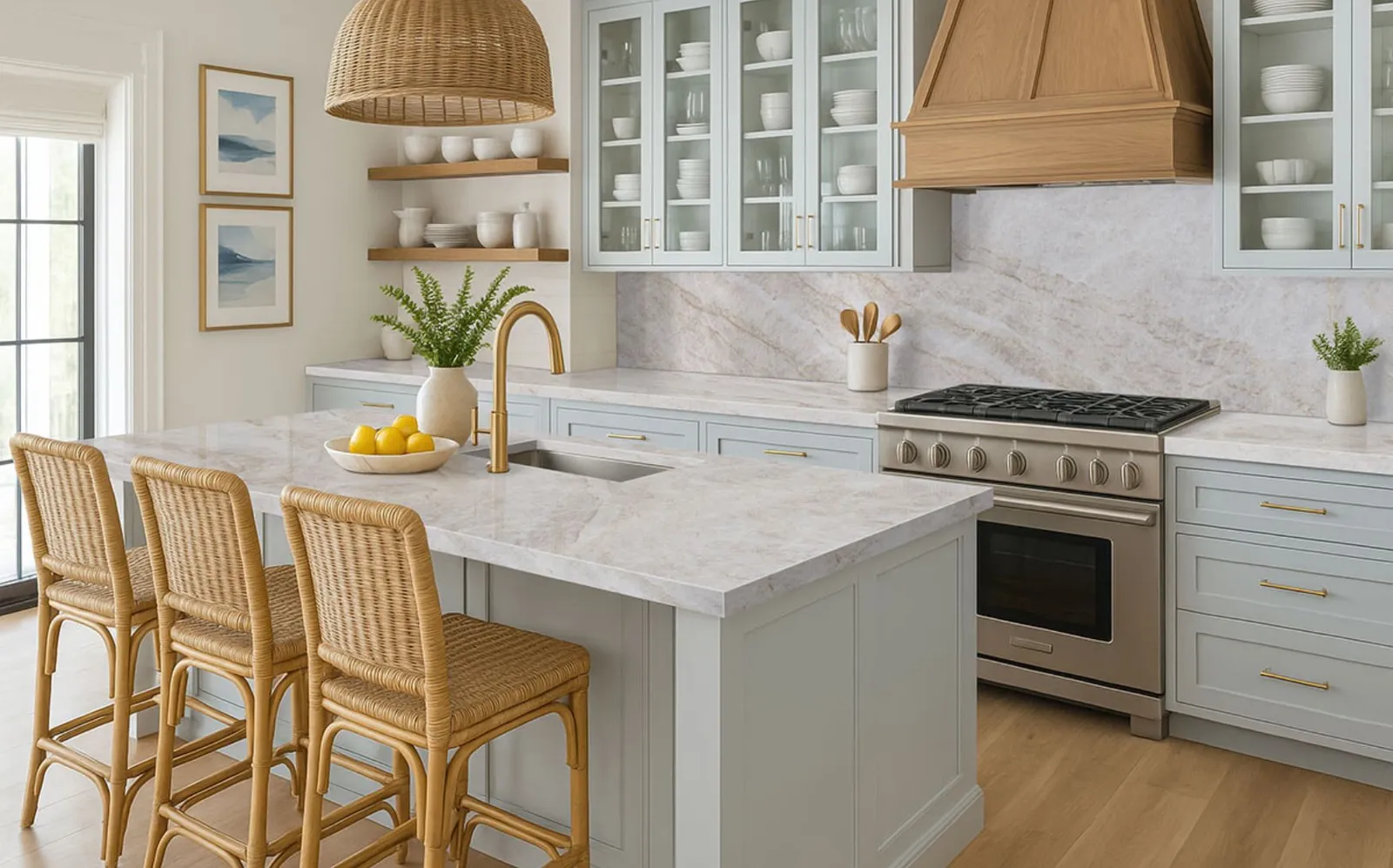
This natural stone forms under the earth’s heat and pressure, which is what makes it stronger. When homeowners want a marble-like appearance with functionality, designers suggest using Quartzite countertops. Quartzite comes in other variations as well, based on its composition.
So, you can choose which one is better suited to your place. For modern kitchens, pick minimal veining and light, elegant tones. Such slabs work perfectly in minimal or contemporary interiors and pair naturally with other items.
Where it performs effectively:
- Dense and more durable than marble
- Strong enough to bear heat without damage
- Stain-resistant compared to most natural stones
Where it needs to be improved:
- Needs sealing after a specific time to remain in its original form.
- High-quality slabs and rare variants can feel pricey.
- Slabs can be inconsistent in texture due to natural composition.
Soapstone Countertops
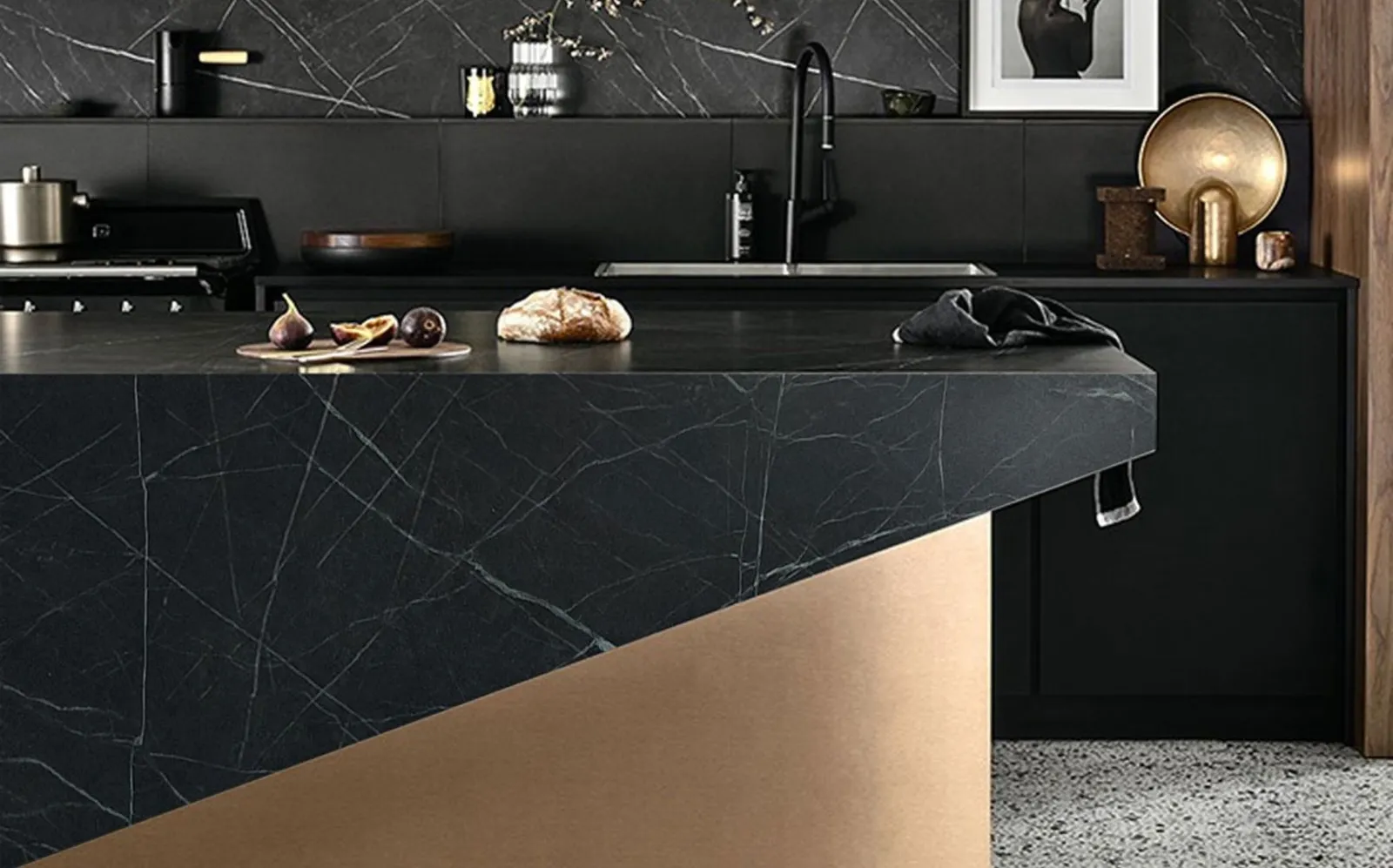
Soapstone is famous for its high talc content that gives it a soft, attractive appearance. It is mainly available in a variety of dark tones, including blue, grey, brown, and green. Therefore, this material is usually selected for luxury, contemporary designs. This material is not porous, unlike other metaphoric stones.
It’s the other reason that most homeowners choose it. They don’t have to seal surfaces after a particular time. Interestingly, it is also resistant to moisture and stains. That means it doesn’t need much maintenance. The Soapstone is commonly seen in farmhouse and traditional kitchen styles.
Where it performs effectively:
- Where the non-sealing surfaces are prioritized
- In matte and rough designs
- High-cooking spaces because of the heat-resistant feature
Where it needs to be improved:
- Limited color choices, commonly available in highly dark shades
- The surfaces may show patina if not used carefully
- Due to its softer nature, it can show scratches more easily if used in heavy-traffic areas
Limestone Countertops
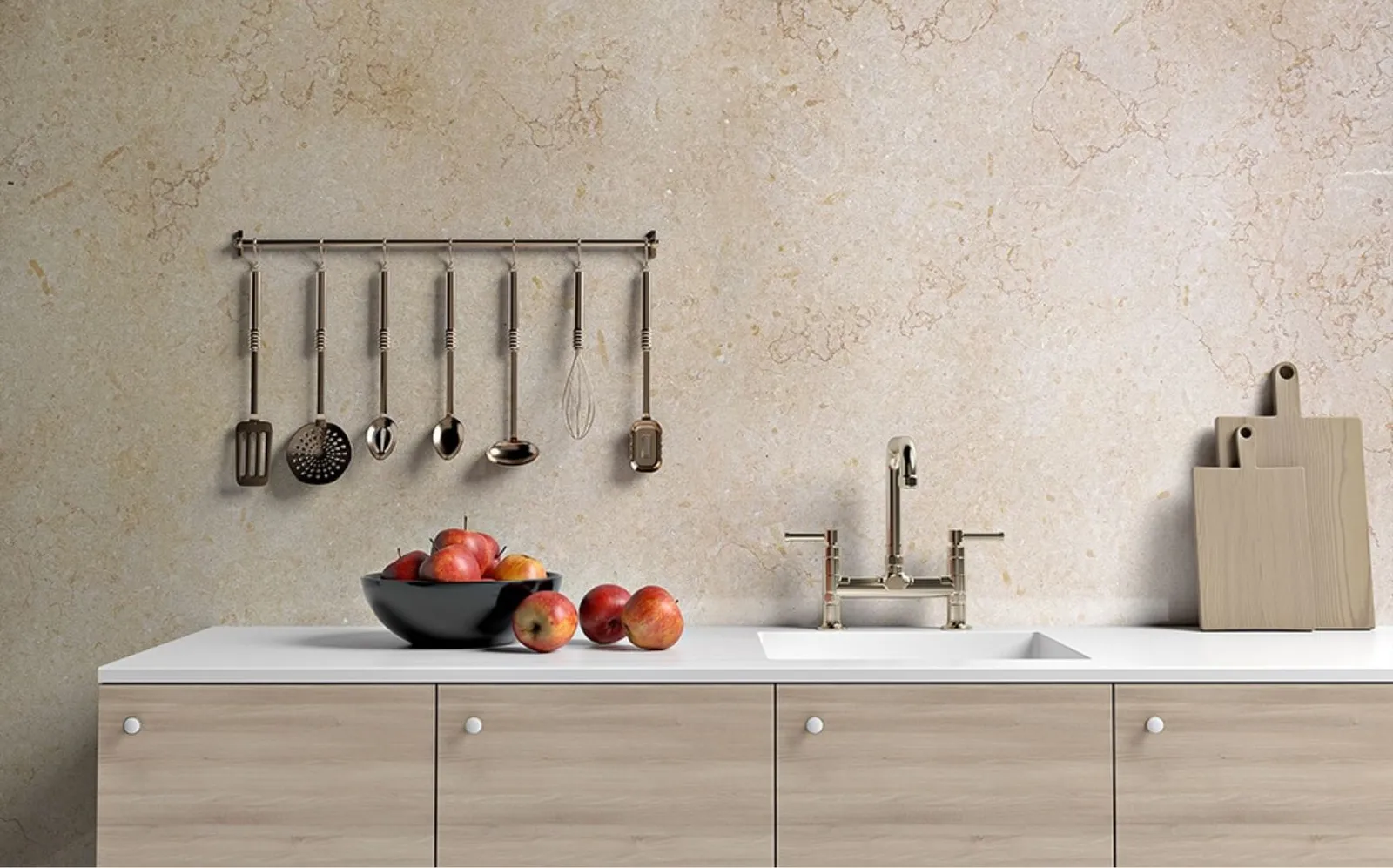
Limestone is a sedimentary rock that is commonly used in neutral kitchen designs. It performs well in areas where warm, relaxed visuals are needed. It is valued for its grounded beauty and the ability to create a soft look. Light veining makes its texture feel neutral. So, if you like classic elegance and minimal aesthetics, this stone countertop helps achieve that. As it is available in earthy, neutral tones, its worktops need to be cleaned properly.
Where it performs effectively:
- Best suited for traditional kitchens
- Unique natural texture that’s likely impossible to copy
- Relatively affordable compared to premium stones
Where it needs to be improved:
- Scratches, stains, and etches easily
- Requires sealing after a specific period and daily maintenance
- Not a very strong stone type for countertops compared to granite and marble
Travertine Countertops
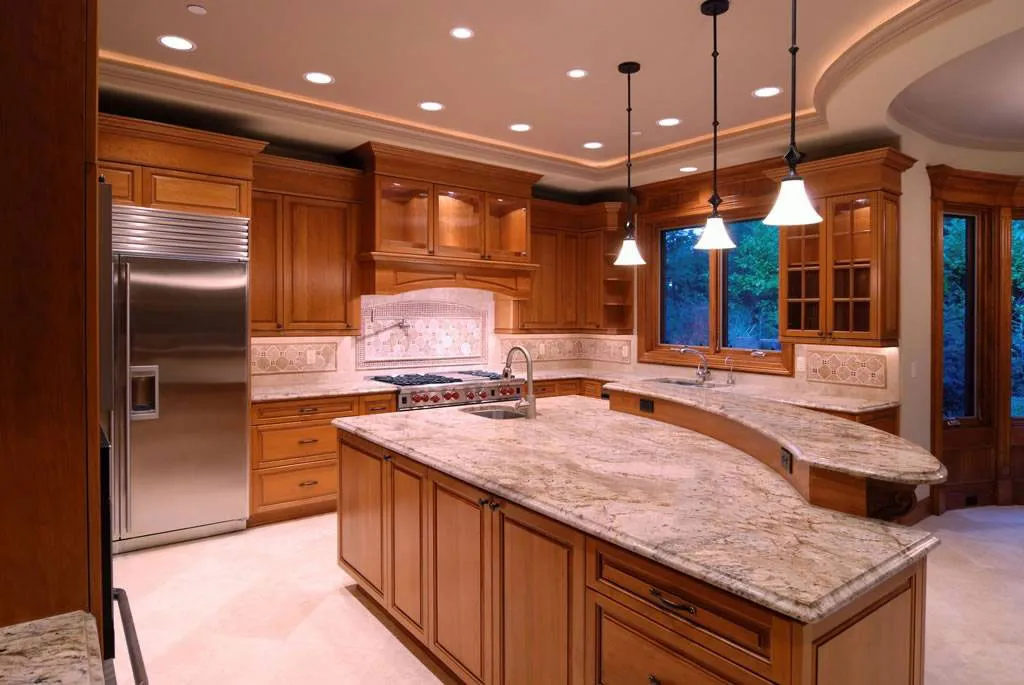
Travertine countertops work as a complementary element in warm, earthy, and Roman-like kitchens. Their natural texture enhances a natural feel and provides a relaxed appearance to the eye. So you can use this stone in kitchen designs that need vintage and earthy charm.
Moreover, its patterns are usually not similar to each other. Small holes and movement of patterns on the surface give each slab a unique touch. As these surfaces require maintenance, they work better in kitchens where daily activities are lower. This showcases that homeowners choose these worktops mainly for creating a particular appearance.
Where it performs effectively:
- Kitchen and bathrooms with a warm, classic aesthetic
- In traditional designs and old interiors
- Spaces that prefer less care
Where it needs to be improved:
- Liquid can seep in if the surface has porosity, which leads to the growth of bacteria
- Need to take care and seal periodically
- Sensitive to acidic substances
Onyx Countertops
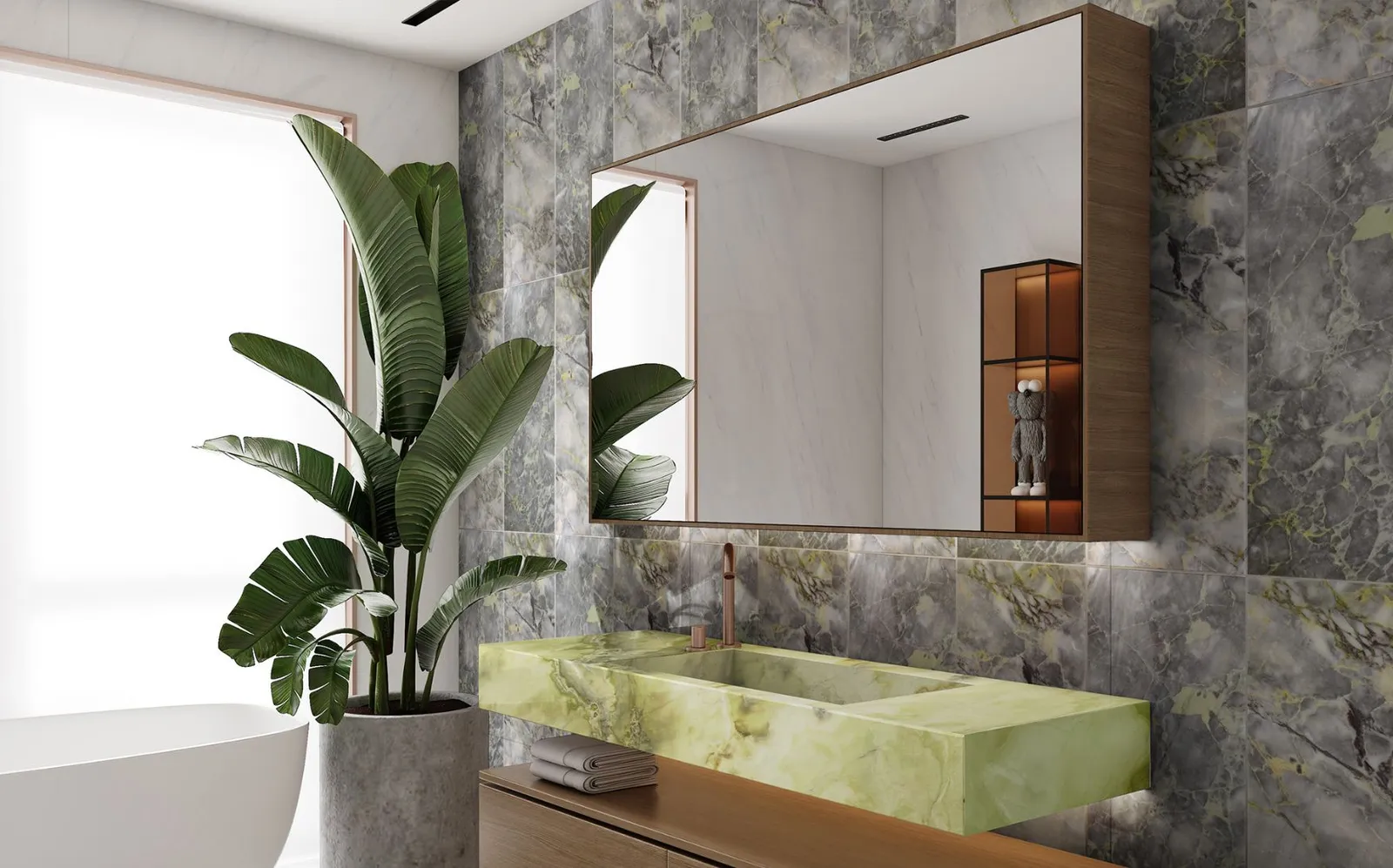
This countertop material is often seen in luxurious houses for translucent beauty and dramatic, attractive veining. It is a rare stone that comes in different colors, ranging from bright to dark shades. Onyx countertops totally transform the space’s appearance. The basic kitchen becomes more appealing when light passes through it. This makes different material parts and veining brighter and more prominent.
Although it is a softer and porous material, its eye-catching patterns and rarity make it a premium stone. Many homeowners choose it when inspired by the way it interacts with light. This translucent nature encourages more homeowners to use it, especially in statement kitchens or luxury interiors.
Where it performs effectively:
- Kitchen islands or bar tops where visual impact matters
- Decorative walls and feature areas enhanced with lighting
- Low-use areas where style is more important than daily tasks
Where it needs to be improved:
- Most sensitive stone on this list
- Easily affected by acidic spills, which should be cleaned quickly to maintain the original condition
- Not ideal for busy kitchens, but performs well in light-use areas like vanities or bar worktops
How to Choose the Right Stone for Your Space
No stone is universally best because each one has its limitations and strengths. You have to go through the important factors first to determine which is best suited to your needs.
- First of all, consider how much the stone will have to function daily.
- Then, ask yourself, how much care can you give them?
- Think, can you periodically seal surfaces?
- Durability level is not an exception. Analyze how strong and durable a material you need. This way, you can ensure the countertops can perform effectively in the spaces where you expect. You can pick softer slabs for decorative spaces and durable ones for more functional and usage areas.
When you are sure about such essentials, the chance of selecting the right stone increases.
Cost Comparison: Which Stone Fits Your Budget?
Now, you may be wondering which one aligns with your budget range, right? The following cost comparison table can help you find a stone in your budget range.
| Stone Type | Material Cost (per sq ft) | Installed Cost (per sq ft) | Maintenance | Overall Value |
| Granite | $15–$50 | $40–$100 | Need to seal once a year. | Great for everyday use in the kitchen |
| Marble | $20–$60 | $50–$150 | High maintenance required | Worth it if maintained |
| Quartzite | $30–$70 | $60–$120 | Periodic sealing is important | Strong long-term investment |
| Soapstone | $25–$55 | $50–$100 | Don’t ask for much care | Underrated value |
| Slate | $20–$50 | $40–$90 | Very low — no sealing needed | Budget-friendly and tough |
| Limestone | $15–$45 | $35–$85 | Frequent sealing | Only if you love the look |
| Travertine | $15–$45 | $35–$80 | Fill and seal regularly | Good if properly maintained |
| Onyx | $40–$120 | $80–$200 | Sealing needs to avoid moisture and permanent stains | Ideal choice for luxury/statement designs |
Stone Types Countertops FAQS
Below are the answers to commonly asked questions of our customers:
Will my stone countertop look exactly like the sample I picked?
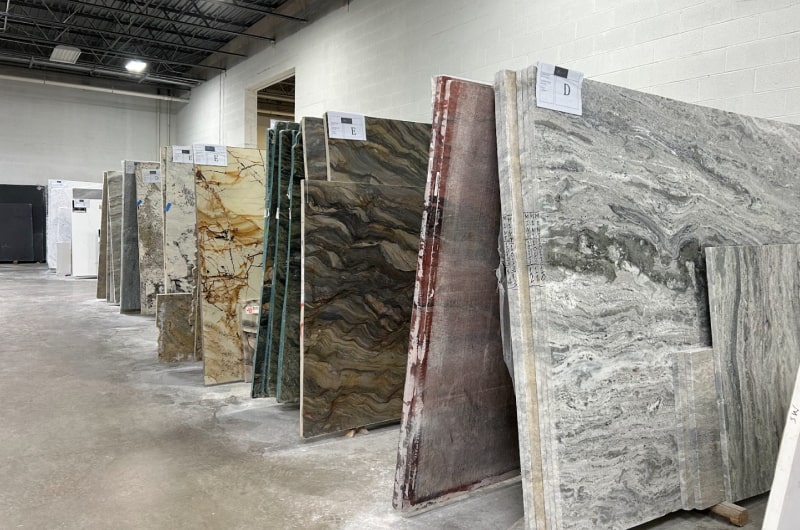
No, natural stone slabs don’t look the same because of veining. Therefore, the color may vary slightly, but the patterns can hardly be the same as the sample. It’s better to see the slabs that are being used in the project before approving.
Are there seams in stone countertops?
Yes, seams appear on countertops, no matter what the stone type is. The visibility may be lessened but not entirely. A skilled fabricator knows how to place slabs where they remain noticeable.
How do I know if my countertop needs resealing?
It’s too easy to observe when countertops need resealing. When you feel like the liquid is seeping into the surface, it’s resealing time. Many stones need it after 6 or 12 months, depending on usage.
Can stone countertops be repaired if chipped or cracked?
Yes, you can repair the affected part using a mix of epoxy and ground-up stone chips. Such methods are only helpful when the damage is minor. Otherwise, you have to consult with a professional, as a specific slab may need to be replaced.
Is it safe to use stone countertops for food preparation?
Yes, you can do food preparation tasks on countertops without stressing about health threats. According to the study, none of the resources mentioned anything regarding this. But you have to be careful about the cleaning products being used. They should not be toxic or harsh.
Final Words
It concludes that the type of stone for countertops significantly depends on the look, functionality, and longevity you want. If your kitchen is used heavily daily, granite, quartzite, or slate are best. You can choose whichever one feels complementary and attractive as a countertop. They don’t require much care. Consider marble if you like something minimal, soft, and don’t mind the upkeep required for retaining its natural charm. But if you don’t have much time to clean regularly and want a natural stone, turn to soapstone. Personally, I like Onyx more in the list, which really deserves praise. This one is often used in contemporary and statement designs.
Regret does not feel when you pick the “wrong” stone. It comes when you realize you did not get enough details before buying. At Royal Marble and Granite NJ, homeowners often explore different stone countertop options based on durability, appearance, and long-term practicality.