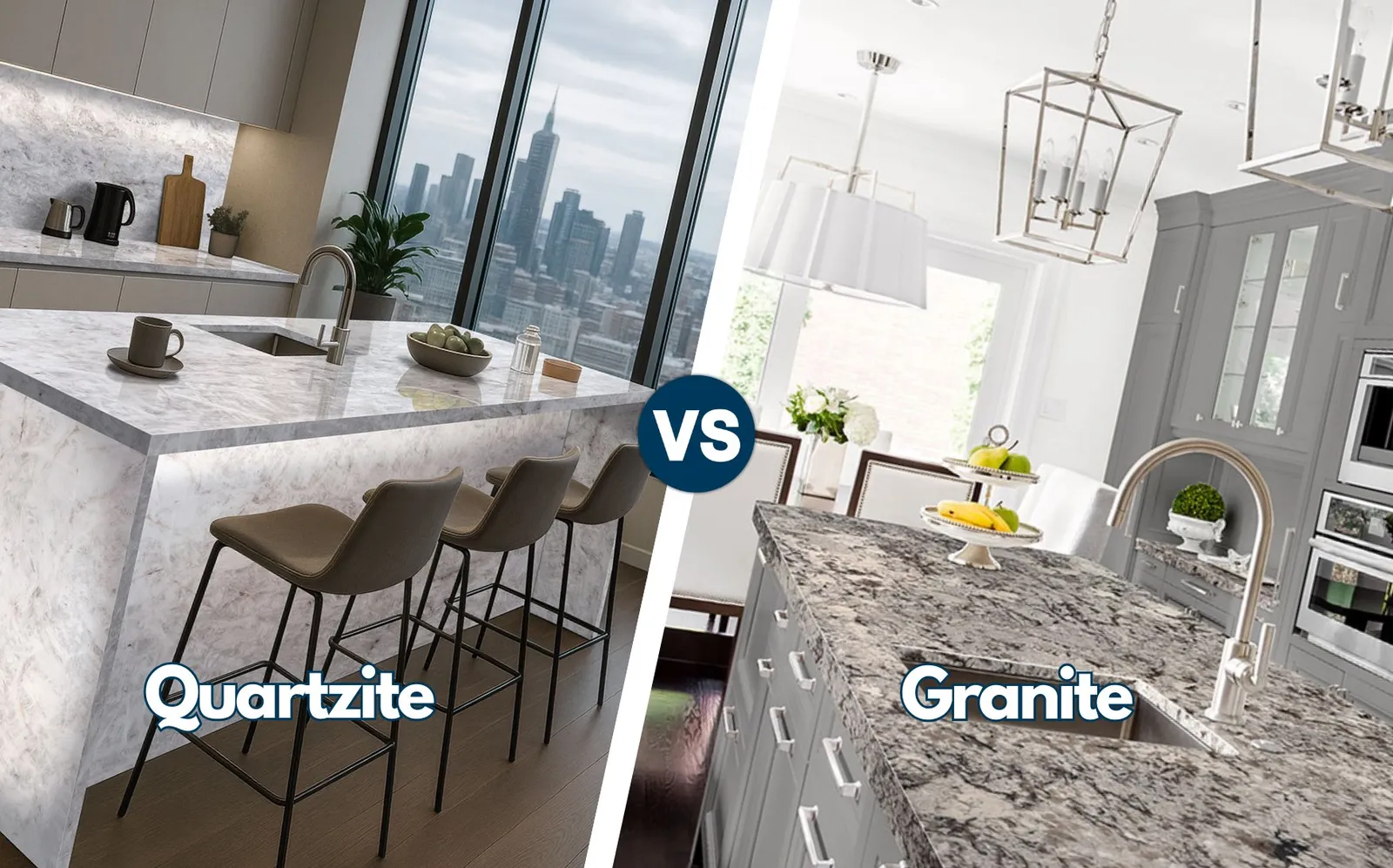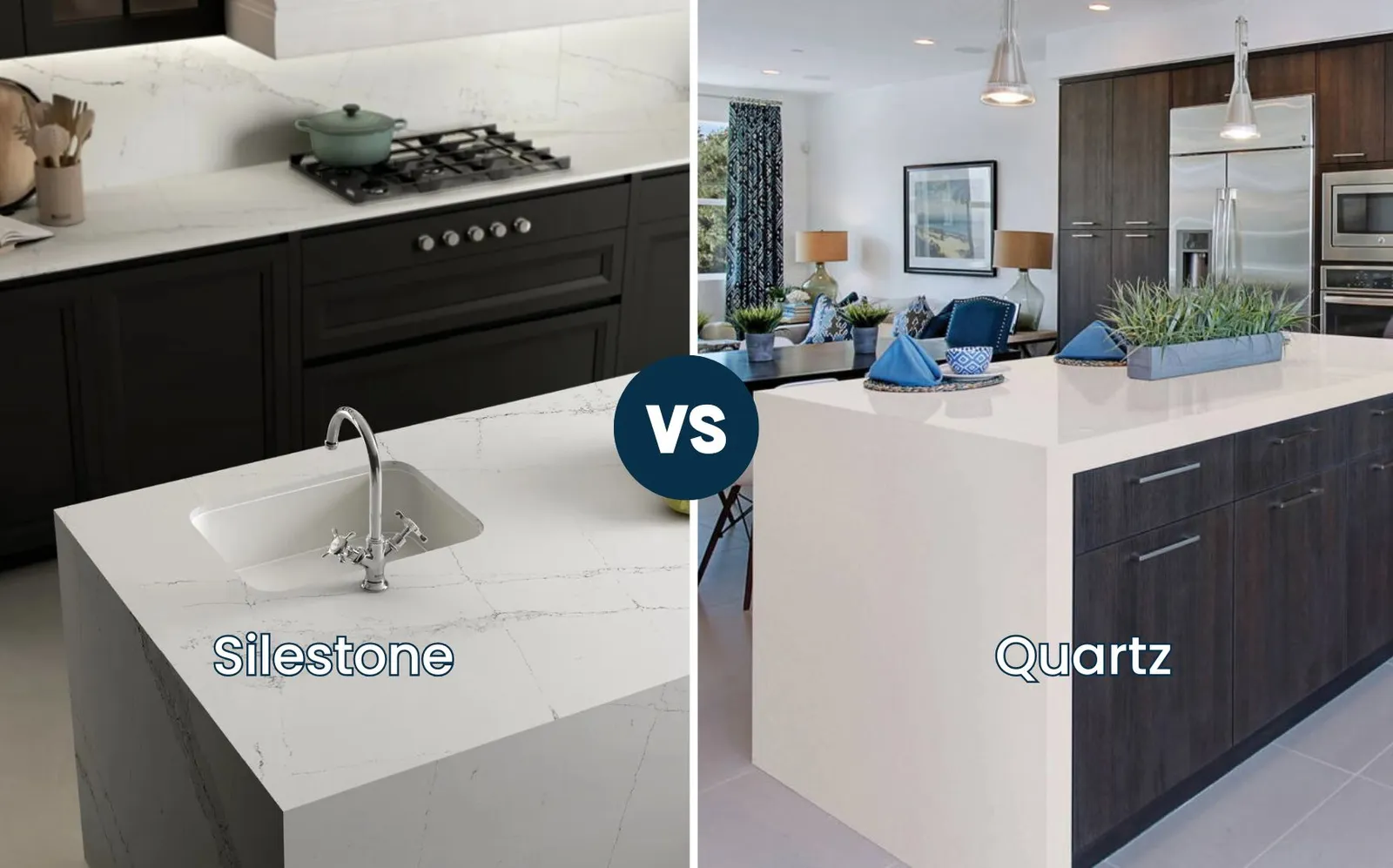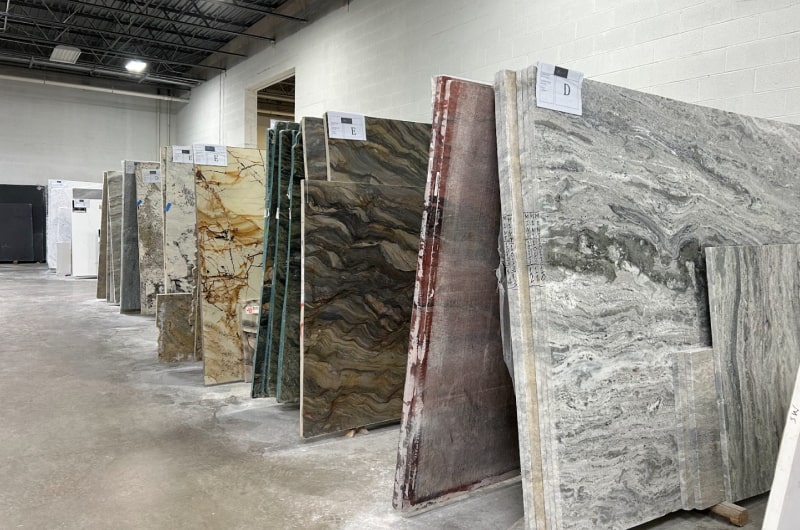
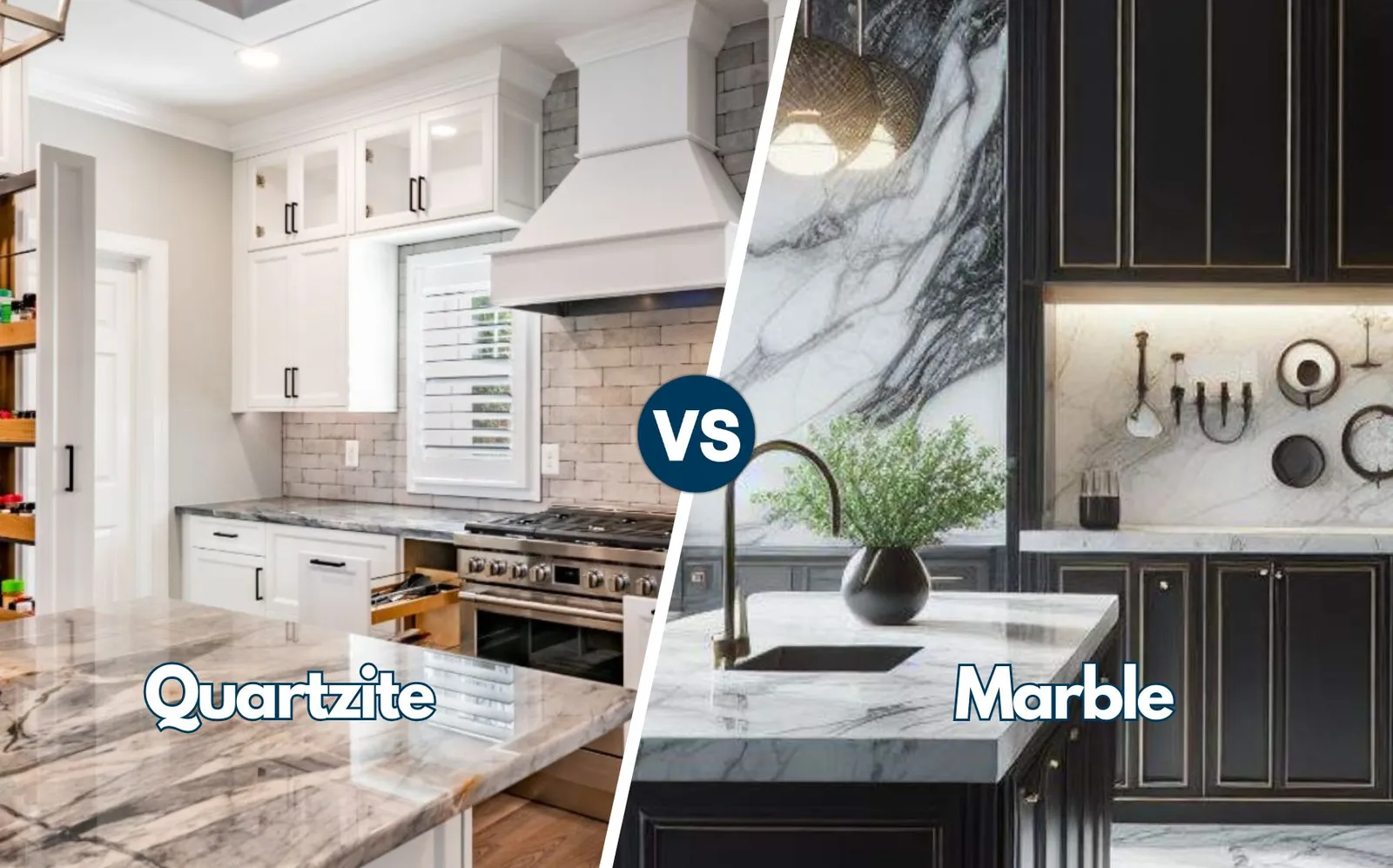
In a showroom, if Quartzite and marble are placed together, homeowners often take them as the same stone. Even if they look similar, there are many other differences between them. They are among the most popular natural stones, often chosen for countertops, backsplashes, and other interior surfaces. Knowing the differences helps you determine which aligns with your taste, budget, and needs. This guide has covered all major aspects that differentiate marble and quartzite.
Quick Comparison: Quartzite Vs Marble
Below is a comparison of quartzite and marble that quickly tells the differences this article covers:
| Property | Quartzite | Marble |
| Rock Type | Metamorphic (from sandstone) | Metamorphic (from limestone) |
| Primary Composition | Quartz (SiO₂) 90% to 99% | Calcium Carbonate (CaCO₃) 75% to 99% |
| Mohs Hardness | 7 to 7.5 | 3 to 4 |
| Scratch Resistance | Excellent, can resist knife scratches | Poor, scratches easily with a knife |
| Acid Resistance | Great, does not etch with it | Poor, can be etched by acids (lemon, wine, vinegar) |
| Porosity | Low (0.1% to 0.4%) | Moderate to High (0.2% to 0.5%+) |
| Water Absorption | Minimal | Moderate |
| Stain Resistance | Good (when sealed) | Poor to Fair (even when sealed) |
| Heat Resistance | Excellent | Good |
| Durability | Very high, can last decades in original condition | Moderate, develops patina over time |
| Sealing Frequency | Once per year | Every 6 to 12 months |
| Maintenance Level | Low | High |
| Veining Pattern | Sharp, bold, and angular | Soft, flowing, and organic |
| Color Range | White, gray, pink, gold, and blue-gray | White, cream, gray, green, and black |
| Surface Finish | Often has subtle sparkle | Smooth, soft appearance |
| Weight (per sq ft, 3cm) | 20 to 22 lbs | 18 to 20 lbs |
| Density | 2.65 to 2.7 g/cm³ | Approximately 2.7 g/cm³ |
| Cost with installation | $60 to $200+ per sq ft | $50 to $300+ per sq ft |
| Best For | Busy kitchens, high-traffic areas, outdoor use | Bathrooms, decorative features, low-traffic areas |
| Common Issues | Looks like marble | Etching, staining, scratching |
| Cleaning Products | Dish soap and other household cleaners are enough | pH-neutral cleaners only |
Formation of Quartzite Vs Marble
When limestone is buried deep under the earth in heat and pressure over millions of years, marble forms. During this process, the calcium carbonate in the limestone recrystallizes. This is how the distinctive veining and elegant patterns are created that make marble recognizable. Marble remains softer than quartzite as it forms in moderate heat and pressure.
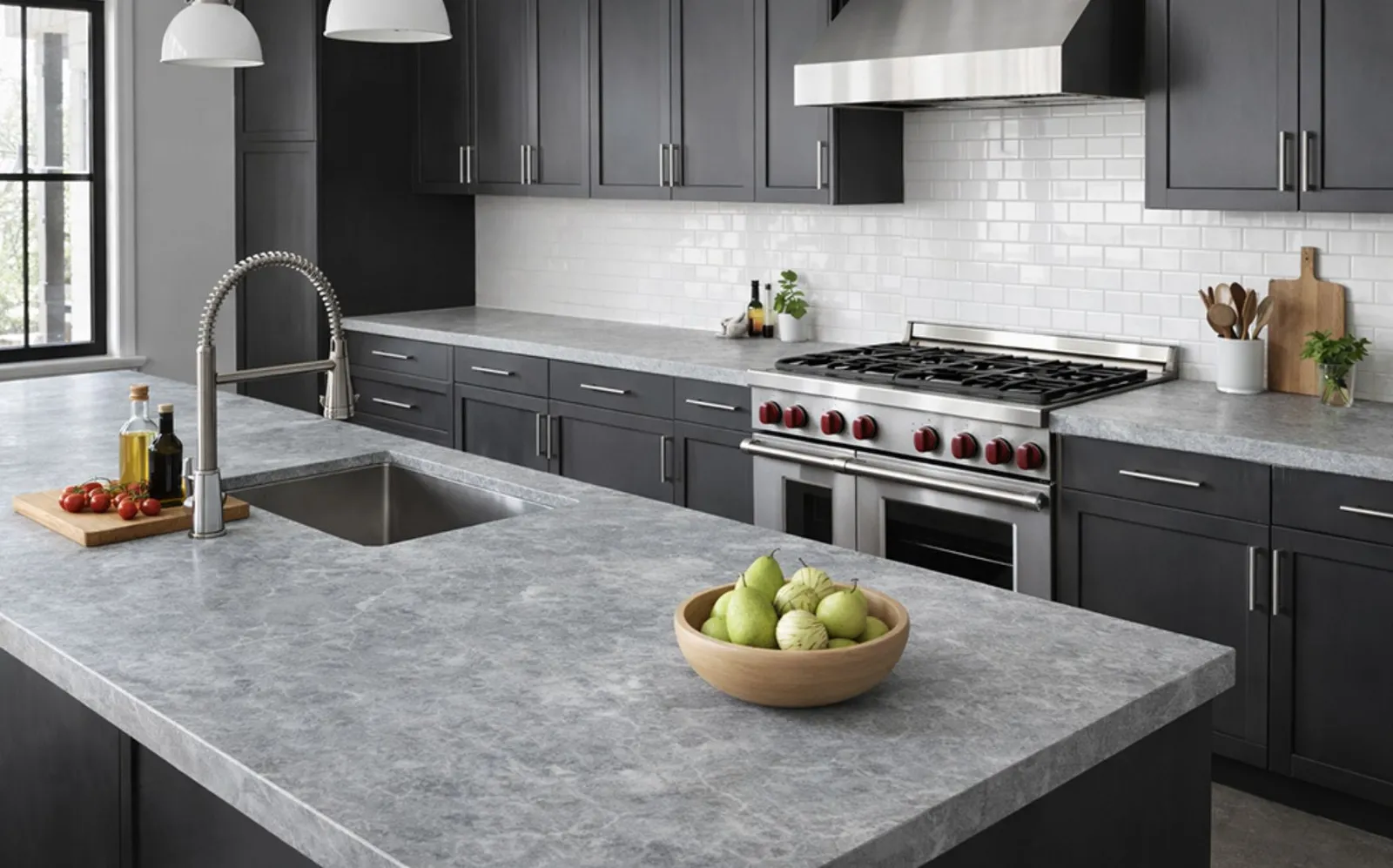
Quartzite also takes millions of years for formation, but the process happens on sandstone, not limestone. Sandstone is a metamorphic rock that is made of quartz sand. It passes through excessive heat and pressure. During this time, the quartz grains recrystallize and accumulate together, forming dense, solid rock named quartzite. This crystal structure is what gives quartzite exceptional hardness, strength, and durability.
Quartzite Vs Marble Composition
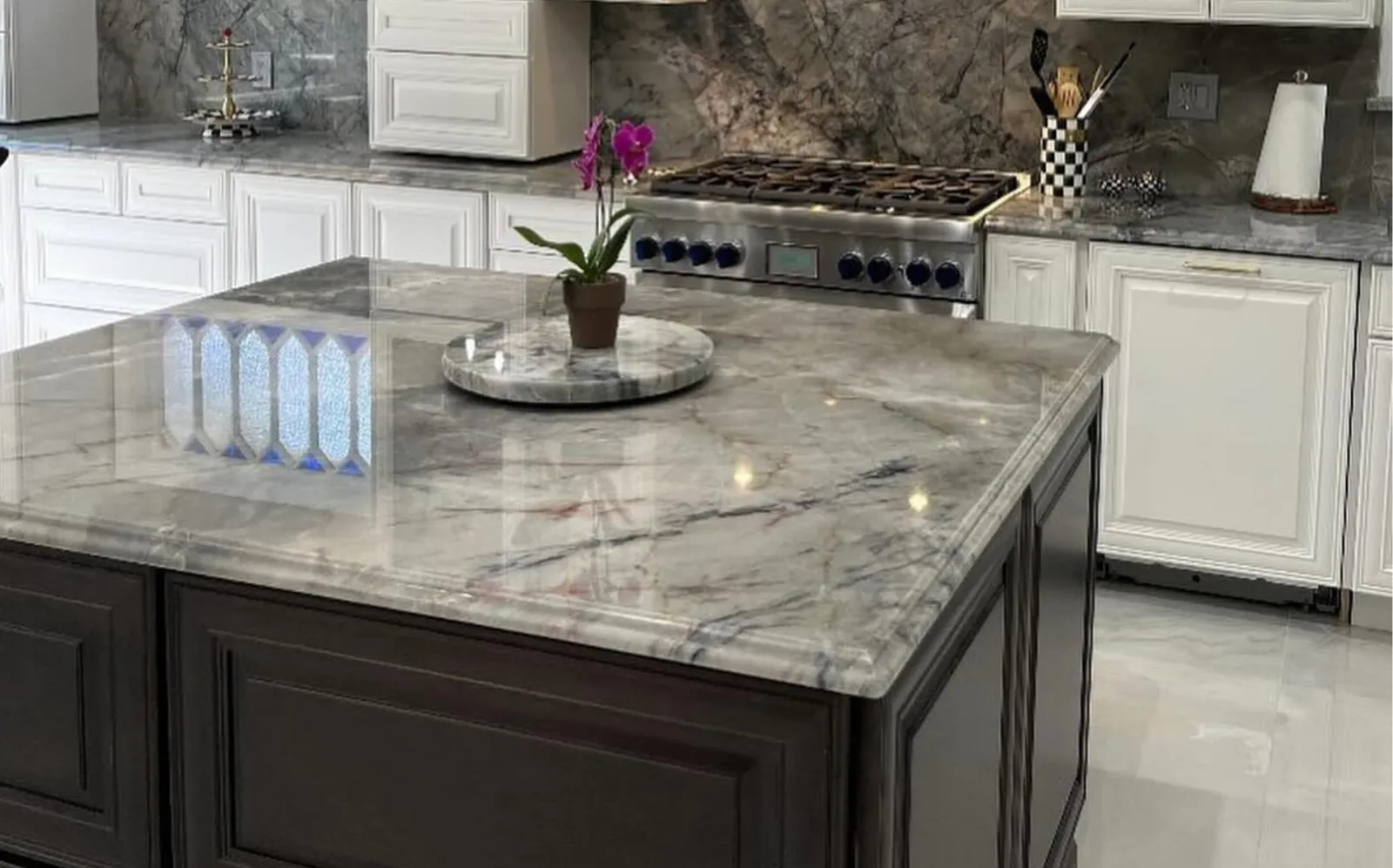
At the start, the marble is calcium carbonate (CaCO₃). This is the same element that makes limestone, chalk, and seashells. In the overall composition, the quantity of calcium carbonate is 75% to 99%, and the rest consists of other minerals. These minerals give marble unique veining and color variation.
Quartzite is almost pure quartz (SiO₂). This element is about 90% to 99% in the quartzite composition. It is the hardest and most abundant mineral on Earth. The remaining percentage usually consists of minerals. For example, iron oxide creates a pink, red, or rusty tone, while mica adds a subtle sparkling effect.
Hardness and Durability Difference Between Quartzite and Marble
Whether choosing for countertops, backsplashes, or other applications, the material should be hard and durable to withstand daily use.
Marble falls around 3 to 4 on the Mohs hardness scale. This means it is not a very dense solid material, so it is not usually considered suitable for high-traffic areas. Marble can chip and scratch due to its lower durability.
On the other hand, Quartzite ranks 7 on the Mohs scale, or sometimes reaches 7.5. It is harder because it is exposed to high heat and temperature when under the Earth. You can pick it for counters, often used every day. It does not scratch or chip easily.
Quartzite Vs Marble Porosity & Absorption
Marble has a moderate to high porosity level. Meaning, some varieties may be more porous than others. Since the porosity varies by type, most marble has a water absorption rate between 0.2% and 0.5%. If the marble is softer, it can absorb even more. Without sealing, the tiny pores on the surface work as sponges when soaking liquid.
Quartzite is less porous, typically under 0.4% and sometimes 0.1%. The strong structure of quartzite has less space for liquid to penetrate. The liquid may not absorb as quickly as on marble. Many homeowners ask, does quartzite stain? While quartzite is naturally more stain-resistant than marble because of its low porosity, it is not completely stain-proof. Spills such as coffee, wine, or oil can still cause stains if left on an unsealed surface for too long.
Sealing Requirements of Marble Vs Quartzite
Marble requires sealing to lower porosity. Some marble countertops require sealing after 6 months, or some only once a year. This depends on marble type and how it is used. Sealing works as a protective layer that fills the pores and provides temporary prevention against staining. The sealer gradually wears off when cleaned and used on a daily basis.
Thanks to quartzite’s lower porosity. It needs sealing once a year or sometimes more frequently, depending on structure and usage. The lower the porosity, the longer the sealing lasts. Fortunately, if it is highly dense, it can also go easily 2 to 3 years without sealing.
The Acid Effect: Etching Behavior Distinction
Marble reacts with acidic substances like lemon juice, vinegar, wine, tomato sauce, and most soft drinks. They chemically react with the calcium carbonate. Dull spots are created when acids dissolve on the surface. This is etching, not staining, so the solution is not sealing. The acid can go through the sealer and still attack the stone itself.
Quartzite does not react with acid and is a chemically stable material. You can test this by pouring lemon juice on quartzite. Nothing will happen to the stone’s surface. No reaction, no dissolution; quartzite countertops remain the same.
This small difference tells you how to use each stone in daily life.
Visual Characteristics of Marble Vs Quartzite
Colors range from pure white (like Thassos) to cream (Crema Marfil), grey (Carrara), green (Verde Guatemala), and black (Nero Marquina). The veining comes from mineral impurities that were present during formation.
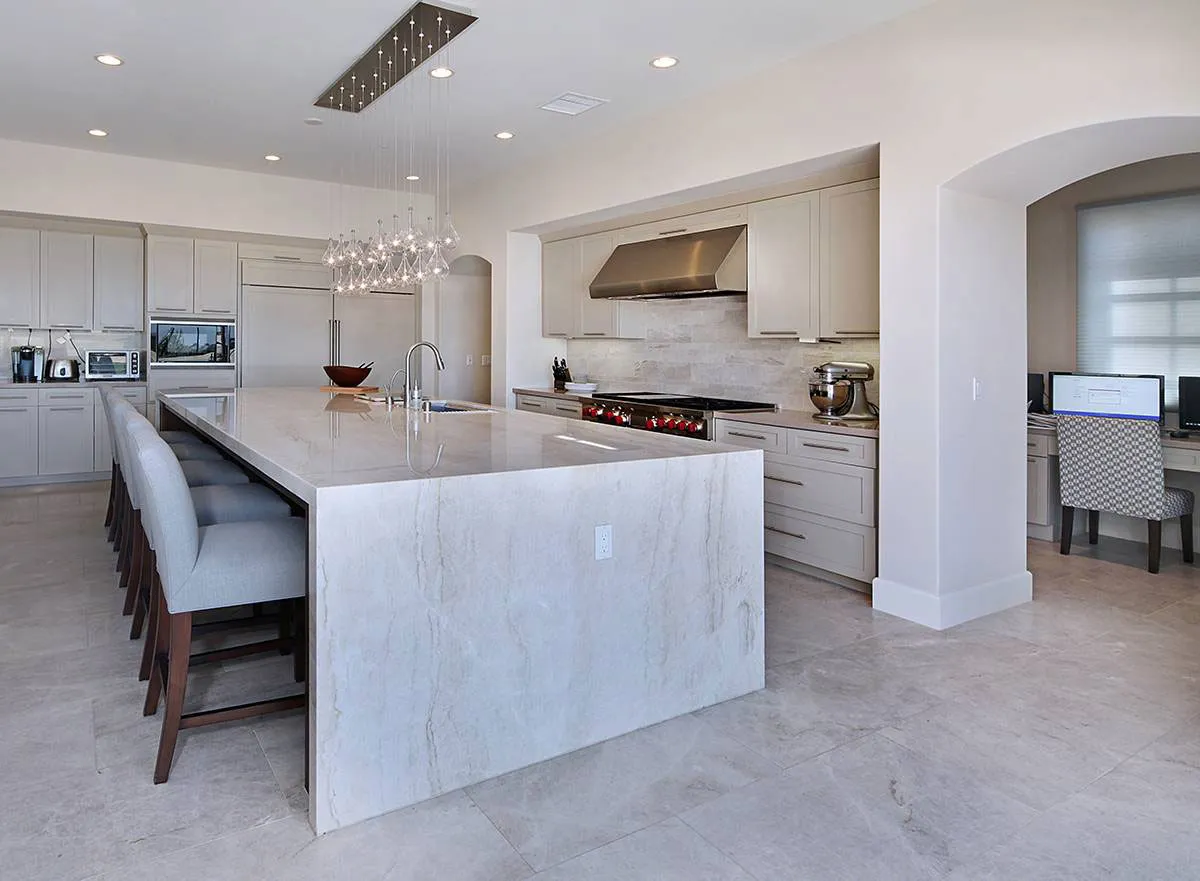
The veins on marble countertops are softer and more flowing. They often look like wisps of smoke or flowing water frozen in stone. The appealing texture attracts the viewers at first glance. Its color ranges from pure white (like Thassos) to cream (Crema Marfil), grey (Carrara), green (Verde Guatemala), and black (Nero Marquina). It brings elegance and a classical look to the kitchen.
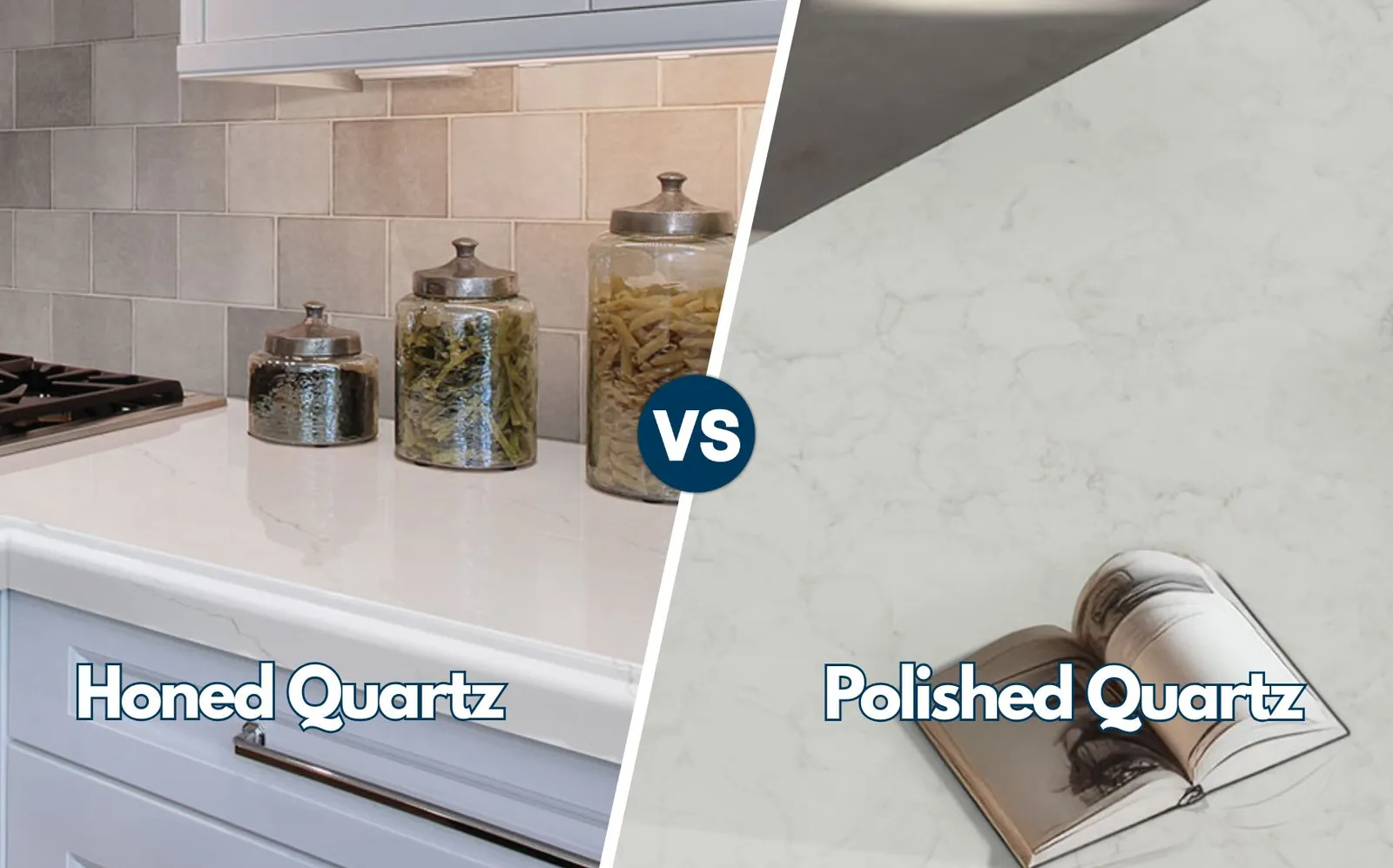
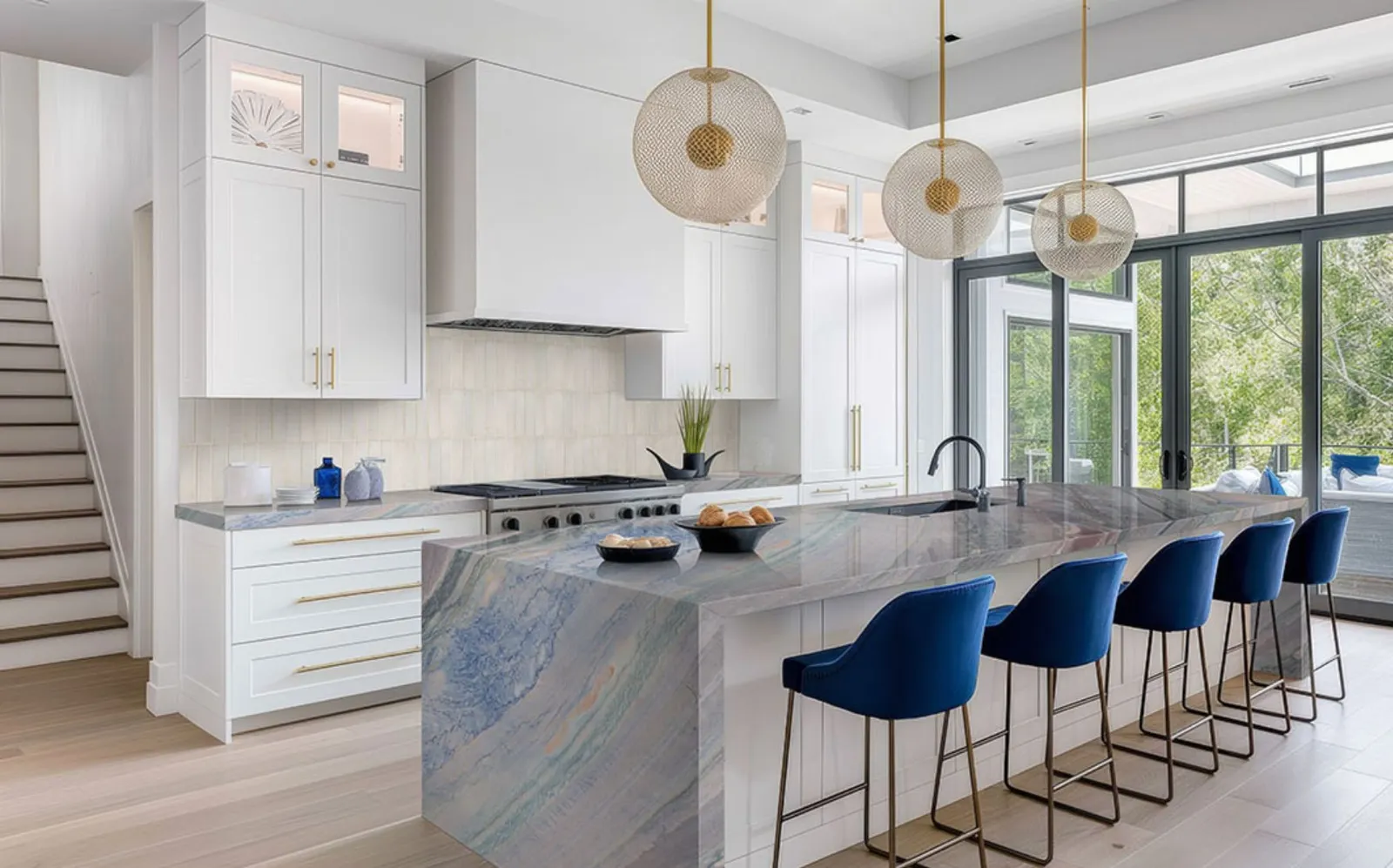
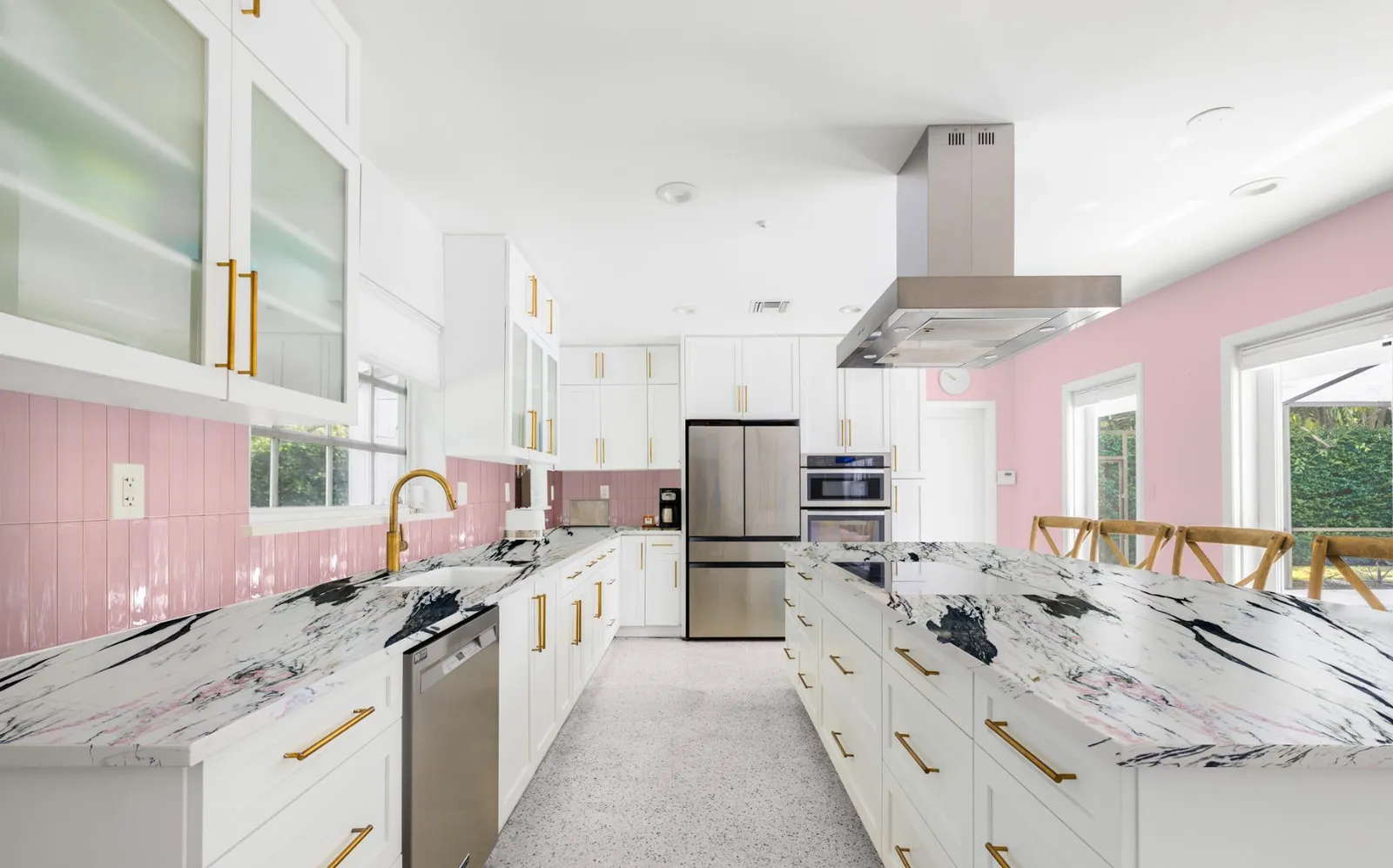
Quartzite that looks like marble has bolder, sharper patterns. The veining seems dramatic. Varieties that mimic a marble-like appearance include Taj Mahal quartzite and Sea Pearl. Interestingly, you have the option to choose among eye-catching colors, like pink tones, old streaks, or even blue-grey coloring. Some quartzite varieties have a subtle sparkle as their quartz crystals naturally reflect light. Honed quartzite offers a matte finish that creates a softer appearance while maintaining the same durability as polished quartzite.
Quartzite Heat Resistance Vs Marble
Marble is a good heat-resistant material. It does not get affected by hot pans or cookware. But it is not strong enough to withstand daily heat temperatures. Sudden temperature changes can cause thermal shock that further leads to cracks.
Quartzite prevents heat much better than marble. The tightly bound quartz structure can handle high temperatures without damage. The risk of thermal shock is lower. Its surfaces can tolerate the placement of hot cookware. Yet, using trivets is recommended.
Lifespan and Longevity
Marble can show patina over time, which enhances its look. After years, the surface becomes dull, small scratches accumulate, and etching marks build up. Some homeowners like this when it ages. It develops a unique character and sense of history. A few may not like this. If you are one of them, simply turn to quartzite.
Quartzite does not have patina. It remains unchanged for longer. The harder the surface, the lower the chance of scratches and etching. It can remain the same after 20 years as on the first day if you properly maintain it. The wear pattern is slightly visible on these surfaces even in a high-traffic kitchen.
Cost
The cost of a stone includes more pricing aspects than just the initial cost. Therefore, the table below is crafted to compare prices of both stones side-by-side:
| Cost Factor | Quartzite | Marble |
| Basic/Common Varieties | $60 to $90 per sq ft | $50 to $100 per sq ft |
| Mid-Range Options | $90 to $130 per sq ft | $100 to $150 per sq ft |
| Premium/Exotic Slabs | $150 to $200+ per sq ft | $150 to $300+ per sq ft |
| Material Cost Only | $40 to $100 per sq ft | $35 to $150 per sq ft |
| Fabrication & Installation | $30 to $50 per sq ft | $30 to $50 per sq ft |
| Edge Profile (upgraded) | $10 to $30 per linear ft | $10 to $30 per linear ft |
| Cutouts (sink, cooktop) | $100 to $200 each | $100 to $200 each |
| Sealing (initial) | Usually included | Usually included |
| Annual Sealing Cost | $100 to $300 | $150 to $400 |
| Typical Kitchen (40 sq ft) | $2,400 to $8,000+ | $2,000 to $12,000+ |
Marble countertop installation costs vary based on slab size, edge profiles, cutouts, and the complexity of the project.
Maintenance Differences
Marble is a high-maintenance stone. For daily cleaning, you need pH-neutral cleaners only. Wiping can be done with water and mild soap. If you are wondering how to clean marble countertops, this simple cleaning method is the safest option. Acidic or alkaline cleaners harshly damage the surface. The spills may be more visible, so they need to be cleaned quickly. Professional polishing every few years helps restore the surface after etching. Plus, you have to use them so carefully and avoid placing heavy objects on them.
Quartzite is a low-maintenance stone compared to marble. You can simply clean its countertops with dish soap and water without buying any special cleaner. Although it has more strength, you should still adopt care habits for it.
The daily reality of living with each stone differs significantly.
Common Applications
Marble is usually used for bathrooms, fireplace surrounds, floors in low-traffic areas, wall cladding, and decorative applications. You can consider it for kitchens, but it requires owners who maintain it properly. If we look at its history, marble has been used for sculpture and architecture for thousands of years.
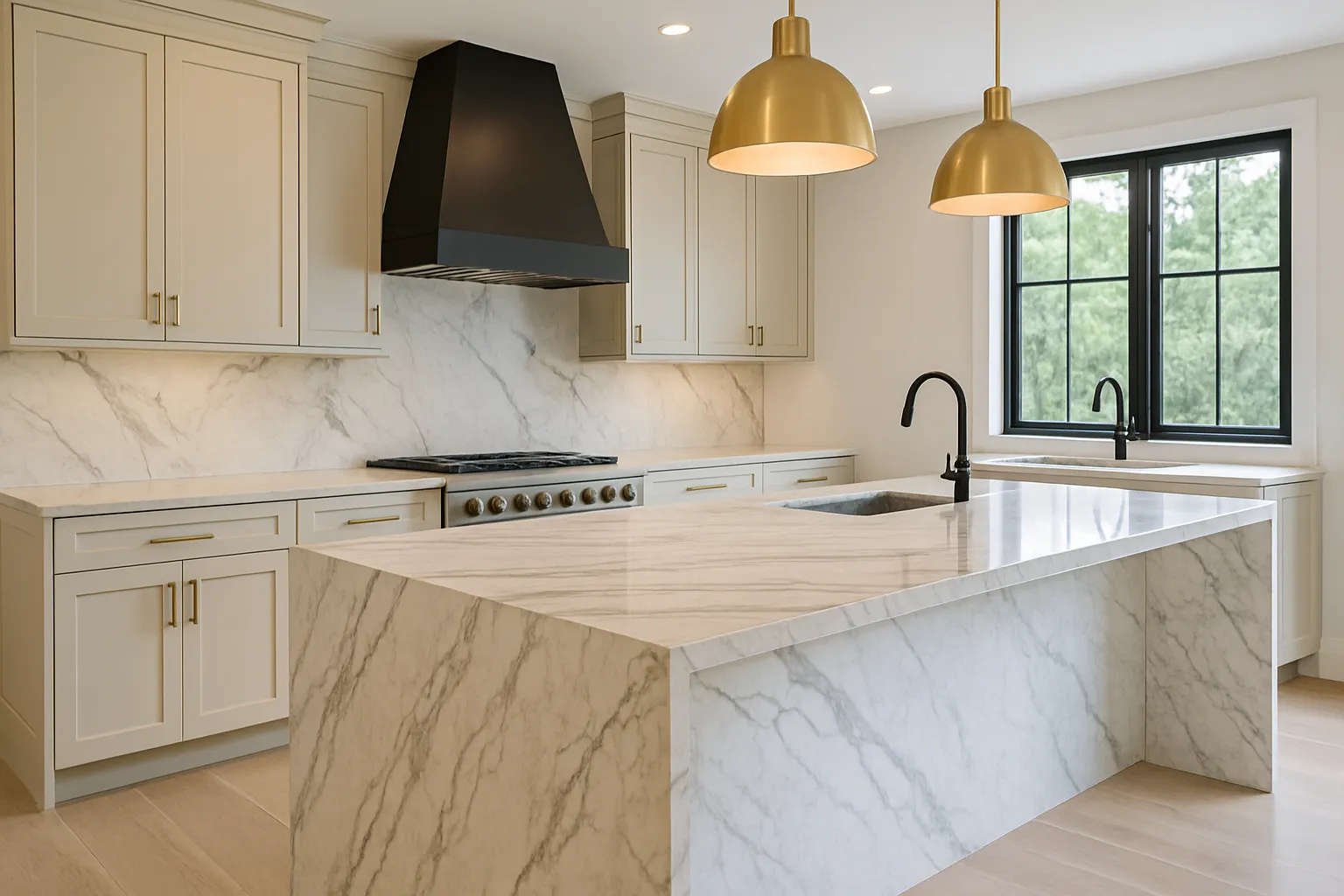
Quartzite works well for kitchen countertops, outdoor applications, high-traffic floors, shower walls, and any area requiring durability. It’s popular as a marble alternative, but it performs much better compared to marble. In simple terms, it is a more functional and practical choice.
FAQs: Marble Vs Quartzite
Below are the answers to some of the most asked questions we often get from our customers:
Does quartzite or marble add more value to a home?
Yes, they increase the home value because both are considered premium stones. However, quartzite is safer to consider for resale and ROI. That’s because it is better in quality while giving the same marble-like aesthetic.
Can marble and quartzite be used outdoors?
Yes, they can be used outdoors. But marble needs more care, while quartzite can handle weather, UV exposure, and temperature changes more effectively.
Do marble and quartzite come in large slabs?
Yes, both countertop materials are available in large slab sizes. They range from 100 to 138 inches long and 55 to 78 inches wide. Slab size depends on the quarry and the specific variety, so that maximum dimensions can vary from one stone to another.
Can damaged marble or quartzite be repaired?
Yes, marble and quartzite can be successfully repaired if they get minor chips, scratches, and cracks. For major damage, call a professional quickly. Some damage depends on the color and pattern of the stone, as they require pieces that are hard to find. So, the repair totally depends on the extent of the damage.
Do marble and quartzite change color over time?
No, they don’t change color under normal conditions. Both stones’ colors get affected if they are exposed to sunlight, moisture, or certain cleaning products over the years. With proper maintenance, you can enjoy their original color and appearance for decades.
Wrap Up
These are the main differences between quartzite and marble stone. They differ in formation, composition, appearance, durability, hardness, sealing requirements, stain resistance, etch reactions, longevity, and cost. You may now know which one can work best for your preferences, needs, and budget. If maintenance is not a concern and the softer countertop appearance is your taste, marble can be the best choice. Turn to quartzite if your kitchen is highly used daily. Quartzite is best as it gives visual appeal as well as durability. At Royal Marble and Granite, homeowners often compare marble and quartzite before selecting the right natural stone for their project.