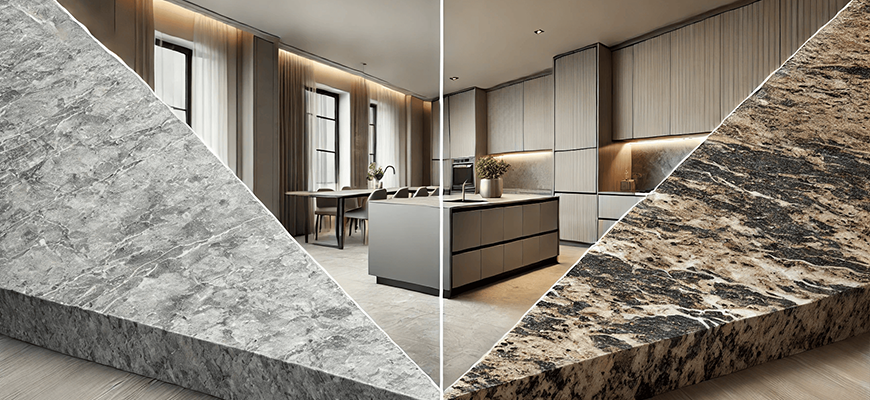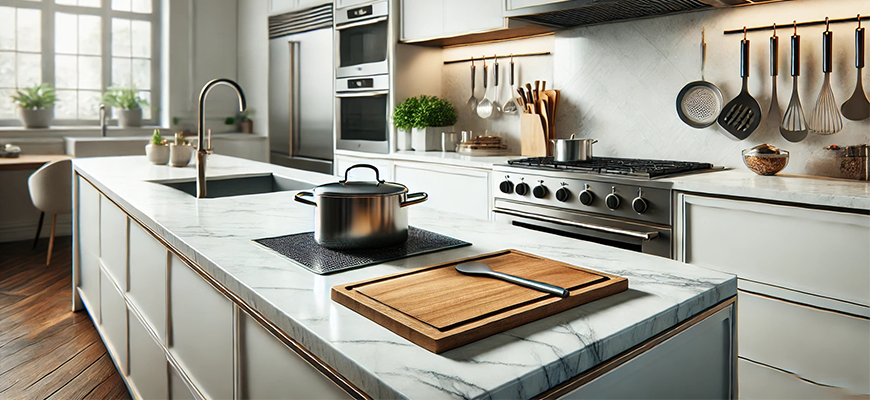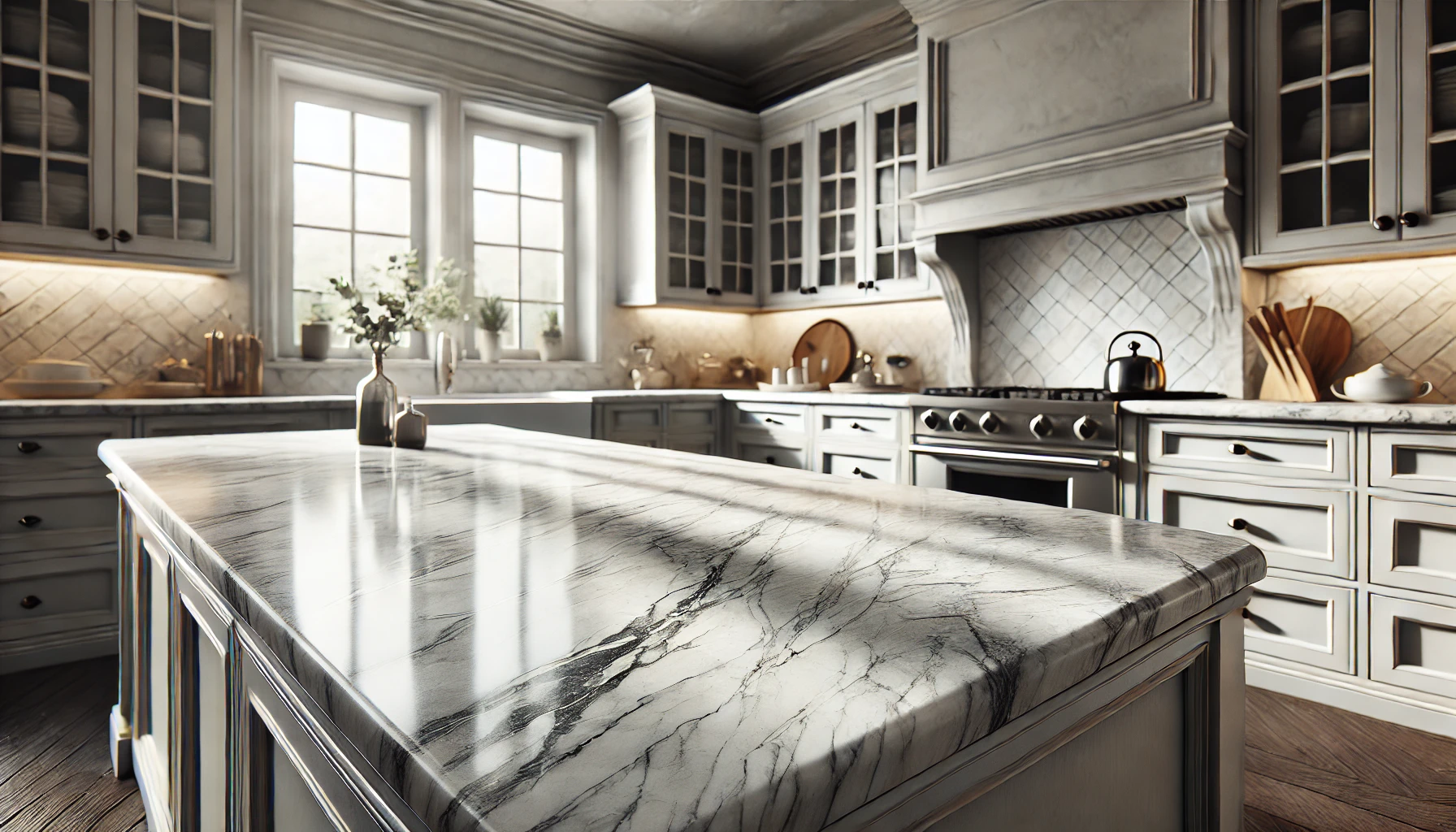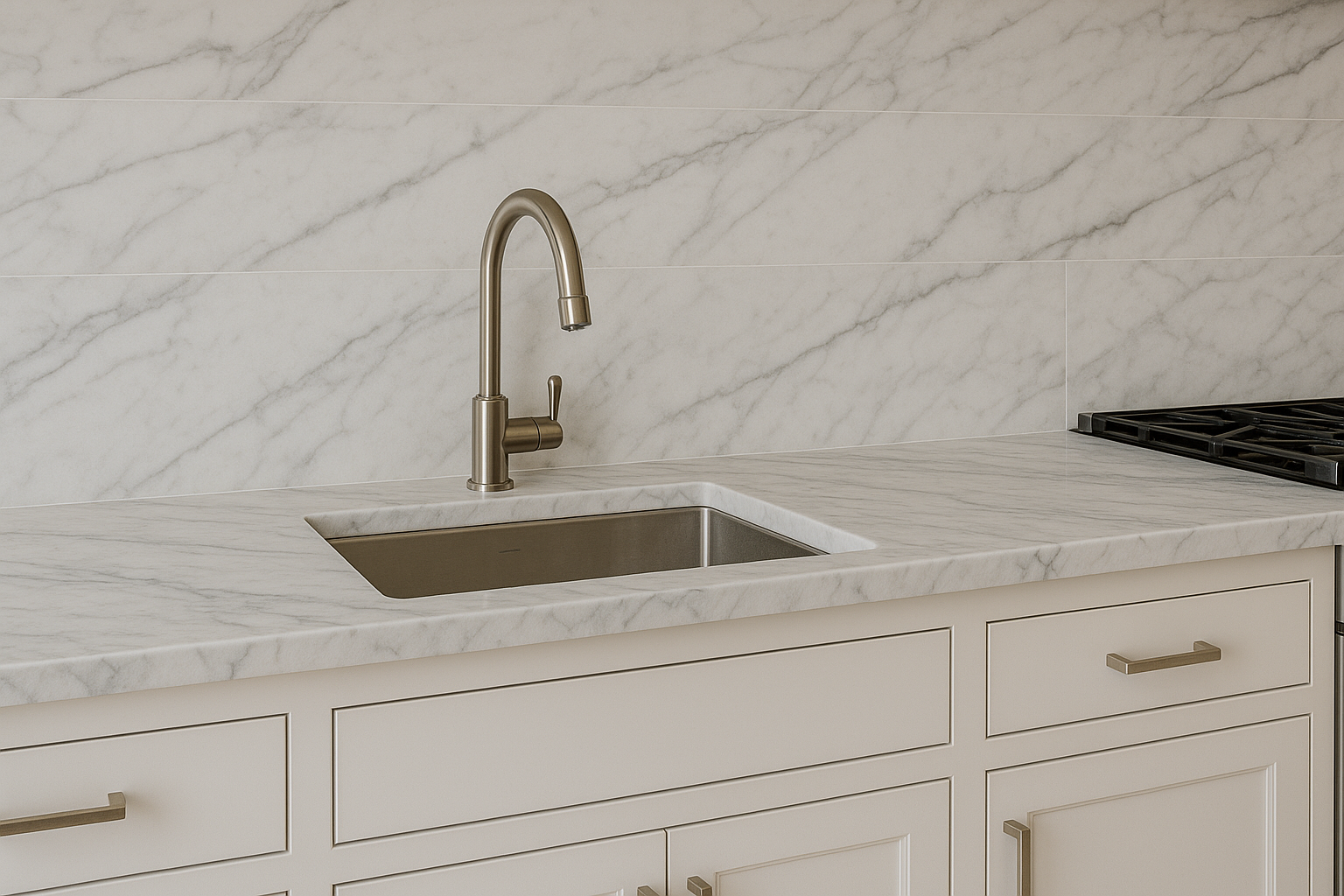
Marble countertops are a popular choice among many homeowners as kitchen countertops. They add a calm and refined look to any space. The soft surface feels cool, the vein looks natural, and the finish adds a quiet personality. However, despite being beautiful, it needs the right care. It has a porous surface that will absorb water over time. Also, the surface is sensitive to acidic substances, which may leave unsightly stains if not treated correctly.
This is why knowing how to clean marble countertops is crucial to avoid damaging them in the long run. The countertop cleaning process is not so complex, but you need to know the right method. Continue reading this guide to learn the process in clear steps. This will help you keep your marble countertops clean, protected, and close to their original look.

Daily Marble Cleaning Routine
When searching for how to clean marble countertops, you should understand the simple cleaning routine as well. A regular countertop cleaning routine on a regular basis can protect the marble better than any deep cleaning treatment.
Step 1: Use a Soft Cloth
Select a microfiber cloth or a soft sponge to lift the dirt without scratching the surface. Do not use any abrasive scrubber for a marble countertop.
Step 2: Apply a Gentle Cleaner
Use warm water with a small amount of mild dish soap. You can also use a stone-safe cleaner, which should be labelled as safe for marble.
Do not use vinegar or lemon juice, as they usually have acids or harsh agents that react badly with the natural stone surface.
Step 3: Wipe the Surface
Clean the surface smoothly with gentle movements. Focus on areas where you prepare food or place items.
Step 4: Rinse Lightly
Use a clean and damp cloth to wipe any residue.
Step 5: Dry the Surface
This is one of the most important parts of cleaning marble countertops. If water is left on marble, it will leave marks or dull the finish over time.
How to Remove Common Marble Stains?
Due to its porous surface, marble countertops tend to stain even when you take care of them. The only working tip is to treat the marble stains according to their source.
Oil-Based Marble Stains (Cooking Oil, Grease)
Oil stains are one of the hardest to clean on countertops, as they can penetrate the surface and leave dark patches that are hard to remove if left longer. Clean the marble stains by:
- Create a poultice by mixing the baking soda with water
- Apply the paste over the stain
- Cover the paste with the plastic wrap
- Leave it for 12–24 hours
- Wipe and rinse the paste
This is the best way to pull out the oil stain from marble.
Organic Stains On Marble (Coffee, Tea, Food)
Organic stains often affect the marble countertops with a light surface. The worst thing about organic stains is that the longer they are left untreated, the harder they are to remove. They require immediate wiping or cleaning for the best results. However, when treating harsh stains, like carbonate drinks, you should start by:
- Using a small amount of hydrogen peroxide on the affected area using a soft cloth.
- Let it sit for a short time
- Rinse and dry the surface
Most of the time, you can see that the surface stain is gone. If you are conscious of marble sensitivity, test first on a hidden area to avoid any discoloration.
Water Spots and Rings
Water spots on marble countertops are the result of mineral residue or air drying of metallic items.
- Use a dry microfiber cloth and buff the stained area gently.
- Use a marble polishing powder if needed.
Mind that gentle rubbing matters a lot as harsh rubbing can scratch the surface, especially the polished finish.
Deep Cleaning and Sealing Marble
While daily cleaning is effective in handling dirt, deep cleaning matters when marble is stained with stubborn stains. Sealing can secure the surface from dirt accumulation and staining.
Deep Cleaning the Marble Countertops
When dealing with some seriously stubborn stains, a deep clean can keep the surface clean in such scenarios.
Start with a stone-safe cleaner specifically designed for marble. Deep cleaning is ideal for edges near the sinks, cooking zones, and areas with high use.
Sealing Marble
Sealers reduce the water absorption in the marble. Though it doesn’t make the marble surface stain-proof, it slows down the damage over time. Always use a penetrating sealant for the best experience.
Marble Sealing Frequency:
- For kitchen marble, reseal every 6 months
- For the bathroom area marble, seal every 9–12 months
To check if the marble requires sealing, place a few drops of water on the surface. It beads first and stays in that condition for longer than marble doesn’t require sealing. However, if water disappears (absorbs), it requires sealing.
Brands like Royale Marble and Granite NJ often advise regular sealing as part of long-term stone care.
Kitchen vs Bathroom Marble: Cleaning Differences
Even if you have installed marble in your entire house, not every marble is the same. Homeowners should understand the difference between cleaning the kitchen marble and bathroom marble. Treating the same will result in uneven wear. Cleaning marble surfaces is different for kitchens and bathrooms, which are exposed to different conditions, temperatures, and environments. This is why knowing how to keep your countertops clean according to application matters a lot.
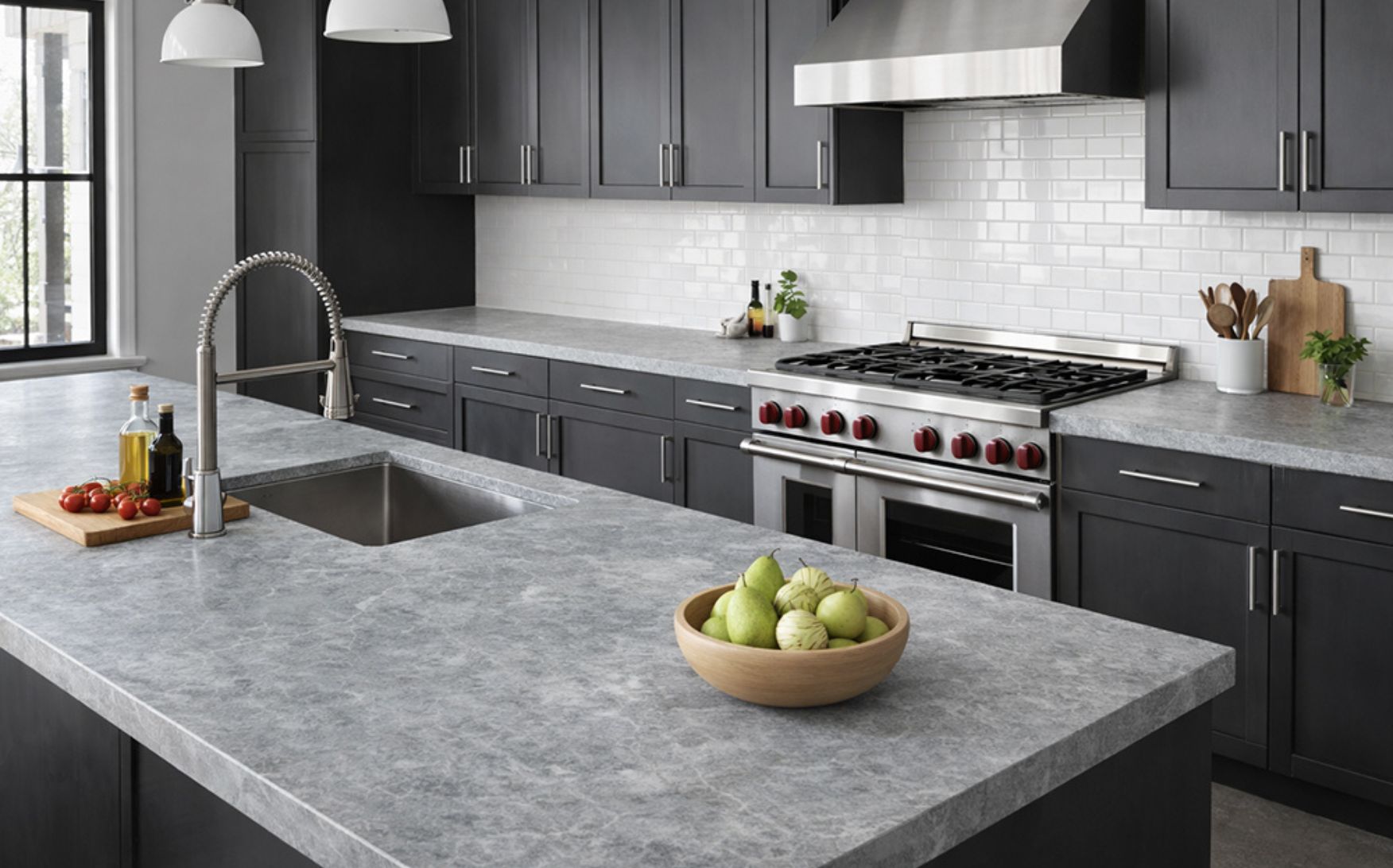
Kitchen Marble Cleaning
Marble Kitchen countertops often face heavy use, food and beverage spilling. Sometimes the acidic substances make their way, which creates a high risk of damaged surface. Kitchen marble is suspected to stain from oil and spices, etch from acidic foods, and be damaged by heat exposure.
How To Clean Kitchen Marble:
Cleaning the kitchen marble requires immediate actions, frequent cleaning, and regular sealing. Clean the kitchen marble by:
- Wiping the spills right away
- Daily cleaning with a mild solution
- Use trays under oil bottles and pickle/vinegar jars
- Avoid direct contact with acidic foods
Homeowners should know that damage in kitchens happens quickly, as a single spill can result in stubborn marking if left untreated.
Bathroom Marble Cleaning
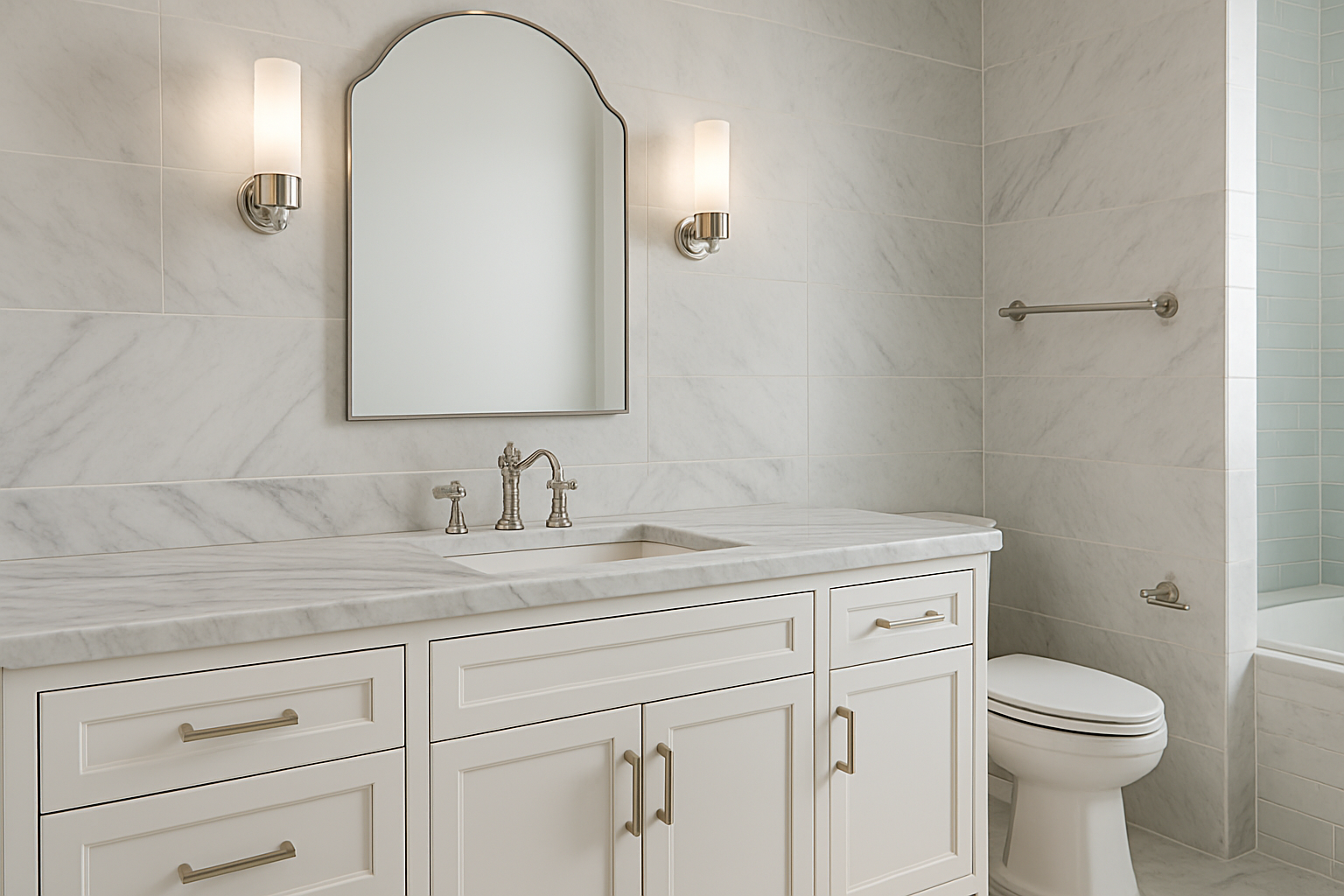
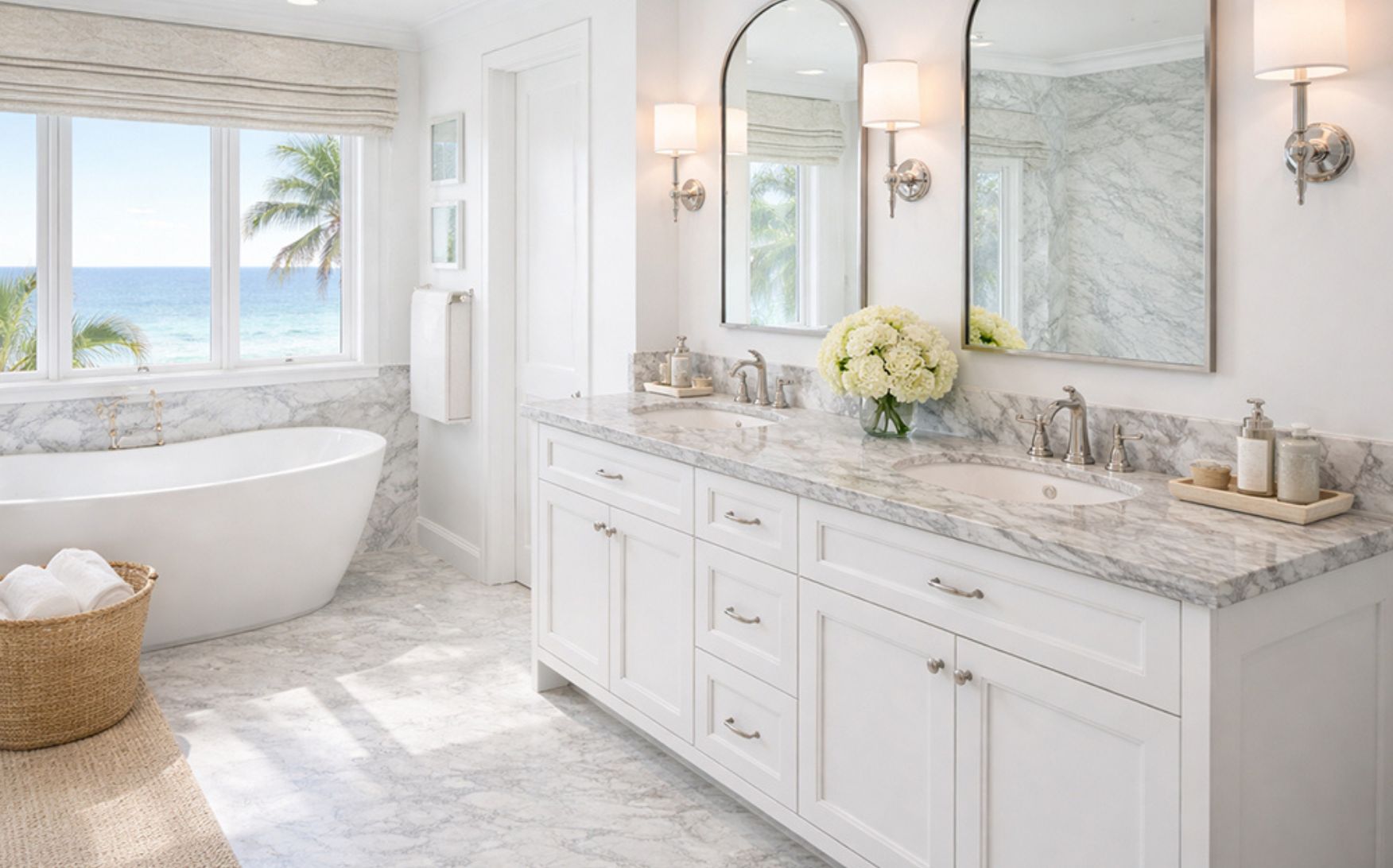
Bathrooms are much different spaces from kitchens. They are often humid, face frequent wetness, and are affected by elements like soap scum and residue of hygienic products. These mineral buildups require much more frequent cleaning than the marble in the kitchen. The key risks bathroom marble has to face are:
- Water spots
- Soap film buildup
- Gradual dullness
Cleaning The Bathroom Marble Strategy:
Bathroom marble, such as marble vanities, requires steps that keep the surface moisture-free to prevent staining and mold growth. This includes:
- Drying the surface after each use
- Clean several times a week
- Use stone-safe cleaners only to avoid surface etching.
The surface shine reduces over time rather than showing instant stains. Bathroom marble maintenance should focus on regular cleaning with moisture control strategies and polishing. Make sure not to polish too much, as it will cause a slip hazard. Due to the environment, damage builds slowly in the bathrooms.
When to Call a Professional Marble Cleaner?
Even though these tips are compatible with most marble cleaning, sometimes, the cleaning will require expert hands. This usually happens when:
- There are deep stains on the surface that do not respond to even frequent cleaning with cleaners.
- The etched areas are larger
- Uneven shine across the surface
Professionals possess the skills and tools required to polish and restore the marble countertops. After cleaning the marble, they will also polish just enough that will remove a thin layer and restore the finish.
Cleaning Marble Countertops (FAQs)
Let’s answer your questions about cleaning marble countertops
How often should you clean marble countertops?
Daily cleaning with a soft cloth and mild cleaner is effective for most marble countertops. Deep cleaning should be done every few weeks.
Can you use dish soap on marble countertops?
Yes. A small amount of mild dish soap mixed with water is enough. Do not use cented soaps as they often contain harsh ingredients.
What causes dull spots on marble?
Etching and reaction of the acidic substance with the marble surface result in dull spots.
How do you make marble shine again?
Yes. With gentle buffing using a dry microfiber cloth or a marble polishing product. For severe dullness, professional polishing may be needed.
Is sealing marble really necessary?
Yes. It secures the surface from water absorption and staining, though not permanently. It gives enough time to clean.

Bottom Line
Marble countertops are undoubtedly a great addition to any kitchen, but they require attention, not a complex cleaning routine. A simple marble cleaning routine with consistency will keep the surface shiny and clean and preserve its natural character.
Always use a stone-friendly product, clean the spills immediately, and dry the surface after every use to keep the marble in good condition. Make sure to clean the marble bases in their installation area, especially after marble countertop installation, as kitchen marble requires different cleaning than bathroom marble.
Over time, marble develops a soft patina. This is part of its nature. The goal is not to keep it untouched, but to guide how it ages.