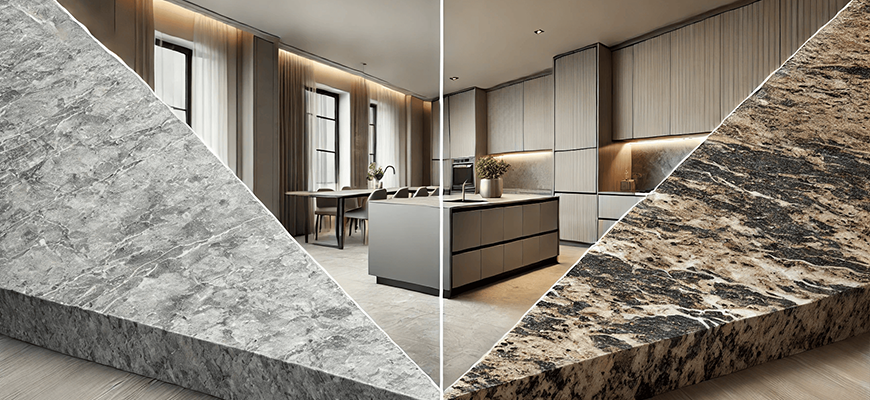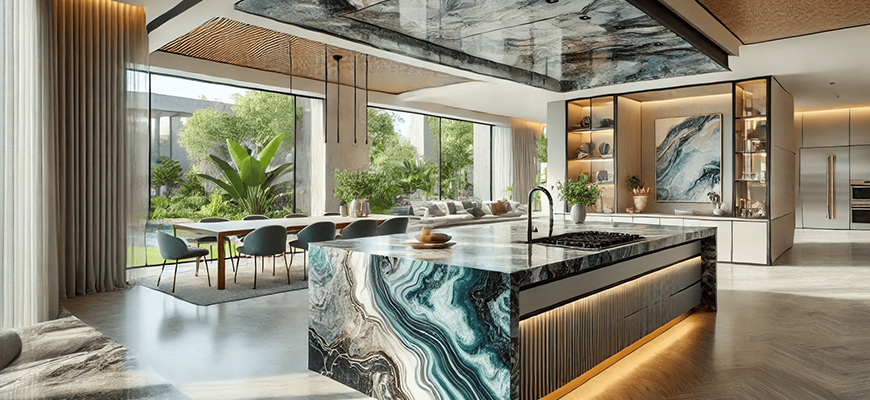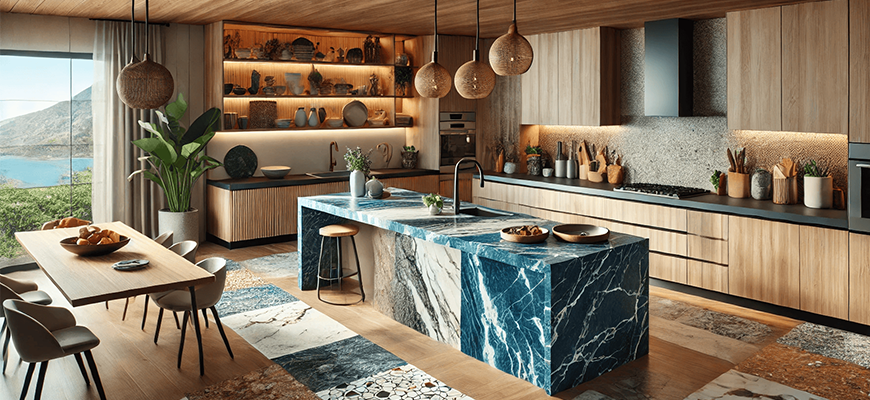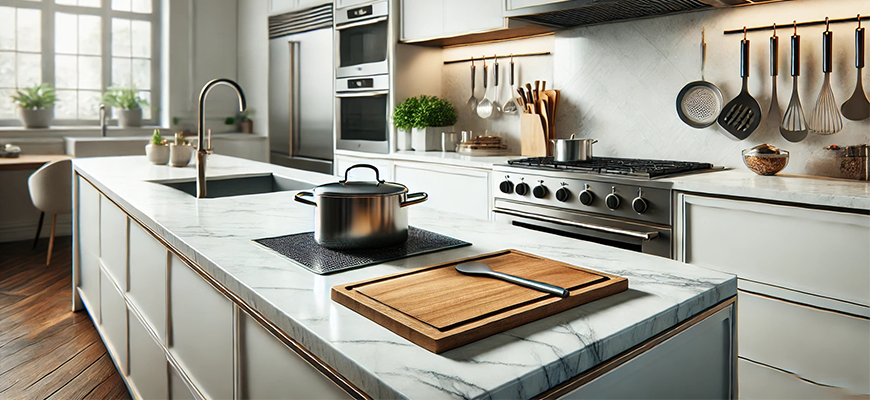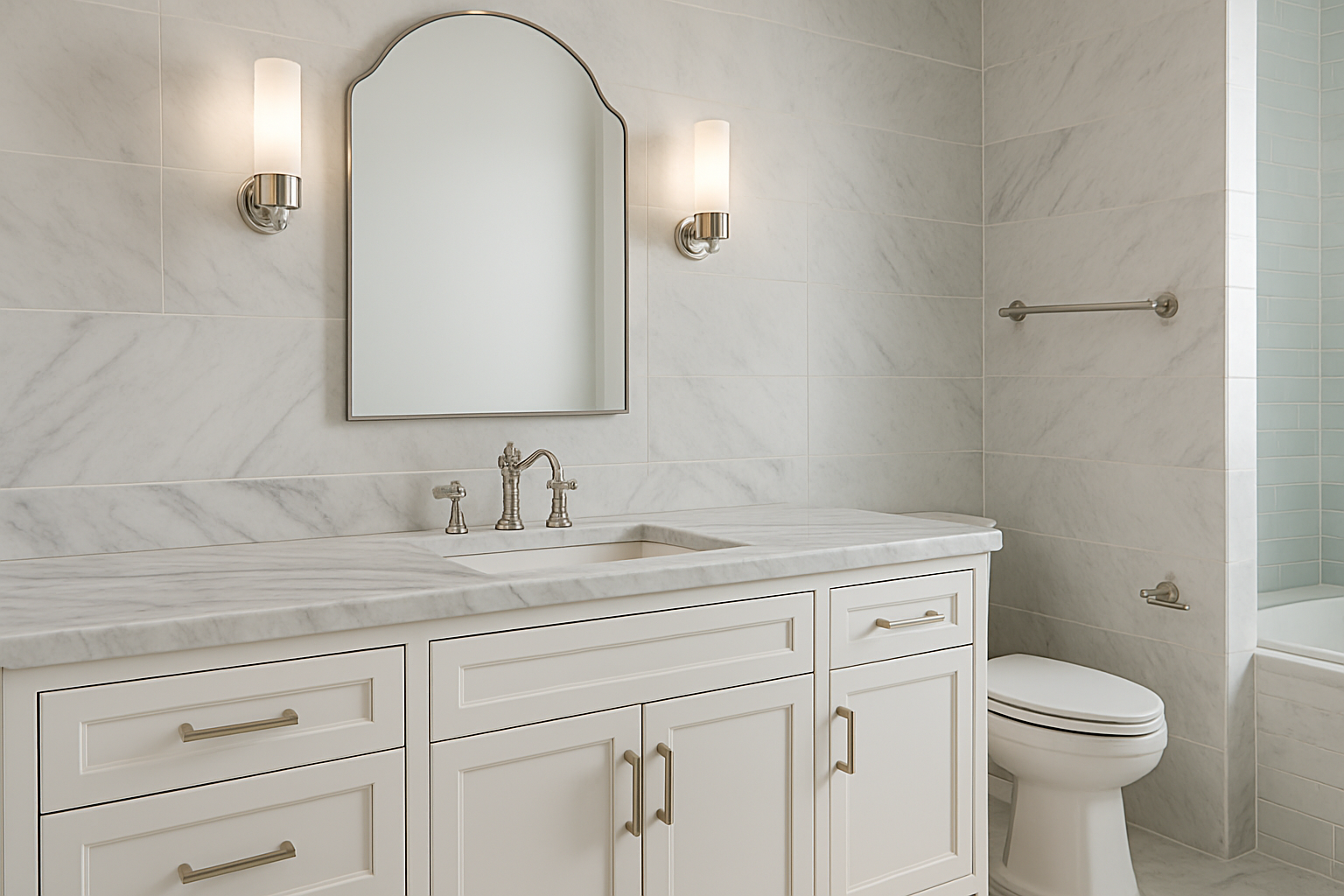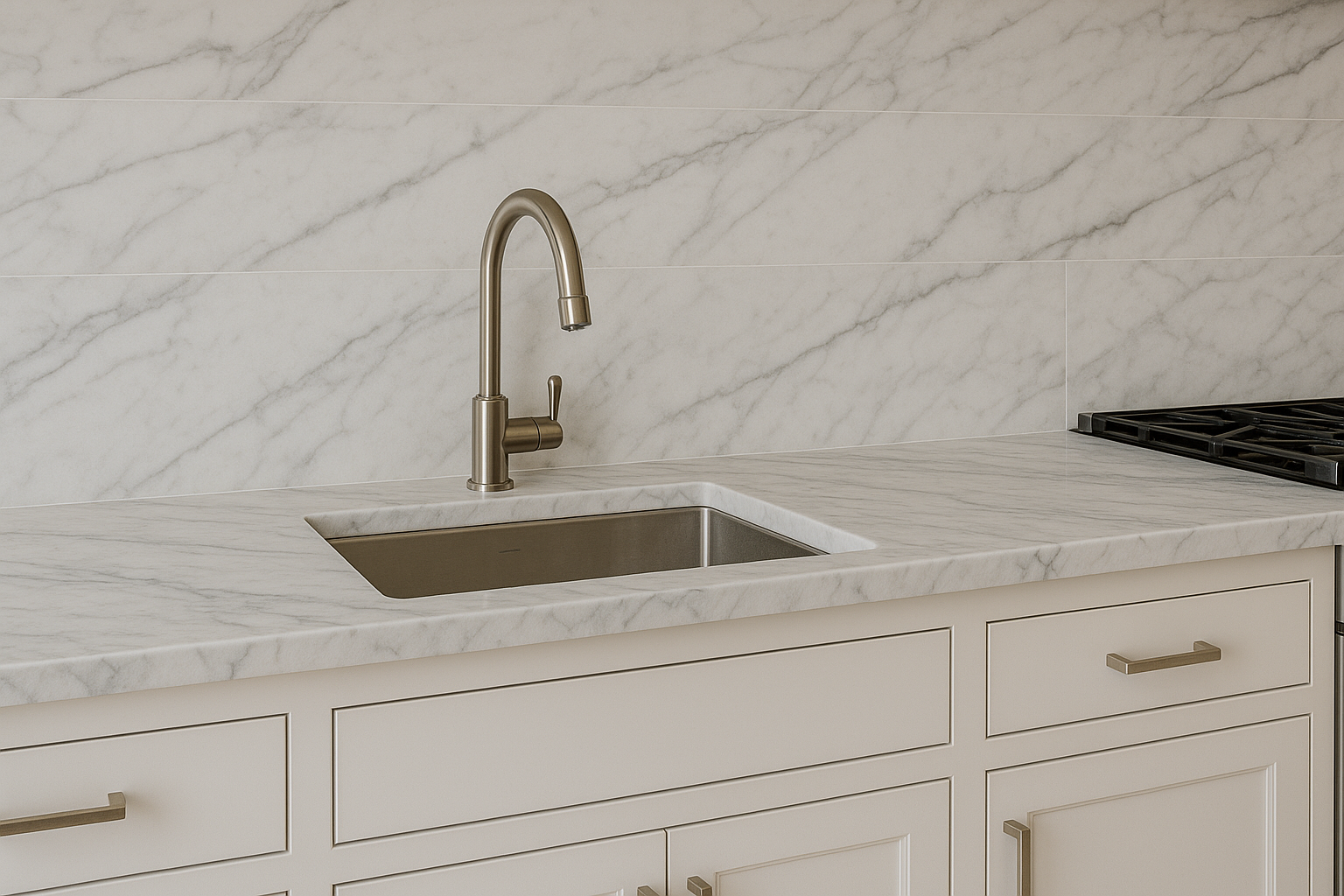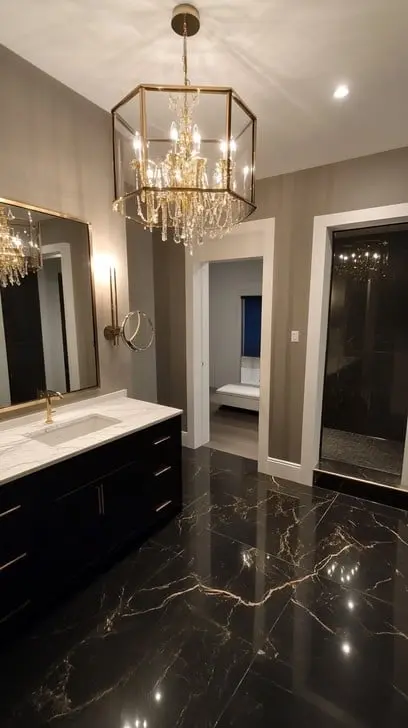
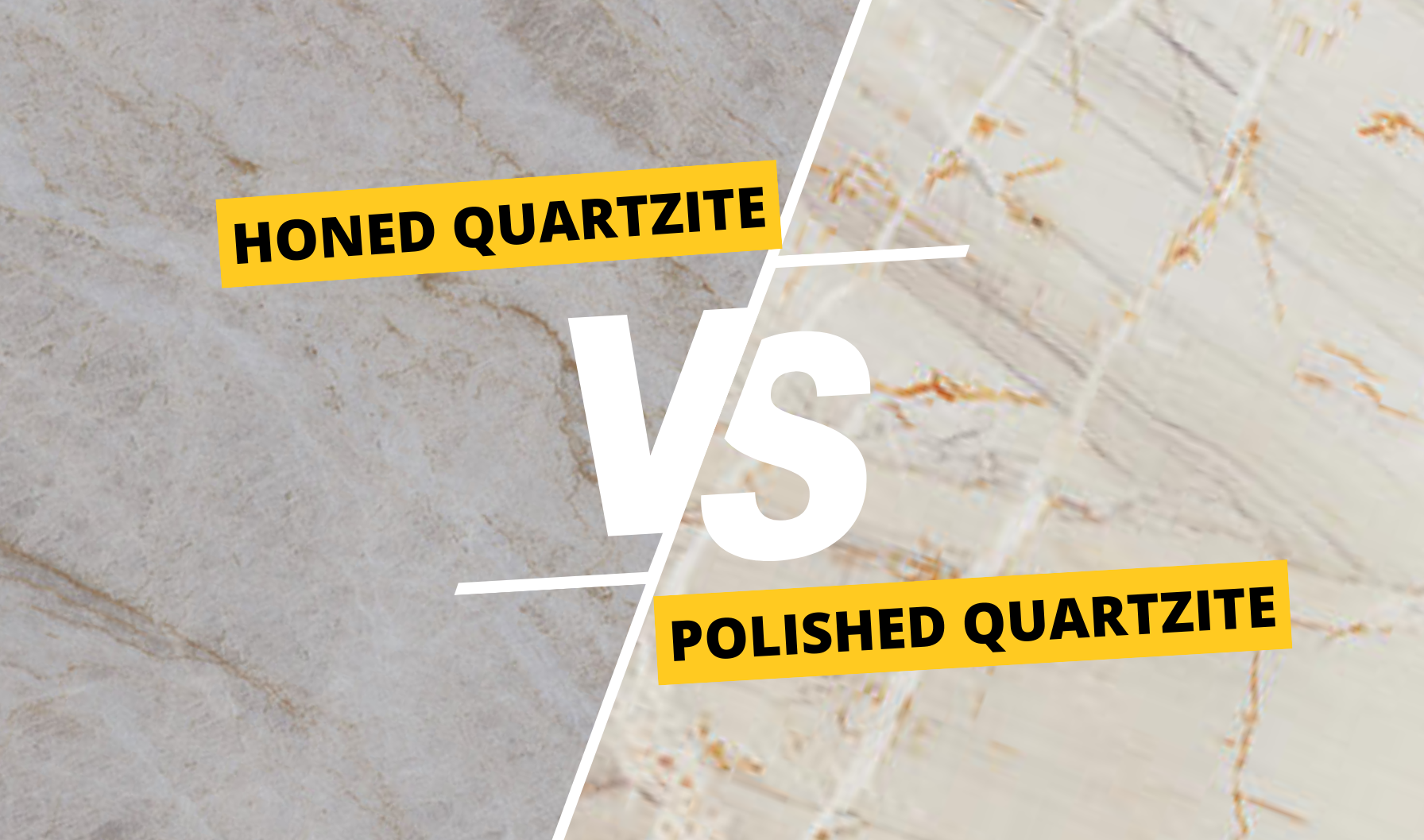
Quartzite has gained popularity as one of the most durable and reliable stone options for modern homes and commercial spaces. The best feature of quartzite is its strength, beauty, and longevity. One of the major considerations of selecting quartzite is its finish. You can choose between honed and polished. This determines how the stone will perform and how the space will feel. In this post, we will explain the technical details between honed vs polished quartzite. This approach helps homeowners and project managers choose the finish that fits their layout, daily routine, and long-term expectations.
Comprehensive Comparison Table: Honed vs Polished Quartzite
Knowing the honed vs polished quartzite differences will help you understand the finishing types. You can make an informed decision with this. Here is what you need to know.
| Feature / Aspect | Honed Quartzite | Polished Quartzite |
| Finish Look | Matte or satin with low reflection | Glossy, bright, and reflective |
| Color Depth | Soft, muted, natural | Bold, rich, and intense |
| Veining Visibility | Subtle and blended | Sharp and pronounced |
| Texture / Feel | Smooth, velvety, slip-resistant | Slick, glass-like surface |
| Scratch Visibility | Less visible due to low sheen | More visible on glossy surfaces |
| Stain Resistance | Needs more frequent sealing | Easier to clean when sealed |
| Maintenance Level | Moderate; more sealing | Low to moderate; easier cleanup |
| Durability | Strong; hides wear | Strong; shows wear faster |
| Slip Resistance | Higher; ideal for wet zones | Lower; slippery when wet |
| Best Uses | Kitchens, flooring, outdoors, high-traffic areas | Countertops, vanities, feature walls |
| Lighting Impact | Soft and calming | Bright and dramatic |
| Style Match | Modern, rustic, minimalist | Luxurious, contemporary, classic |
| Cost Range | Slightly lower | Slightly higher |
| Longevity | Ages naturally and gracefully | May be dull and need polishing |
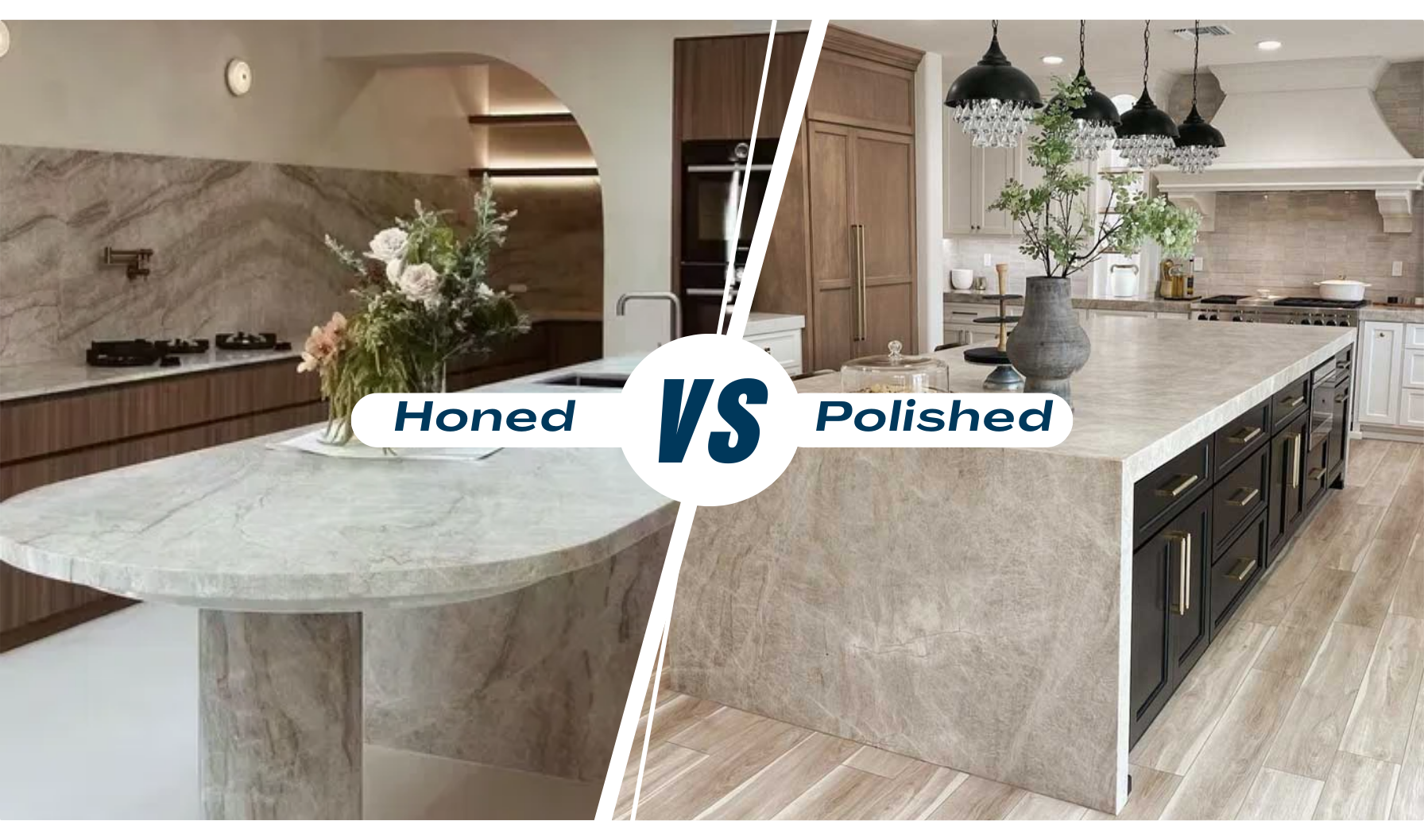
Key Differences Between Honed and Polished Quartzite
Now, let’s talk about the key differences between honed vs polished quartzite. This will surely help you in choosing a finish that fits the daily demands of your project. These differences are more than surface texture. They shape how the stone performs, ages, and interacts with light and space.
Appearance and Visual Weight:
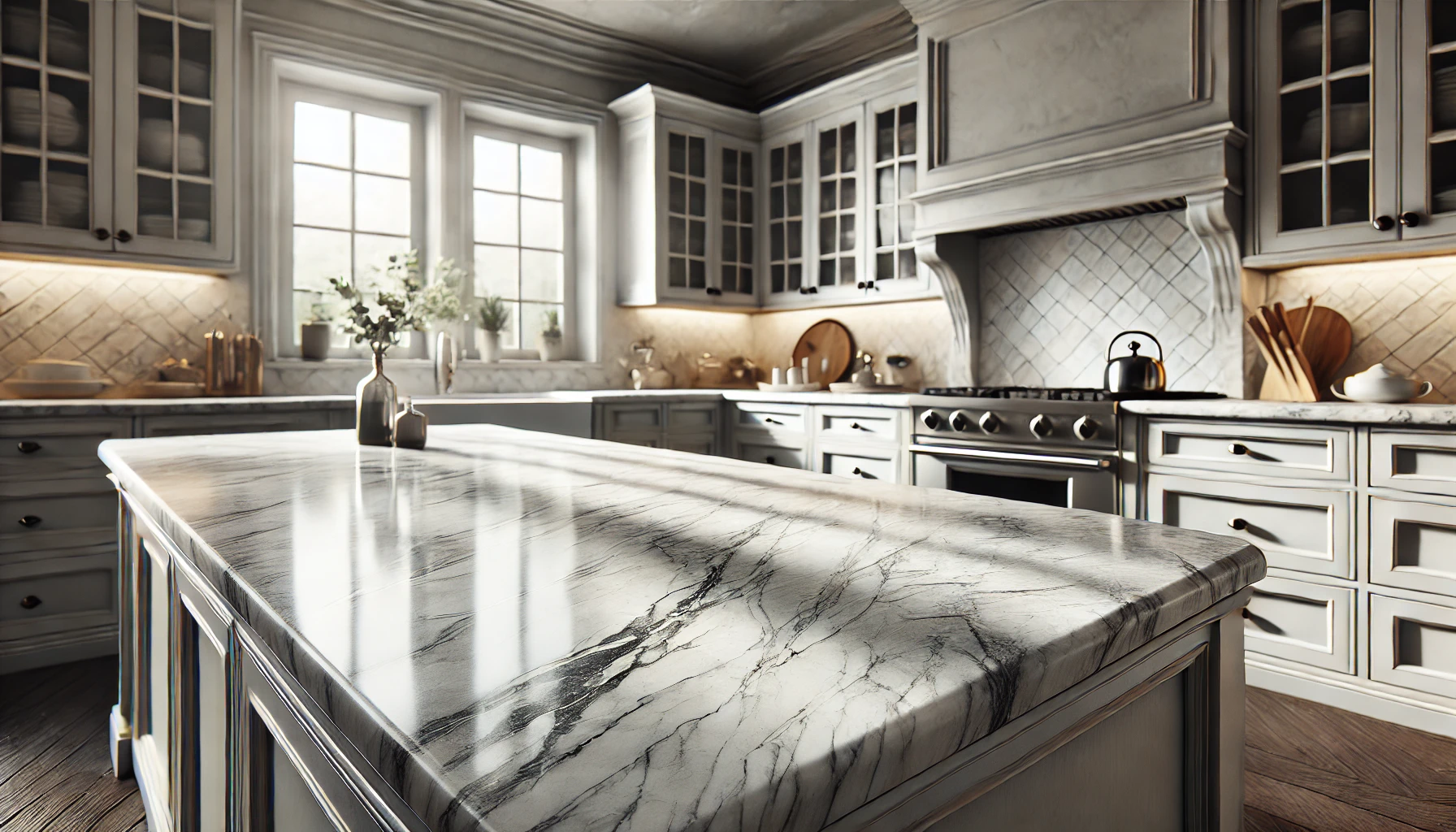
Appearance is the major difference between honed vs polished quartzite. Honed quartzite features a soft color with a matte surface that diffuses the light. This pulls attention toward texture and movement rather than shine. This effect is well-suited in calm interiors where the material is compatible with the design rather than dominating it.
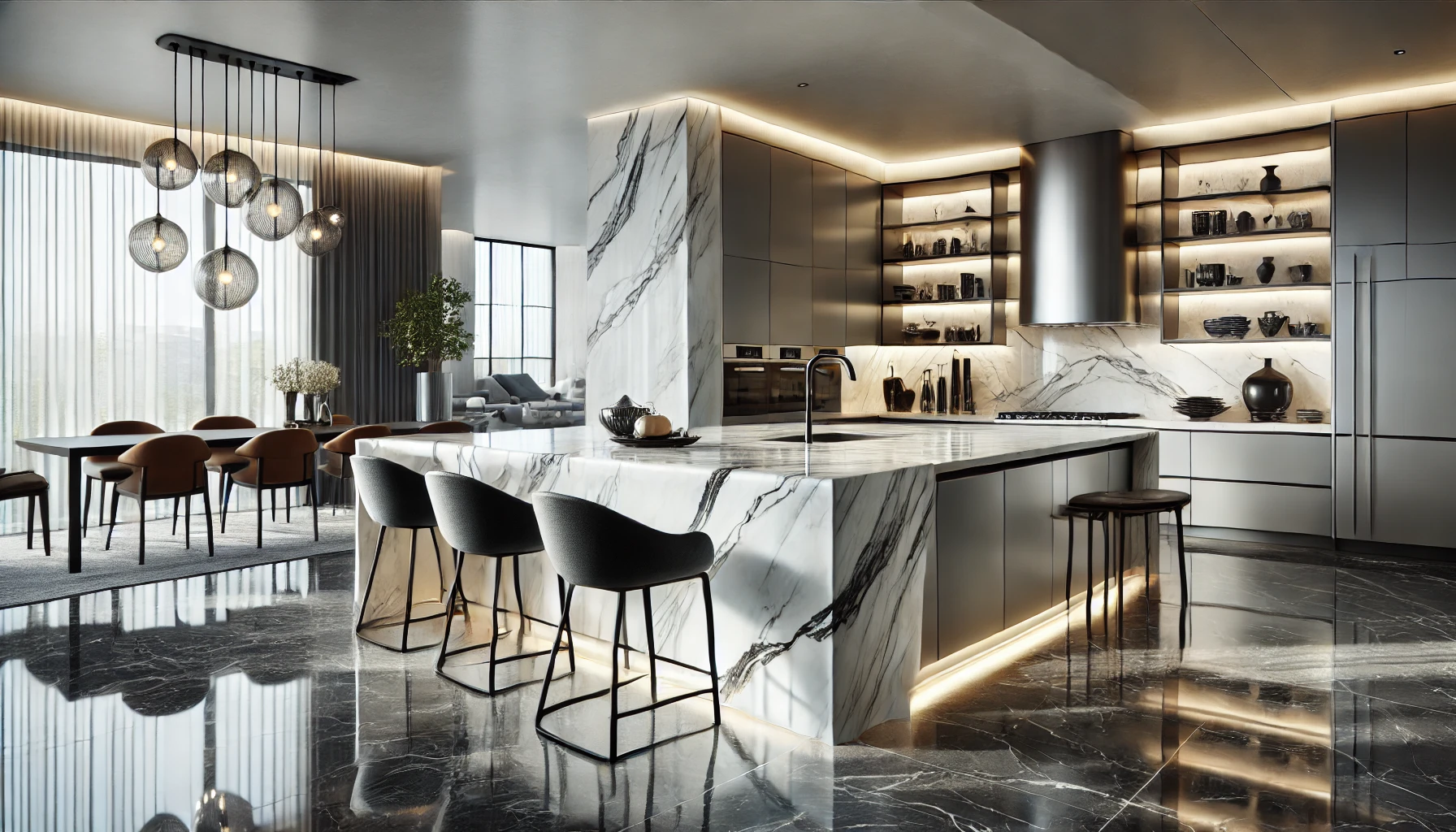
On the other hand, polished Quartzite reflects light. The finish emphasizes veining and pattern because gloss creates contrast. This makes its a perfect choice when the stone needs to stand out. It works great with waterfall islands, statement wall cladding, or high-end bathroom vanities.
Surface Texture and Touch:
Another difference between honed vs polished quartzite is the surface texture and touch. Honed has a smooth-to-touch surface with a slight grip. This finish adds a warm and natural touch to the stone that works well even in a kitchen with heavy use. They are also ideal for mudrooms and commercial spaces with foot traffic.
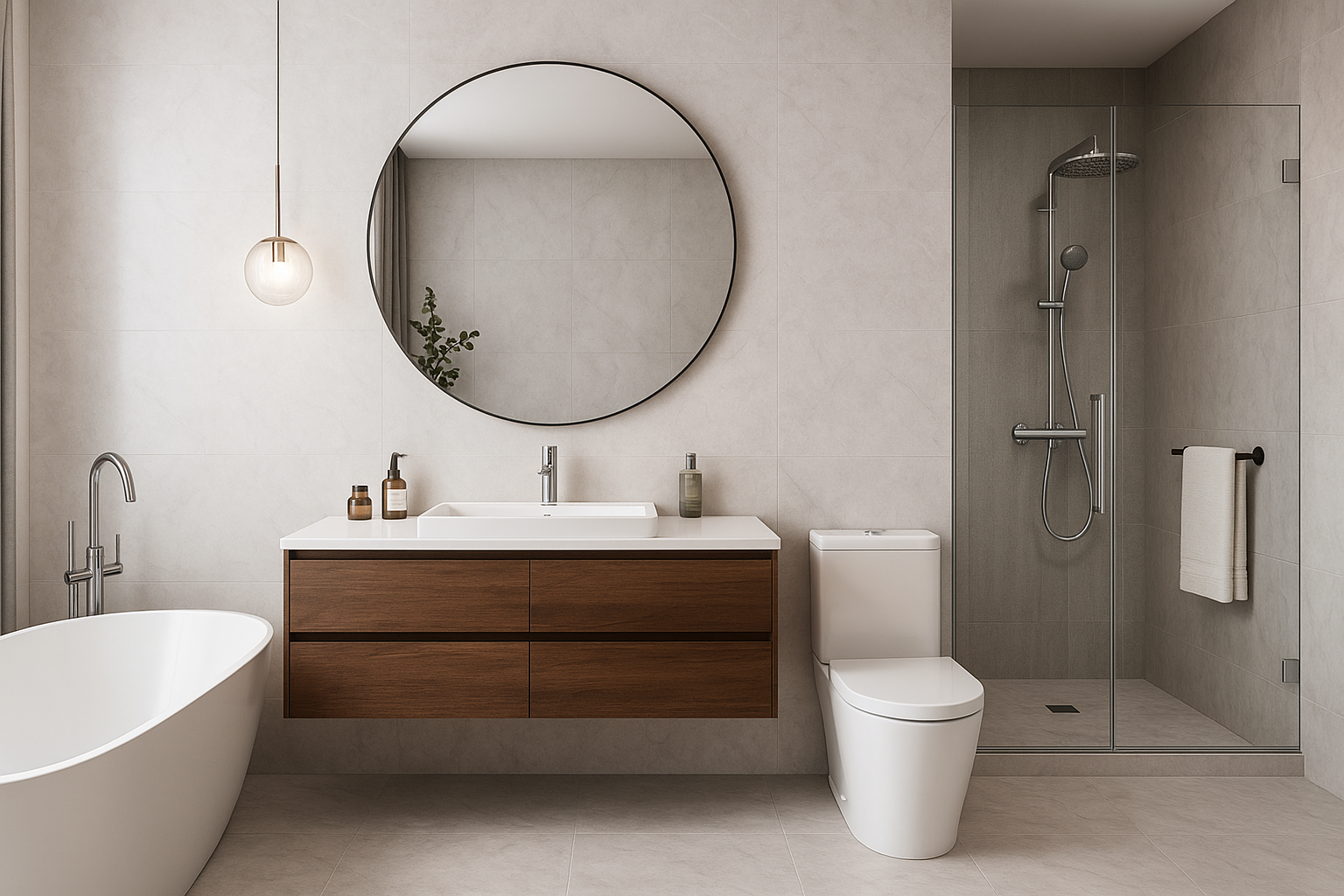
Polished quartzite feels slick and lavish. The smooth surface adds a formal and refined look; however, it becomes slippery when wet. This makes polished quartzite better for dry zones, vertical applications, or areas like kitchen vanities where a sleek, polished look is desired.
Maintenance Expectations
Maintenance is largely different between honed vs polished quartzite. Both finishes offer the same strong material, but the maintenance is largely different. Hones quartzite offers more regular sealing depending on its use. The porous surface may absorb more, so consider sealing every 6–12 months to keep stains from settling.
Polished quartzite resists spills better because its tight surface repels moisture. Sealing once at installation and occasional maintenance is often enough. The challenge is not stains but visible scratches, which show quickly on glossy surfaces.
Aging Over Time
Honed quartzite ages subtly. Minor wear can easily blend into the matter surface and gives the stone an organic, lived-in feel.
On the other hand, the polished quartzite has a more dramatic aging process. The high gloss finish looks dull with regular usage, especially around the stoves and sinks. Professional re-polishing restores shine but requires scheduling and cost consideration.
Performance in High-Use Areas
Honed quartzite is the best choice for areas with heavy usage. Scratches and small etches can easily blend into the finished surfaces. This is especially beneficial for kitchens, laundry rooms, and workspaces benefit from this forgiving surface.
Polished quartzite is perfect for luxurious looks and areas where physical contact is limited. Decorative walls, bathroom vanities, and low-use counters hold the shine longer and maintain impact.
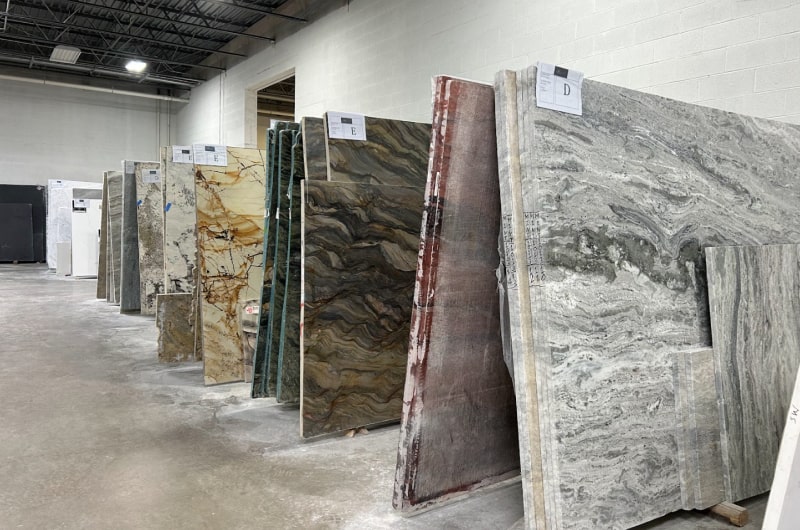
How to Select the Right Finish: A Practical Guide
Choosing the right finish between honed vs polished quartzite is not about guessing. You will need to consider several factors, from lighting, maintenance, to the overall area of usage. Here is how to approach the decision with clarity.
Understand How the Surface Will Be Used
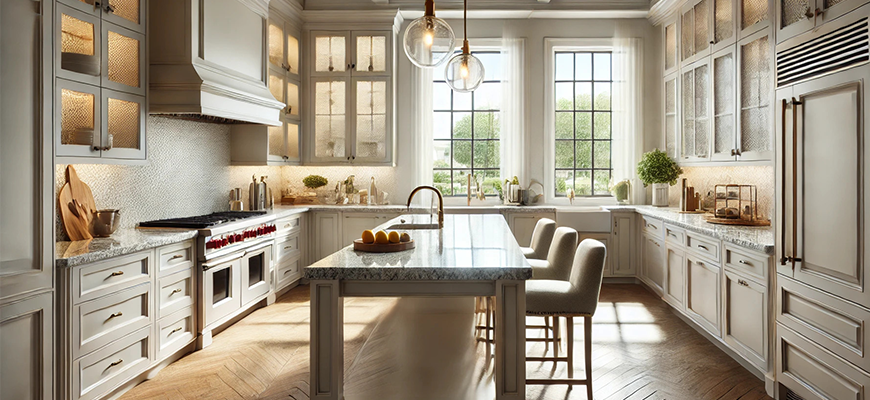
The right finish between the honed vs polished quartzite starts with the daily activity consideration. Kitchen with regular cooking, moving cookware on the counters, and families with children should choose a honed finish. It hides small marks and keeps a quiet look even when the kitchen sees heavy action.
If your focus is on on display island or just the dry vanity where things stay organized, the polished finish works well. It adds brightness and reflects lighting beautifully.
Consider the Lighting Conditions
Honed quartzite absorbs light. In open and bright rooms, it prevents glare and keeps the focus on the room’s layout.
Polished quartzite is ideal for smaller rooms or areas with less natural light. It creates a rather bright interior and adds a sense of openness.
Evaluate Maintenance Comfort
A honed finish requires sealing more often. If you like the surface age naturally and hide wear, then honed quartzite aligns with your comfort.
A polished finish needs protection from scratches. If you prefer a surface that cleans quickly and stays bright, polished quartzite fits better.
Match the Finish to Your Design Style
Honed quartzite supports organic, natural, rustic, modern and Scandinavian, and industrial designs.
Polished quartzite elevates contemporary, classical, transitional, and luxury interiors.
Think Long-Term
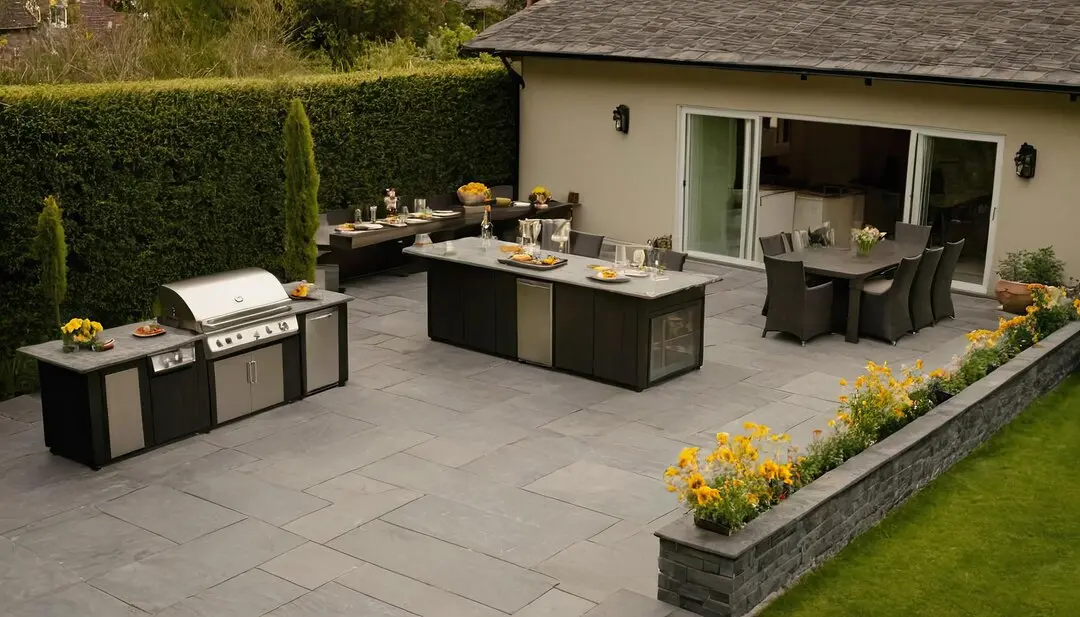
Outdoor areas like patios, pool decks, and outdoor kitchens benefit from honed surfaces for slip resistance and weather durability, while busy commercial floors also favor the low-gloss, forgiving finish.
For indoor use, polished quartzite is ideal for countertops and decorative installations that need a bright, refined look; it also makes striking fireplace countertops where a glossy, dramatic surface is desired.
Honed vs Polished Quartzite: FAQs
Let’s answer your questions about honed vs polished quartzite finish.
Is honed quartzite more durable than polished quartzite?
Both finishes have the same surface, so durability is equal. The only difference is visibility, where scratches and marks show more on polished surfaces. While honed surfaces hide them better.
Does honed quartzite stain easily?
It can stain faster than polished quartzite if left unsealed. Regular sealing prevents stains from absorbing into the stone.
Can polished quartzite lose its shine?
Yes. Regular use may result in dull patches over time, especially near sinks and stoves. Professional refinishing restores the gloss.
Which quartzite finish is best for kitchen countertops?
Honed quartzite is better for high-use kitchens because it hides wear. Polished quartzite works well for display islands and low-use counters.
Is honed quartzite slippery?
No. The matte surface offers better slip resistance, which makes quartzite ideal for flooring and wet spaces.
Can you switch between finishes later?
Yes. Honed surfaces can be polished, and polished surfaces can be honed, but the process requires a skilled stone fabricator.
Is polished quartzite harder to maintain?
It is easy to clean, but scratches show more. Regular care keeps the finish bright.
How often should quartzite be sealed?
Every 6–12 months for honed and every 12–18 months for polished surface.
Bottom Line
Both honed and polished quartzite offer a durable and reliable performance with natural beauty. The right choice depends on how the surface will be used and how you want the room to feel. Honed quartzite supports rugged usage but also creates a calm look. Polished quartzite improves interiors where brightness and visual impact matter.
When homeowners and project managers understand how each finish behaves, they make informed decisions that align with function and design. Royale Marble and Granite continues to recommend Quartzite because it offers strength and durability that is perfect for most residential and commercial projects.