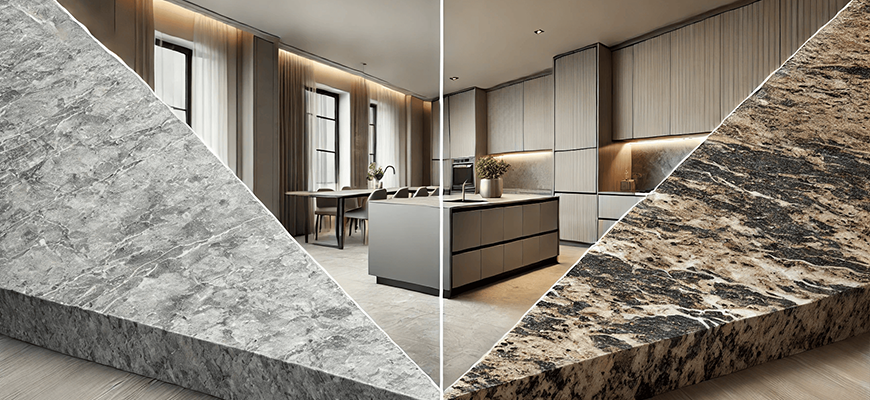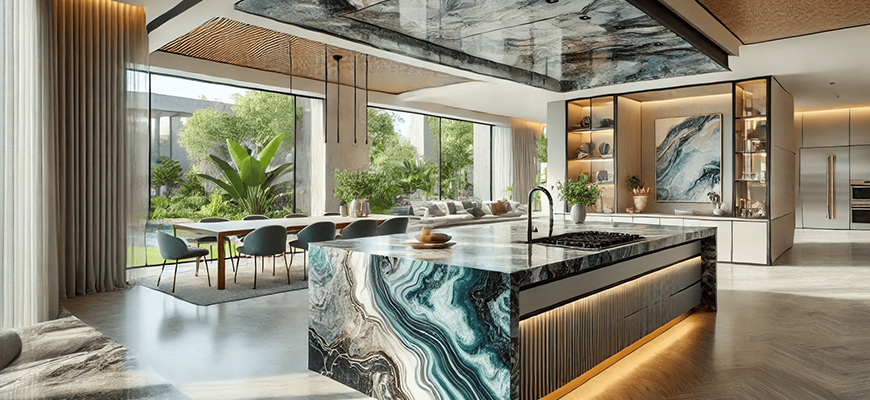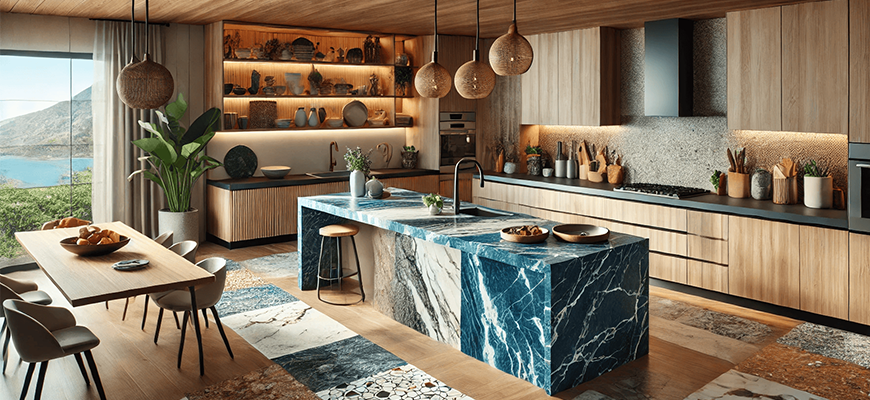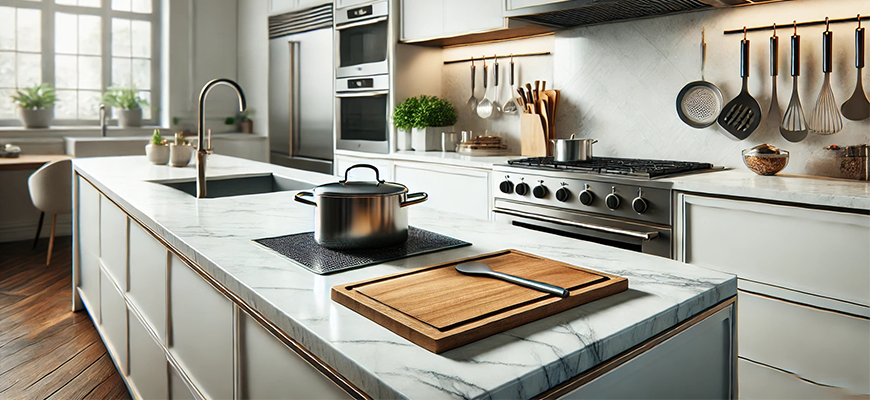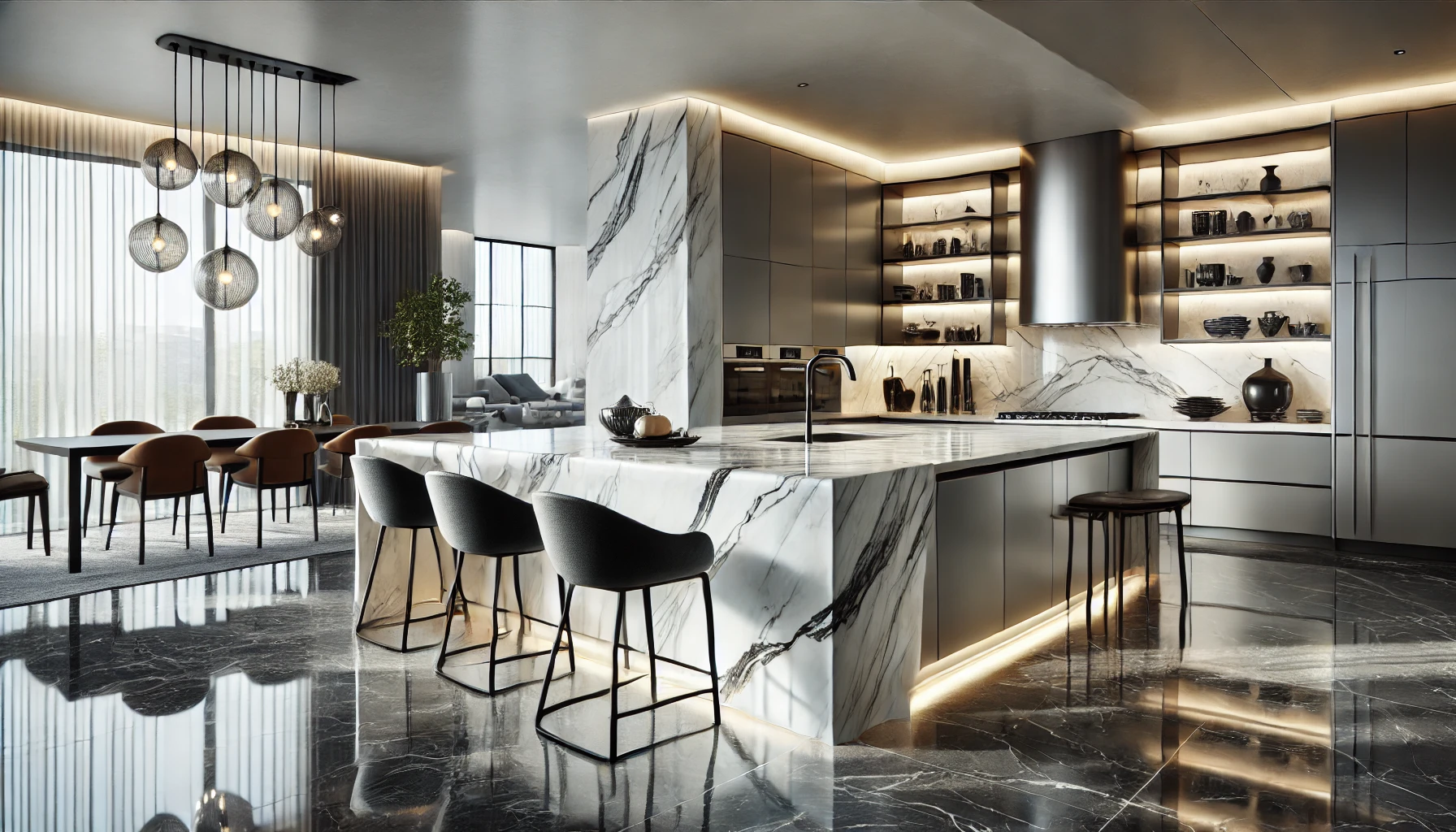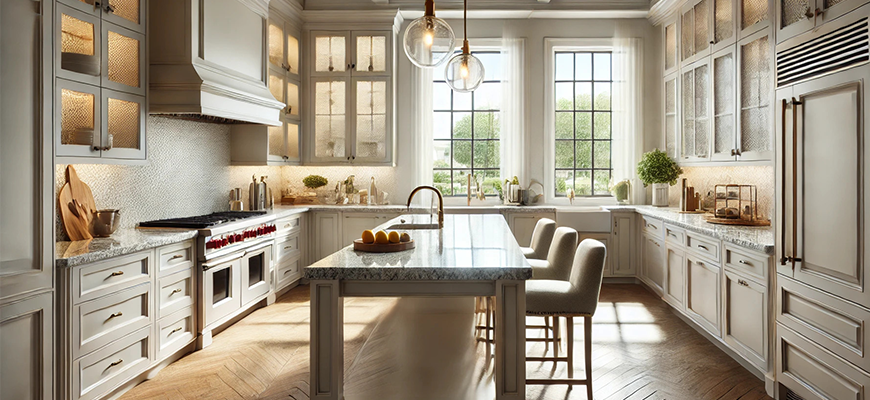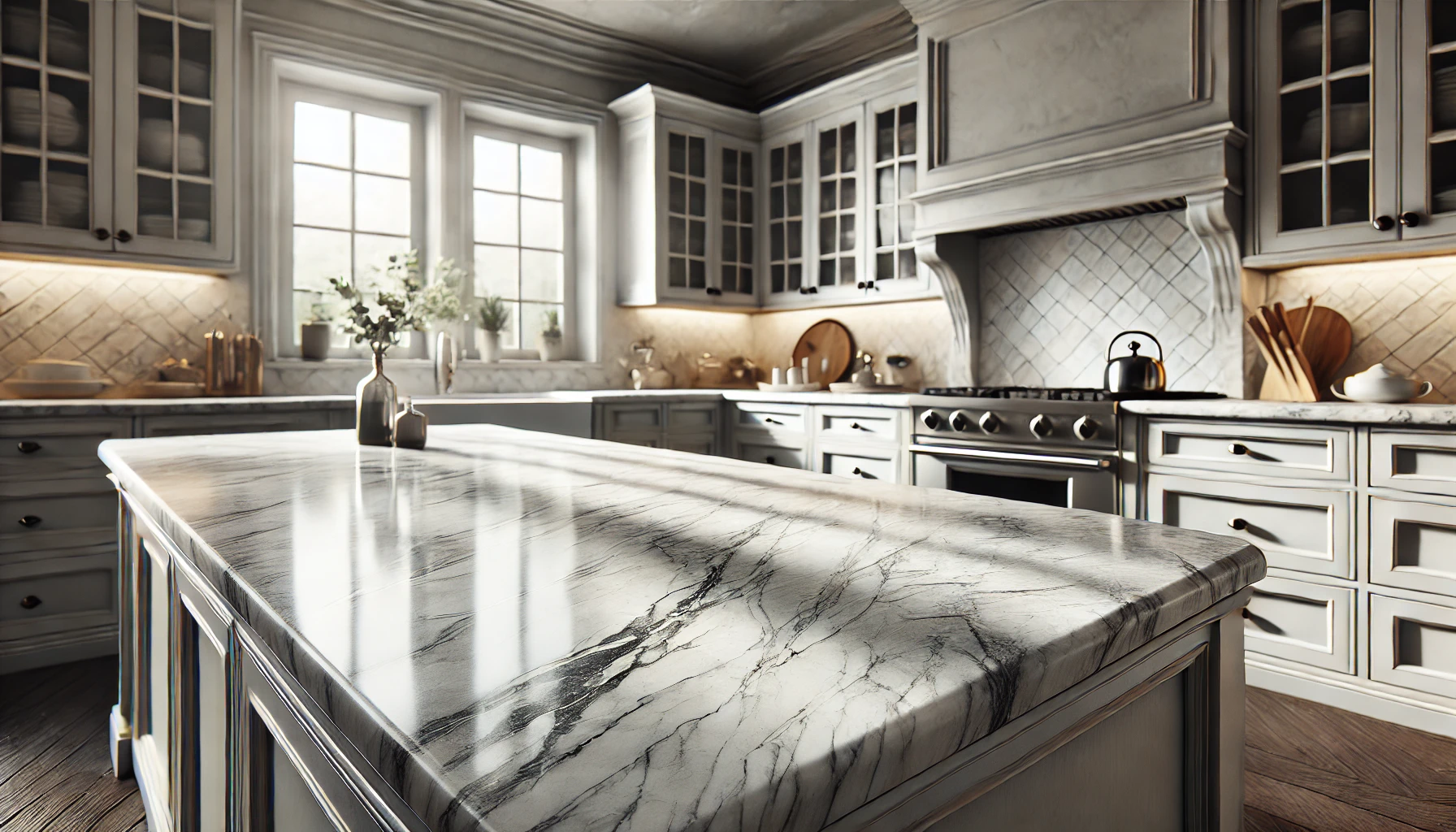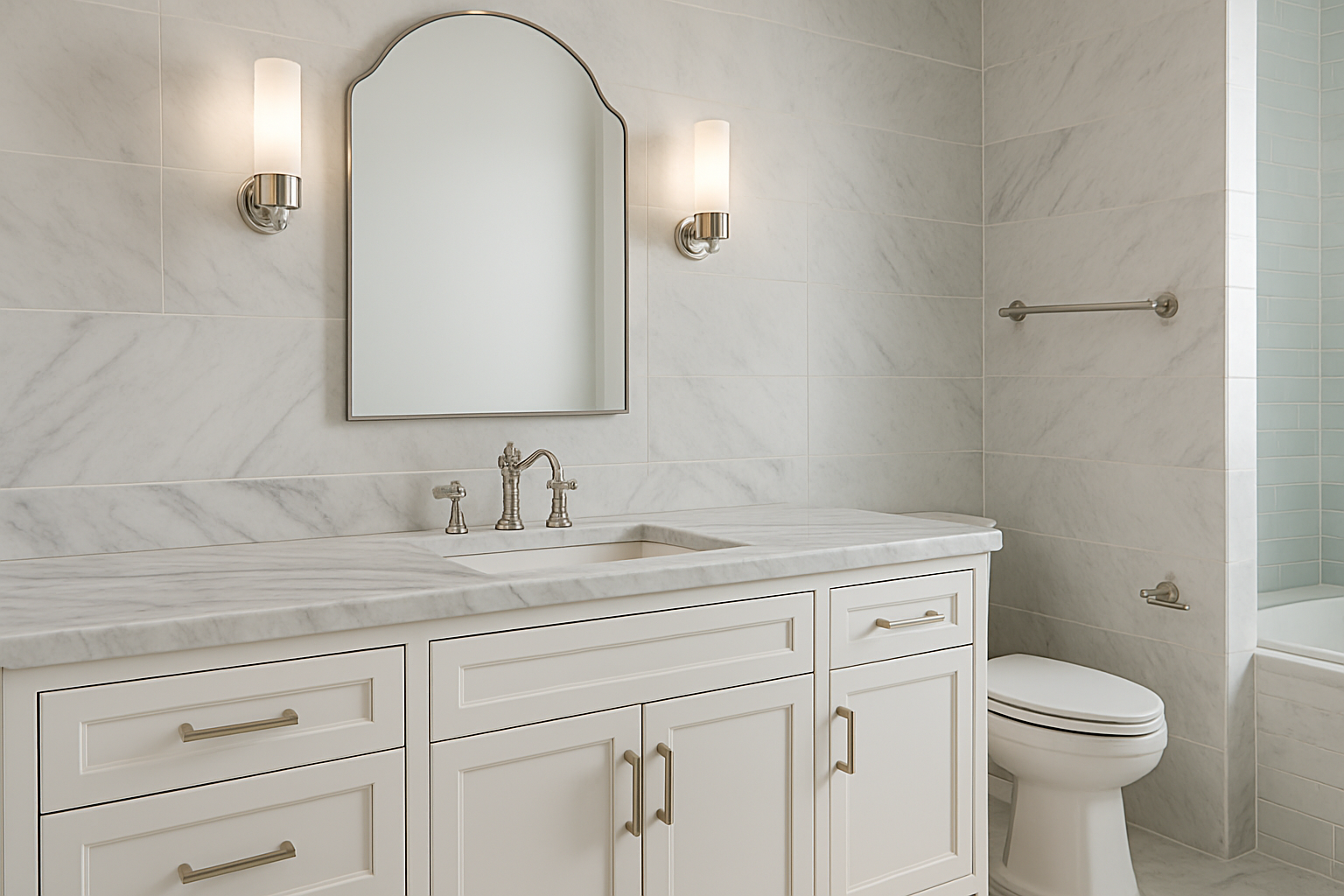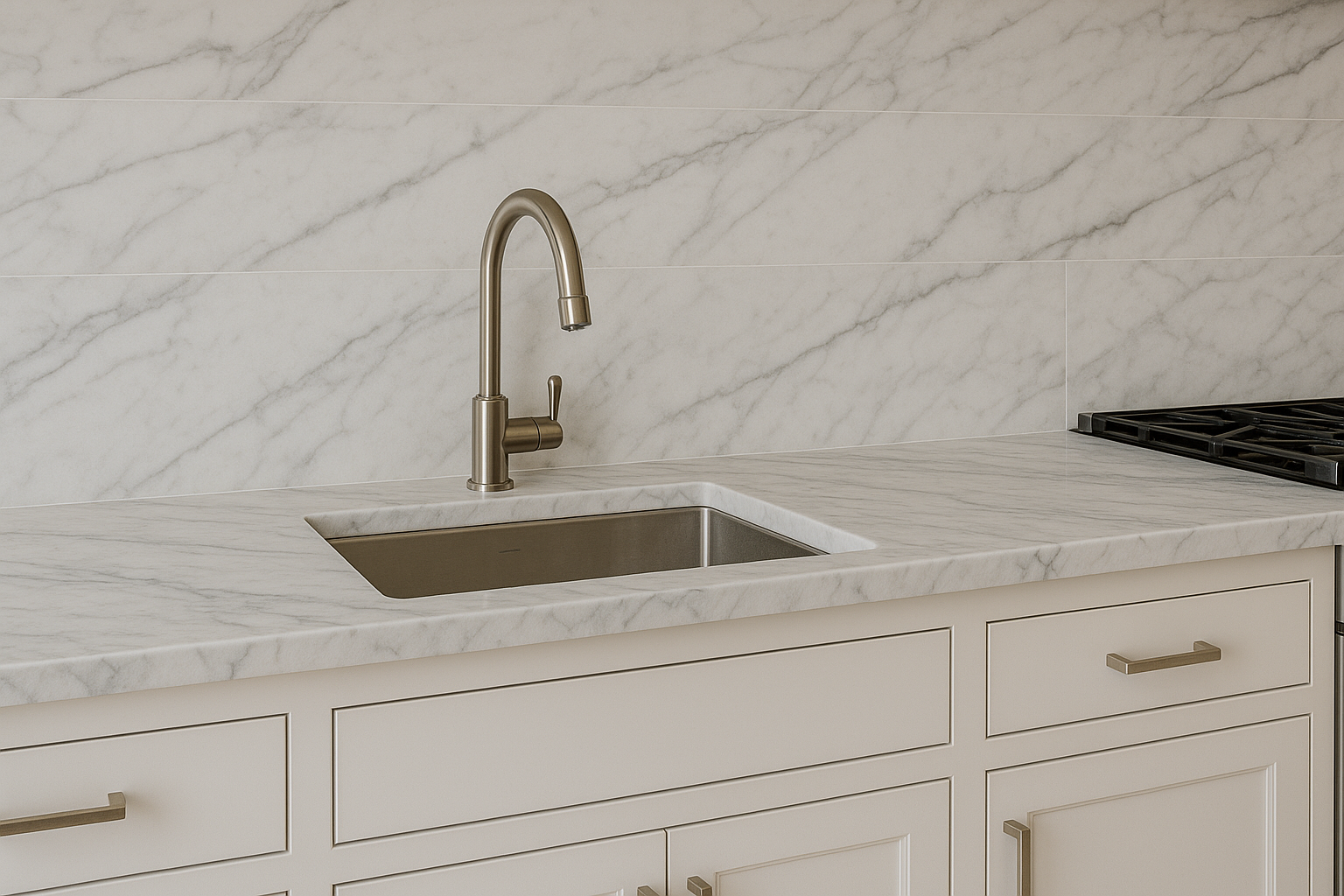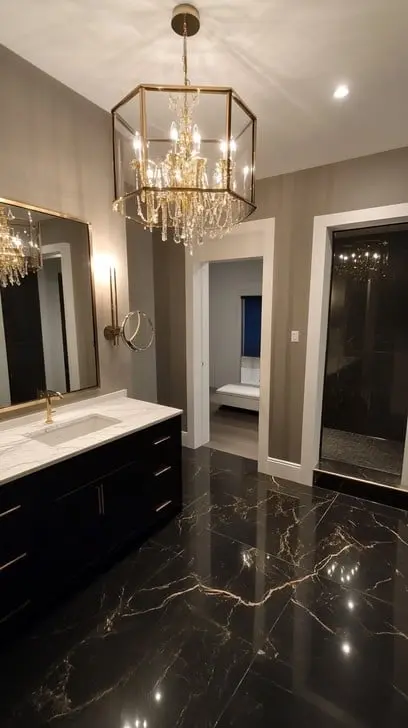
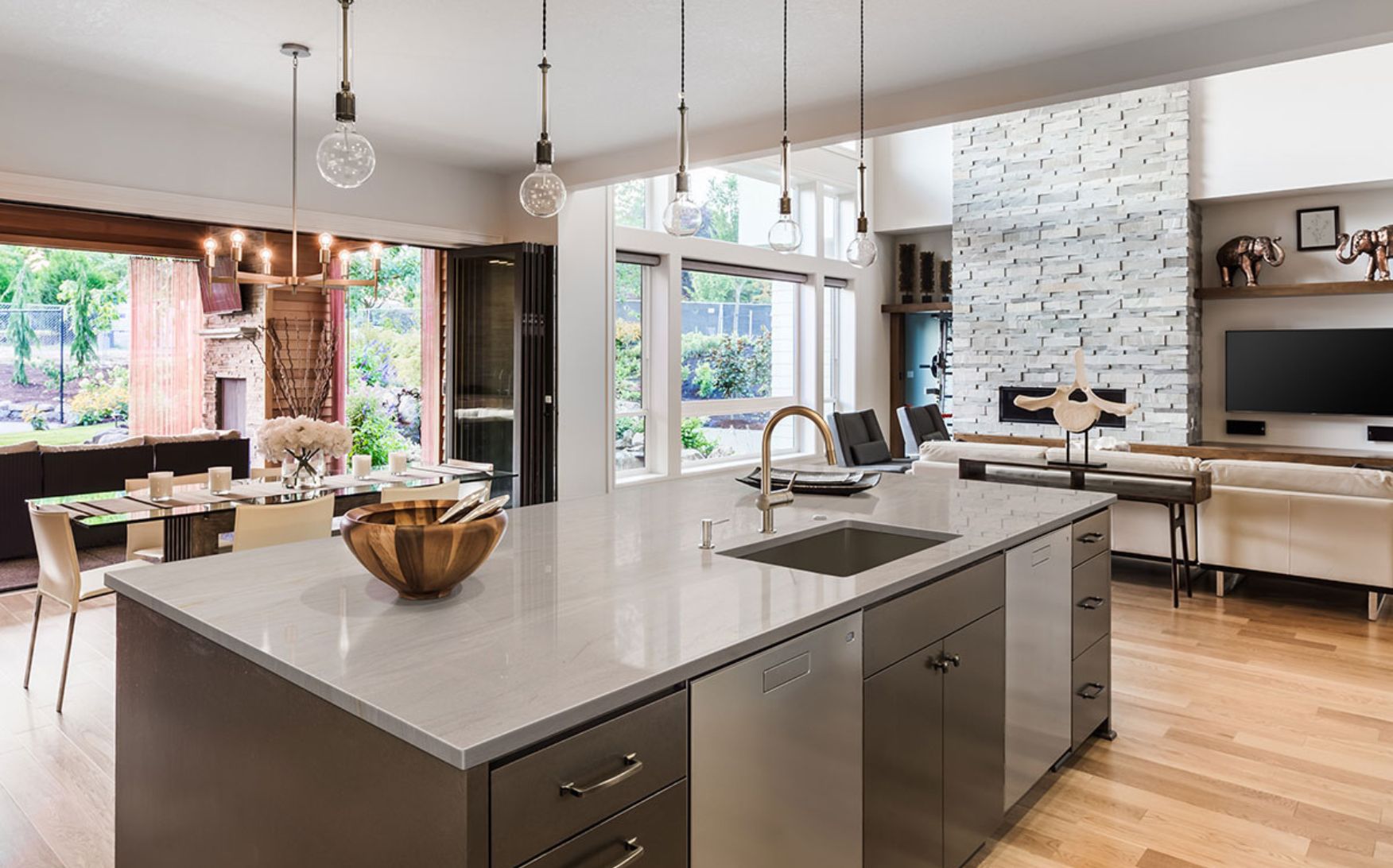
Quartzite is a unique natural stone type that offers luxury aesthetics but maintains high structural performance. Many homeowners consider quartzite a practical alternative to marble because it combines visual elegance with mechanical strength.
Quartzite countertops are gaining popularity these days, so if you are considering them, then understand how they perform. Continue reading the following for more information.
What Is Quartzite?
Quartzite is a natural stone. It is a metamorphic stone that is formed when sandstone goes through intense heat and pressure within the Earth’s crust. This process recrystallizes quartz grains into an interlocking matrix. The resulting surface is tougher and durable one that is far superior than engineered quartz.
Quartzite has distinct characteristics such as:
This geological transformation creates several defining characteristics:
- High density, which is around 90–99% natural quartz crystals
- Interlocking crystal structure
- Low mineral impurities
- Strong abrasion resistance
- Mohs hardness: 7–8 (harder than granite)
- Moderate but sealable
Quartz crystals dominate the composition, which is why it ranks among the hardest countertop stones available. It even outperforms granite.
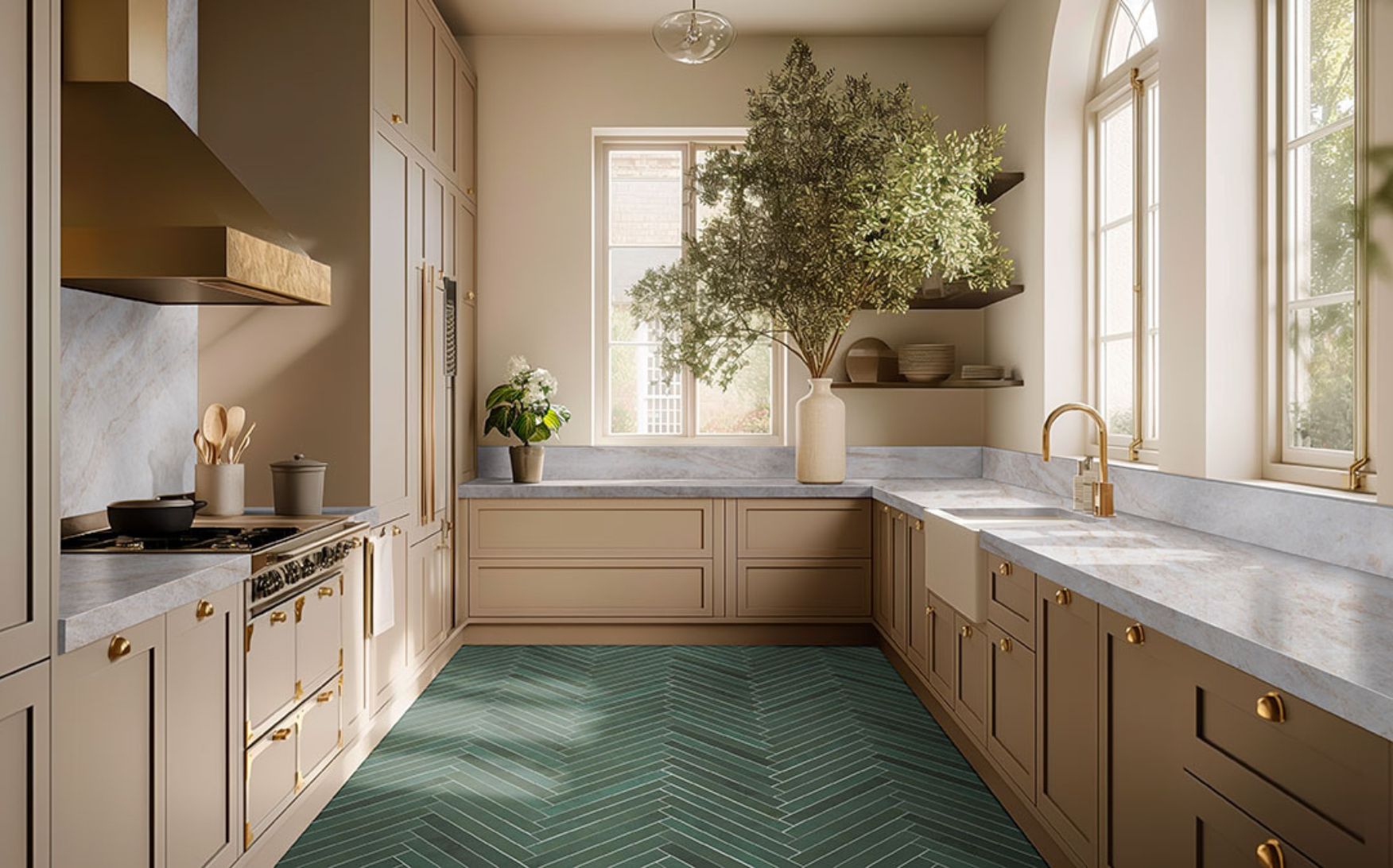
Pros and Cons of Quartzite Countertops
Many homeowners want to know about quartzite countertops because it mimicking the look of marble. However, to give a better idea, here are the pros and cons to have better idea about the quartzite countertops.
| Pros | Cons |
| Extremely durable | Higher upfront cost |
| Excellent heat resistance | Requires periodic sealing |
| Natural luxury appearance | Heavy material |
| UV stable for outdoor use | Fabrication complexity |
| Long lifespan | Limited DIY installation |
| Strong resale value | Potential mislabeling risks |
Pros Of Quartzite Countertops (Why Homeowners Choose Quartzite)
Homeowners are now preferring the quartzite countertops for a wide range of benefits, such as:
Exceptional Durability
Quartzite has a resistant surface that can withstand daily wear. These kitchen countertops can sustain knife scratches, direct heat from pots, and heavy cookware impact. This makes it ideal for:
- Active kitchens
- Multi-generational homes
- High-traffic cooking zones
Strong Heat Resistance
Natural quartzite can resist direct exposure to heat without structural damage. Many homeowners also ask does quartzite stain, since they often compare its heat resistance with overall maintenance and stain performance. This means that when you place hot pans on the surface, it wouldn’t damage the surface. This feature reduces the risk of long-term micro-cracking.
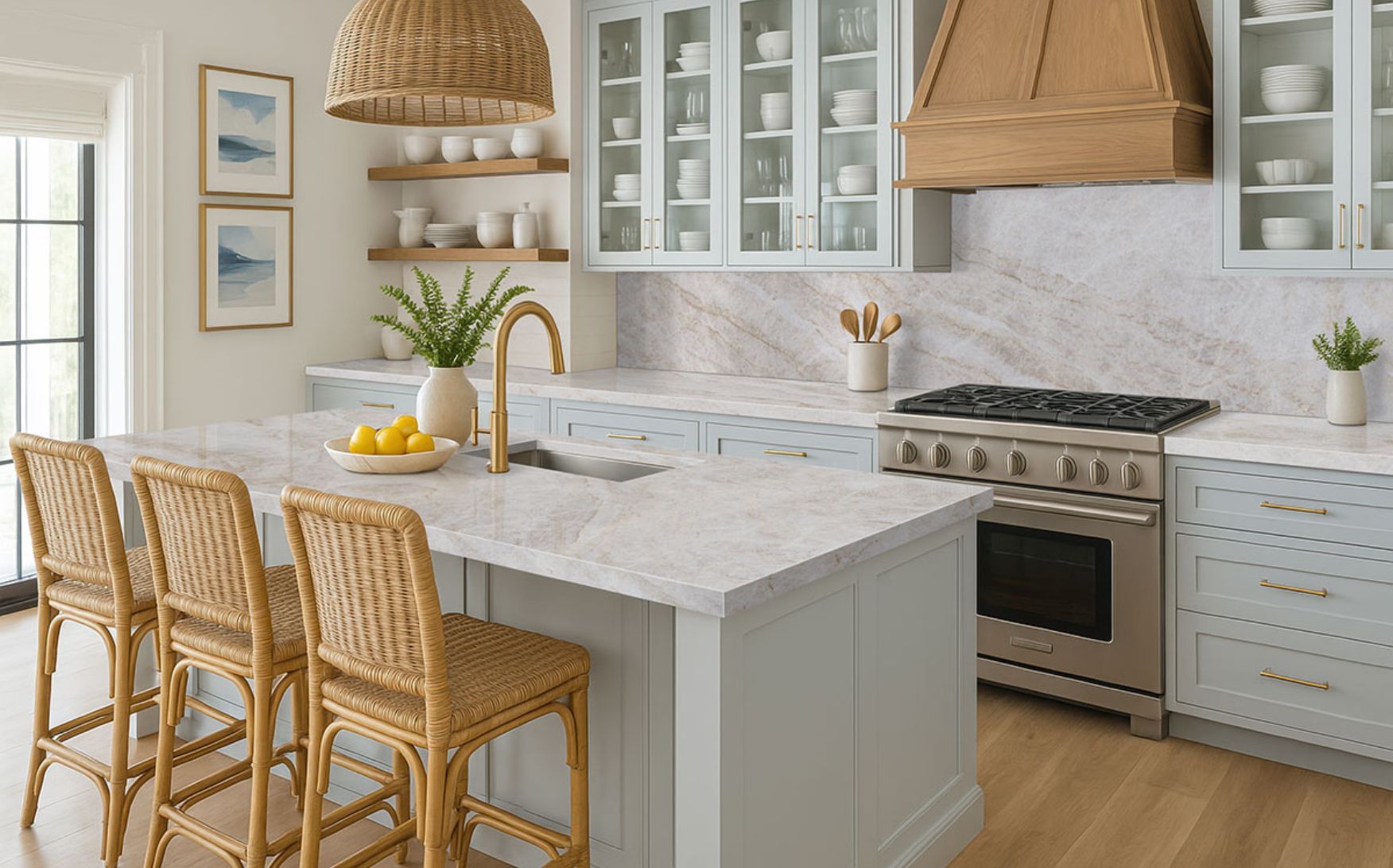
Natural Marble-Like Beauty
One of the unique features of quartzite is its resemblance to marble, but the surface is more reliable and durable. Common aesthetic features include:
- Linear veining patterns
- Colors are naturally soft
- Subtle crystal depth
- Natural variation in tones
Each countertop slab has a unique look because of the geological formation, which is different in each quarry. Many homeowners also ask what color is Taj Mahal quartzite, as it is one of the most popular quartzite varieties known for its soft beige base with subtle gold and cream veining.
Outdoor Suitability
Quartzite doesn’t fade under consistent exposure to sunlight. UV rays don’t cause any harm to the natural mineral pigments. This makes it suitable for:
- Outdoor kitchens
- Patio countertops
- Sun-exposed interiors
Long lifespan
Quartzite is a rugged, hard, and durable material. High-end quartzite variants can even outperform granite. This means there will be less chipping and wearing. Homeowners can enjoy the beauty of quartzite for decades with just routine maintenance, including periodic sealing and cleaning. This makes quartzite countertops a long-term investment for homes with busy kitchens and lifestyles.
Strong resale value
Quartzite has a distinct natural appearance which though resemble marble, but the surface is more durable than marble. When installed properly in kitchen countertops, outdoor entertainment areas, or vanities, it will reflect the owner’s rich taste in natural stone. This often results in boosting the resale value of most properties.
Cons Of Quartzite Countertops (Limitations Of Quartzite Stone)
With too many benefits, quartzite is still not a perfect natural stone for many houses. Here are the limitations of quartzite countertops to consider:
Higher Upfront Cost
Quartzite is a premium countertop material. The cost shows both natural rarity and the complexity of fabrication. This is why it is not suitable for projects with budget constraints. Several factors affect the pricing.
- Quarry origin and slab rarity
- Slab size and thickness
- Veining complexity and color demand
- Installation difficulty due to the hardness
Quartzite is not a DIY countertop installation material for countertops. It requires specialized cutting tools and skilled installers. The fabrication costs more than granite and engineered quartz.
Requires Periodic Sealing
Quartzite has a naturally porous surface which absorb liquids if left unprotected. This is why sealing is an essential part of installing quartzite countertops. Typical maintenance includes:
- Regular sealing every 12–24 months
- Prompt cleanup of spills
- Avoiding harsh chemical cleaners
This routine care is simple, but it is not optional. Without proper sealing, staining risks increase over time.
Heavy Material
Quartzite has a dense structure and is heavy. A single slab can weigh hundreds of pounds. This is why the installation requires many considerations, such as a reinforced cabinet that supports the load. Transporting requires specialized handling, and installation demands professional equipment.
Because of its weight, quartzite is not suitable for unsupported structures or weak cabinetry.
Fabrication Complexity
Quartzite ranks among the hardest natural stones. The strength of the stone makes cutting and shaping more difficult than with many other materials. Fabricators must use:
- Industrial diamond tooling
- Precision cutting machinery
- Skilled stone technicians
This complexity increases fabrication time and labor costs. It also directly affects the installation quality and long-term performance.
Limited DIY Installation
Due to its weight, hardness, and cutting difficulty, quartzite rarely works for DIY projects. Even minor handling errors can cause cracking and damage the surface. Professional installation remains essential for:
- Accurate leveling
- Seam alignment
- Structural safety
Potential Mislabeling Risks
Not all types of stones sold as quartzite are the real stone. Some materials, like dolomite or hard marble, may appear similar but perform differently. Homeowners should verify authenticity by requesting stone classification. Ask about the hardness testing and work with the reputable suppliers.
This step protects buyers from unexpected maintenance issues later.
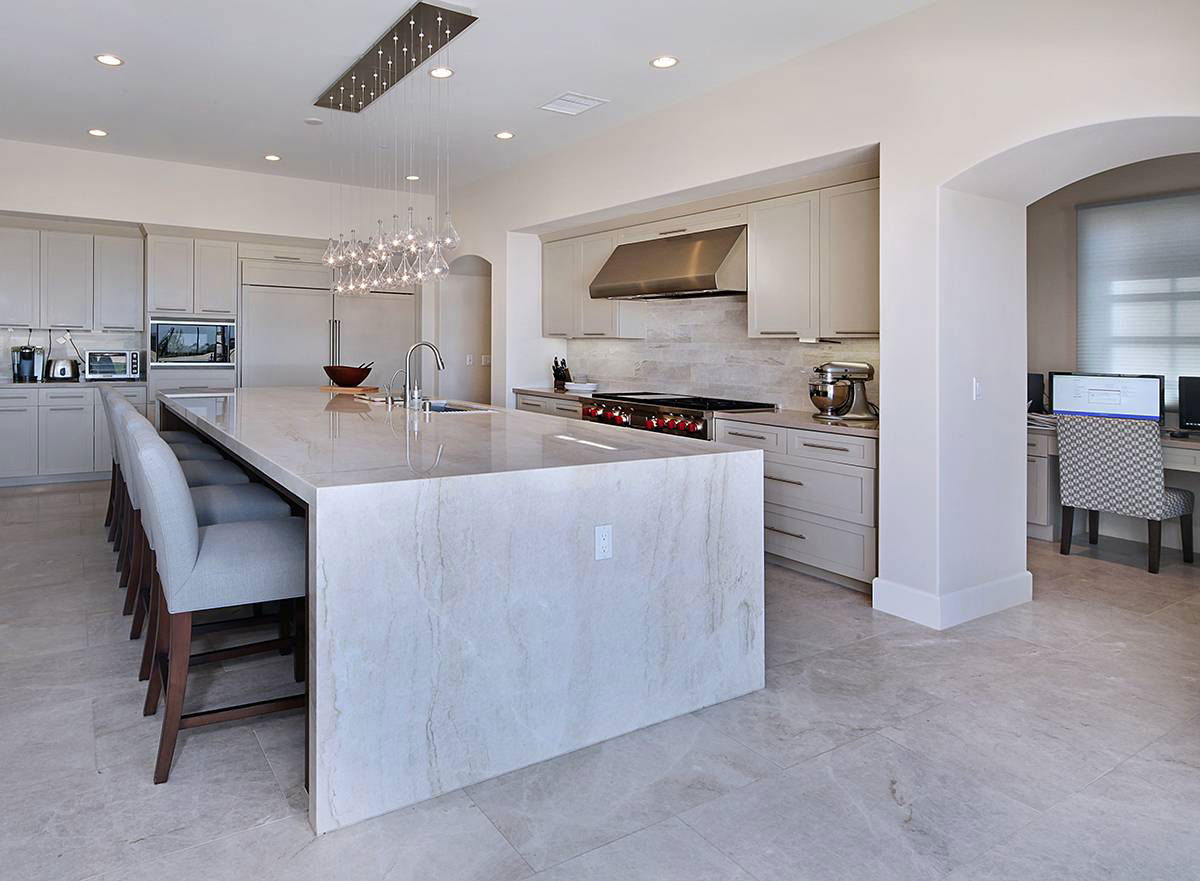
Quartzite vs Granite vs Quartz
Quartzite, granite, and quartz may sound similar, but they are all distinctively different. The following table will help homeowners compare performance, maintenance, and long-term value throughout popular countertop materials.
| Feature | Quartzite | Granite | Quartz (Engineered) |
| Material Type | Natural metamorphic stone | Natural igneous stone | Engineered composite |
| Composition | Recrystallized quartz crystals | Feldspar, quartz, mica | Crushed quartz + resin |
| Hardness (Mohs) | 7–8 | 6–7 | 6–7 |
| Scratch Resistance | Very high | High | Moderate–high |
| Heat Resistance | Excellent | Excellent | Moderate |
| UV Resistance | Excellent | Excellent | Can fade outdoors |
| Porosity | Moderate | Moderate | Non-porous |
| Sealing Required | Yes | Yes | No |
| Pattern Style | Marble-like veining | Speckled mineral pattern | Uniform engineered design |
| Color Consistency | Natural variation | Natural variation | Highly consistent |
| Fabrication Difficulty | High | Moderate | Moderate |
| Average Lifespan | 40–50+ years | 30–50 years | 20–30 years |
| Typical Cost Range | High | Mid-high | Mid-high |
| Best Use Case | Luxury kitchens, outdoors | Durable family kitchens | Low-maintenance interiors |
Quartzite vs Porcelain Countertops
Porcelain slabs are another popular material for kitchen countertops. Due to technological advancements in manufactured stone, it is competing with quartzite. But how quartzite performs against porcelain countertops, let’s find out.
| Feature | Quartzite | Porcelain |
| Material Type | Natural stone | Engineered ceramic surface |
| Manufacturing | Natural quarry extraction | Kiln-fired at high temperatures |
| Heat Resistance | Excellent | Excellent |
| Scratch Resistance | Very high | Very high |
| UV Stability | Excellent | Excellent |
| Thickness Options | Thick slabs (2–3 cm) | Thin to ultra-thin |
| Impact Resistance | High | Moderate |
| Repairability | Difficult | Very difficult |
| Sealing Needs | Required | None |
| Maintenance Level | Moderate | Low |
| Edge Design Flexibility | Limited | Highly flexible |
| Installation Complexity | High | High |
| Cost Range | High | High |
What Are The Most Important Misconception Between Quartz vs Quartzite?
Many homeowners confuse quartz and quartzite, these materials due to their similar names. The difference is simple.
- Quartzite = natural stone
- Quartz = engineered surface
Quartz is a manufactured stone that contains resin binders. Quartzite, on the other hand, is a natural stone. This single distinction affects heat resistance, maintenance, and longevity.
How to Verify Real Quartzite?
It is common to find stones labeled quartzite that are not genuine. Some retailers will offer you hard or dolomite marble under the same name. Practical verification methods include:
Glass Scratch Test:
Scratch the glass with a quartzite, as real stone will scratch the glass due to its hardness.
Water Absorption Test:
Real quartzite absorbs water slowly when sealed.
Professional Certification:
Ask for the stone classification from the supplier.
Quartzite Countertops FAQs
Let’s answer your questions about quartzite countertops.
Is quartzite better than granite?
Yes. Quartzite ranks harder than granite and offers marble-like patterns. Granite requires similar maintenance but offers more speckled visuals. Both perform well, but quartzite provides a more luxurious appearance.
Does quartzite stain easily?
Yes. But with proper sealing, quartzite can resist stains easily. Without sealing, liquid can penetrate microscopic pores, which is why routine resealing prevents most staining risks.
Can quartzite crack from heat?
No. Quartzite rarely cracks due to heat because of its crystalline structure. Sudden thermal shock remains possible but uncommon in residential kitchens.
How often should quartzite be sealed?
Most quartzite countertops require sealing every one to two years, depending on usage and sealer quality.
Is quartzite suitable for outdoor kitchens?
Yes. Quartzite withstands UV exposure, temperature changes, and moisture, which makes it one of the best natural stones for outdoor use.
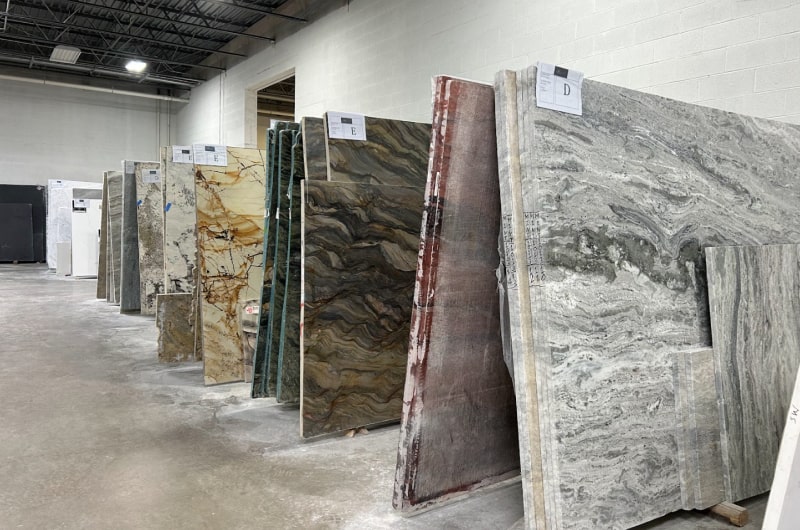
Bottom Line
Quartzite countertops offer a great combination of durability, natural beauty, and long lifespan. They resist scratches, tolerate heat, and maintain color stability in both indoor and outdoor settings. However, they require sealing and professional kitchen countertop installation in New Jersey.
For homeowners looking for a premium natural stone that balances performance with lasting aesthetics, quartzite is the best choice.